A Citizen Volunteer Built an AI to Spot Night-Shining Clouds
Noctilucent clouds are appearing lower and more often. A single unpaid contributor just changed how scientists track them.
By The space-quantum Desk
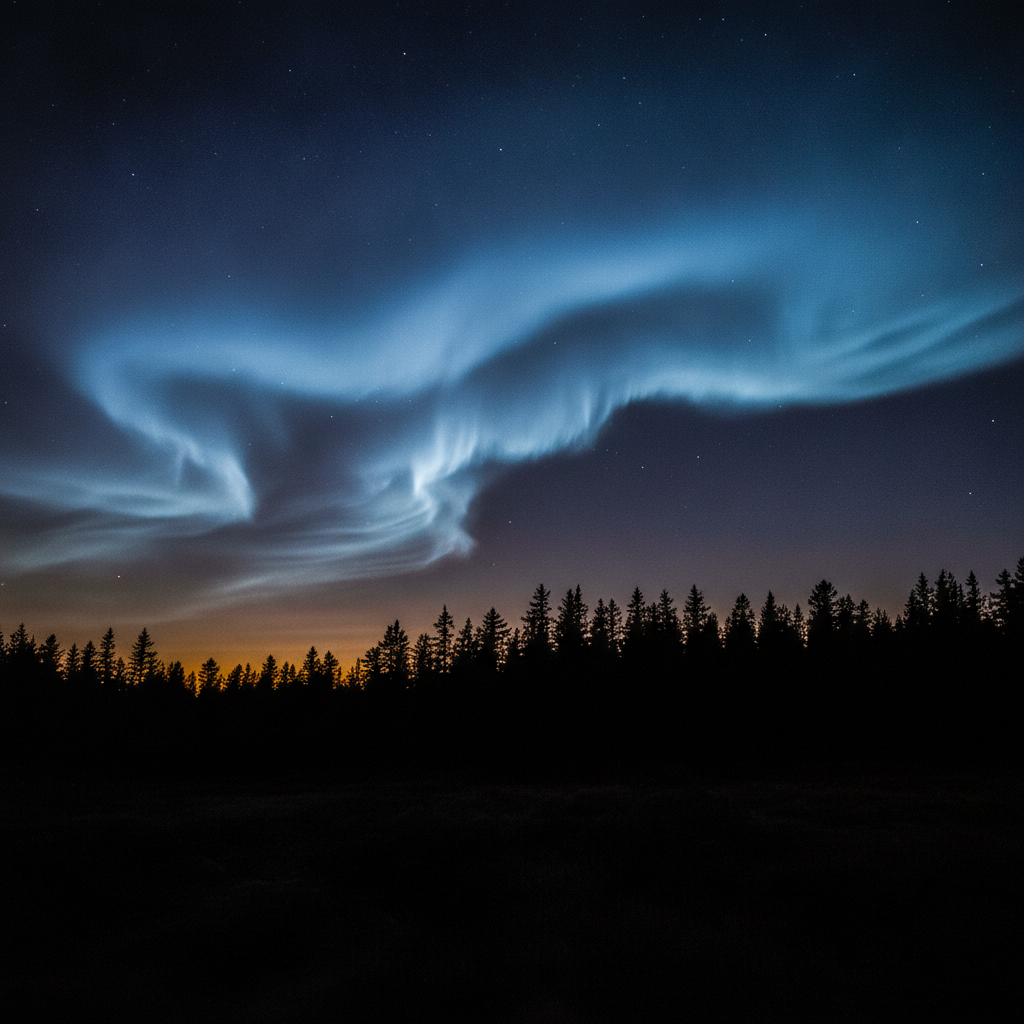
Noctilucent clouds — the silvery, high-altitude wisps that scatter light from the Sun long after sunset and long before sunrise — are misbehaving. They are appearing more often and lower in the sky than they used to, and scientists want to know why. Their answer was to recruit the public: the NASA-supported Space Cloud Watch project asks people around the world to photograph the clouds and submit images for review. [1] The problem was that the clouds are genuinely hard to identify, and manual verification was burying the project's science team.
Enter Namai Chandra, a volunteer who noticed that NLC images were being manually verified by the project leaders. [1] His response was not to write a forum post. It was to build a machine learning pipeline from scratch.
The pipeline Chandra developed combines image pre-screening, cloud classification, and confidence-based review routing. [1] Trained on a dataset that included both genuine noctilucent clouds and the lower-altitude look-alikes that routinely flood Space Cloud Watch submissions, the system does not attempt to replace human judgment — it routes only the uncertain cases to scientists, while clearing the obvious ones automatically. Think of it as triage for the atmosphere.
What makes this story worth sitting with is not the tool itself — it is the conditions that made the tool possible. Citizen science has long promised to close the gap between trained researchers and curious amateurs, but that promise usually stalls at data collection. Someone still has to sort the pile. What happens when the volunteers start sorting themselves?
Chandra reached out to Space Cloud Watch scientists Drs. Chihoko Cullens and Brentha Thurairajah before writing a single line of production code. [1] After several rounds of development, testing, and refinement, he released the NLC identification tool to the project. It is now in active use by both contributors who are unsure what they photographed and by project scientists who want to flag images for deeper review. [1]
The clouds themselves remain the stranger part of this story. Noctilucent clouds scatter light from the Sun long after sunset and long before sunrise, giving them a silvery glow. [1] Scientists are working to identify the factors influencing these changes, including shifts in Earth's long-term weather patterns. [1] Every clean, verified image the project collects moves that analysis forward.
There is something quietly clarifying about this model. A volunteer identifies a bottleneck, consults the scientists directly, builds toward their actual workflow, and ships something that works. No committee. No grant cycle. Just a problem and someone patient enough to solve it properly.
Space Cloud Watch is still actively recruiting contributors. If you have a camera and clear skies just after sunset or before dawn, the project now has a built-in way to check whether what you captured is the real thing before you submit — a direct result of Chandra's work. [1] The barrier to meaningful contribution just dropped.
Noctilucent clouds are a signal from the upper atmosphere that something is shifting. The fact that a single volunteer with a laptop is now helping science read that signal more clearly says something worth noting about what citizen participation can actually look like when the infrastructure catches up with the ambition.
I noticed that NLC images were being manually verified by the project leaders. It felt like a task well-suited for a human-in-the-loop machine learning pipeline, one that could handle the repetitive screening automatically, while keeping human judgment central for the images that matter most.Namai Chandra