America's Robot Gap: Who Builds the Machines That Reshore?
Most U.S. factory robots are foreign-made. A panel at RoboBusiness 2026 wants to change the calculus — and the policy.
By The Robotics Desk
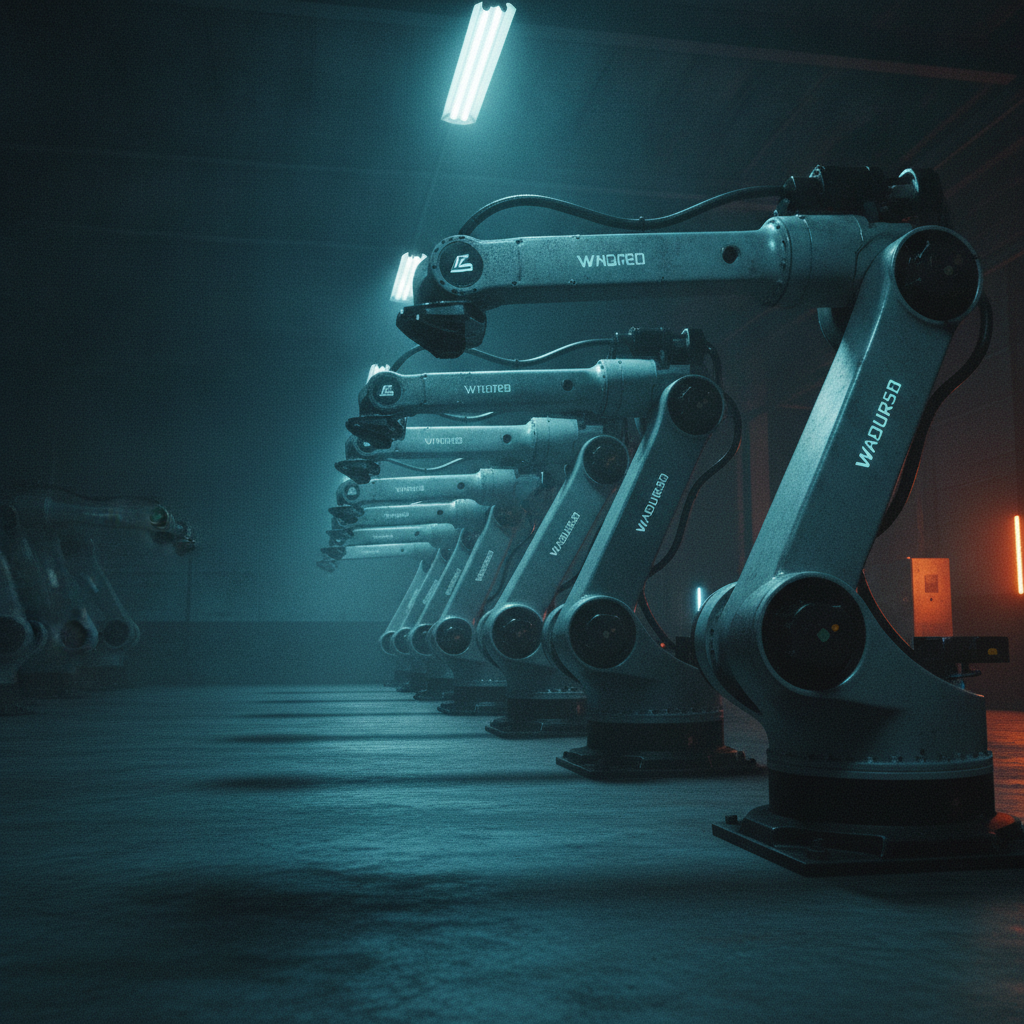
Boston Dynamics' Spot quadruped is already walking the floors of a Michelin plant in Lexington, S.C., conducting inspections. [1] It is a vivid image of American industrial renewal — and also of its central contradiction: most of the robots doing the reshoring are built by foreign-owned companies. [1]
That tension sits at the heart of a panel convened for RoboBusiness 2026, running October 20 and 21 in Santa Clara, Calif. [1] The session will ask whether recent policy levers — tariffs, FCC import restrictions — can actually shift where robots are designed, assembled, and serviced, or whether they merely raise costs without moving factories. [1]
The question is harder than it looks. Trade policy can redirect supply chains, but it cannot conjure the engineering talent, standards infrastructure, or venture capital required to stand up a domestic robotics industry from scratch. Ambition and mandate are different things.
The panelists bring credentials that span the full stack of that problem. Henrik Christensen — Qualcomm Chancellor's Chair of Robot Systems and a Distinguished Professor of Computer Science at the University of California San Diego — is a principal author of the U.S. National Robotics Roadmap and has published more than 400 contributions across robotics, AI, and computer vision. [1] He directs the Contextual Robotics Institute and holds fellowships at both IEEE and AAAS. [1]
On the legal and standards side, Michael Bearman, chief legal and safety officer at Vecna Robotics, has helped secure more than $145 million in federal contracts and supported more than $100 million in venture fundraising. [1]
Ellie Sakhaee, who leads AI and Emerging Tech policy research at Google, arrives with a profile that crosses institutions few people straddle: a machine learning scientist with a Ph.D. in computer science, experience at Microsoft's Office of Responsible AI, and a period serving in the U.S. Congress, advising on technology policy. [1]
Brendan Schulman, vice president of policy and government relations at Boston Dynamics, rounds out the group. [1] He previously played a key role in solutions at the federal, state, and local levels, as well as internationally, concerning commercial drones, and has testified in the U.S. Congress and the U.K. House of Commons.
What the panel collectively represents is a rare alignment of engineering depth, standards expertise, AI policy fluency, and government-relations muscle — the combination any serious national robotics strategy would need to draw on. Whether a two-day conference in Santa Clara can translate that expertise into durable industrial policy is a different matter entirely.
The agenda will also take up workforce development and supply chain resilience — the unglamorous infrastructure questions that often get crowded out by hardware demos. [1] RoboBusiness describes itself as the leading event for professionals developing and deploying commercial robots, with sessions spanning manufacturing, healthcare, agriculture, and logistics. [1] Exhibit hours run 10am to 5pm on October 20 and 10am to 3pm on October 21, with an evening reception on the first day and a networking luncheon also available to attendees. [1, 2]
The robots are already on the factory floor. The policy to build them here is still being drafted.
Robotics is a key enabler of reshoring production to the U.S., but there is little consensus on how to best encourage it.RoboBusiness 2026 panel preview