Army Wants a $150K Drone-Killer Missile
The Next Generation C-sUAS Missile must drop below $150,000, launch in five seconds, and reach targets 25 kilometers out.
By The Defense Desk
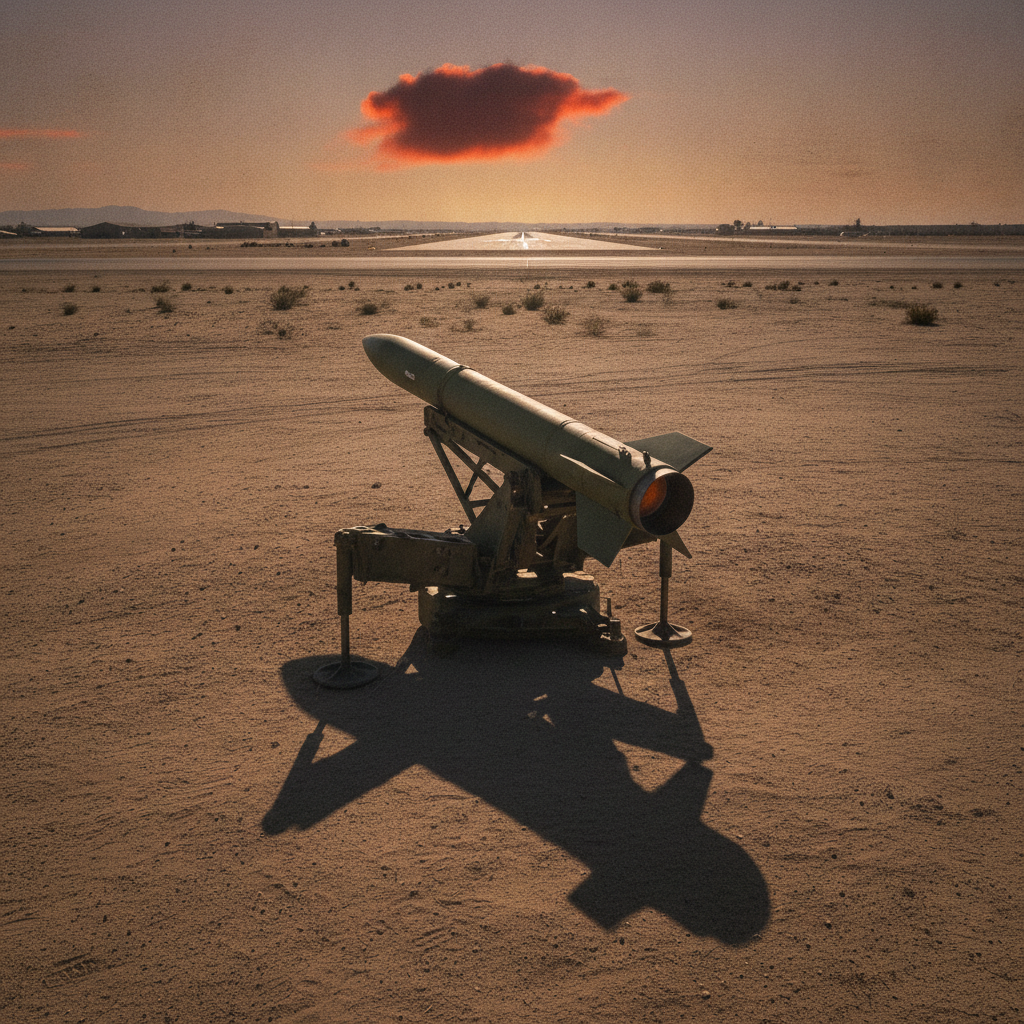
The U.S. Army has issued a request for information seeking a new anti-drone missile priced under $150,000 — a figure that signals a hard reset on how the service thinks about air defense economics. The solicitation, published Tuesday, describes the Next Generation C-sUAS Missile, or NGCM, as a system capable of defeating Group 2 and 3 small unmanned aircraft weighing between 21 and 1,320 lbs. [1]
The math behind the requirement is blunt. Adversaries field consumer-grade drones that cost a few thousand dollars; the U.S. military has largely answered with multimillion-dollar interceptors. The Army's low-cost interceptor program, launched earlier this summer, was created specifically to end that mismatch. [1]
The NGCM spec sheet tightens that ambition into hard numbers. The missile must reach targets farther than 16 kilometers at an altitude of at least 6 kilometers, per the solicitation. The Army's preferred ceiling goes further: beyond 25 kilometers in range and above 8 kilometers in altitude. Launch response must clock in at less than 5 seconds from operator initiation. [1]
Compatibility requirements are equally precise. The NGCMs must slot into Raytheon's Coyote Launcher with "minimal to no modifications" and remain radar-agnostic across the Patriot, AN/TPQ-53, and Sentinel A3 and A4 systems. The Army anticipates two variants: a fixed-site version combining electronic warfare, radar, and electro-optical/infrared sensors with kinetic options, and a mobile version mountable on tactical vehicles. [1]
The two-variant architecture tells a larger story — a force that wants the same core capability to anchor a permanent installation and ride along in a convoy. Modularity has become the organizing principle, not just for hardware but for the entire theory of coverage.
The Army is looking to buy at least 5,000 of the missiles and wants 50 NGCMs ready for operational assessments by the first quarter of fiscal 2028. The RFI states the missiles are expected to achieve technology readiness level seven after an initial developmental test series concluding in the fourth quarter of FY27 — tests the solicitation says will support "immediate deployment." [1]
The $150,000 ceiling on the NGCM sits well below the benchmarks Army Secretary Dan Driscoll set in May, when he told reporters each LCI interceptor should ideally cost less than $250,000. A June event slide went higher still, pegging the all-up round target at under $1 million. Whether the NGCM RFI is formally part of the LCI program remains unclear; the Army did not respond to questions on that point. [1]
A white paper published last month broke the missile into its constituent asks — rocket motors, seekers, fire control and guidance tools, and a weapons system integrator to design an open systems architecture — before requesting the all-up round as well. Responses to Tuesday's RFI are due on August 20. [1]
Price discipline at this level forces trade-offs that defense primes rarely welcome. The open-systems mandate is the tell: the Army wants the architecture to outlast any single vendor's product cycle, keeping future competition alive and unit costs honest.
Whether industry can actually hit $150,000 while clearing the range, altitude, and launch-time bars remains to be seen. But the Army has now said the number out loud — and in procurement, the number you publish is the number you negotiate from. [1]