Astra's Endgame: One Founder, Zero Staff
Chris Kemp is betting that AI agents and robots can build rockets cheaper than humans. His headcount is already proving him right.
By The space-quantum Desk
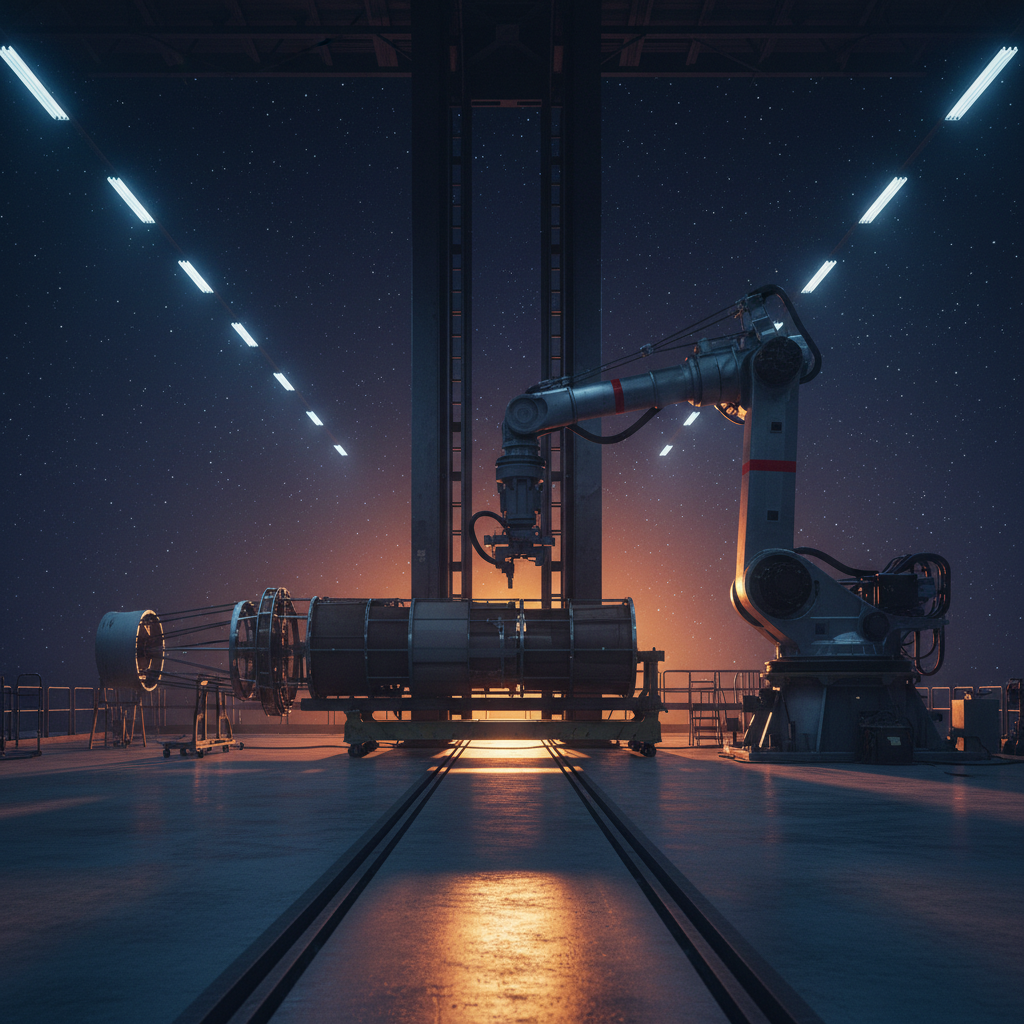
Astra went public, cratered, and was taken private in 2024 at less than 1% of its peak valuation [1]. Now, from a quiet workshop in Alameda, California, it is attempting something stranger than a comeback: a rocket company that barely needs people [1].
CEO Chris Kemp told attendees at the 41st Space Symposium in April that Astra generated nearly $50 million in revenue in 2025 on electric thruster sales, with a "slight" profit on adjusted EBITDA [1]. A first Rocket 4 launch from Cape Canaveral is expected before year's end [1].
The more disquieting story is the headcount. Astra once employed 400 people; it now has 110 [1]. Astra has trained an AI model using every bit of information about the company, from budgets and requirements documents to technical specifications, and Kemp has mandated that every remaining employee contribute code to the internal software stack — or be fired [1].
"Robots are putting things together and AI agents are doing all the work," Kemp said [1]. He frames the logic as cost arithmetic: automated manufacturing and AI agents eliminate the labour overhead that makes rockets expensive [1]. Dario Amodei, chief executive of AI company Anthropic, said at his company's developers conference in May that he expects this will be the year the first billion-dollar company arrives with a single employee, thanks to AI [1].
Space has always demanded redundancy, oversight, and human judgment at every critical juncture. Whether that culture can absorb a model built on deliberate subtraction — or whether it will simply reject it — is the real test.
When someone at the Space Symposium breakfast asked Kemp if he would be the last employee of his own company, he said yes — to laughter [1]. Astra may be a harbinger or an outlier, but either way, the answer landed differently than a joke [1].