AWS Open-Sources the Robot Brain Assembly Line
A new Physical AI Toolchain from AWS and NVIDIA stitches together synthetic data, simulation, and edge deployment into one workflow.
By The Robotics Desk
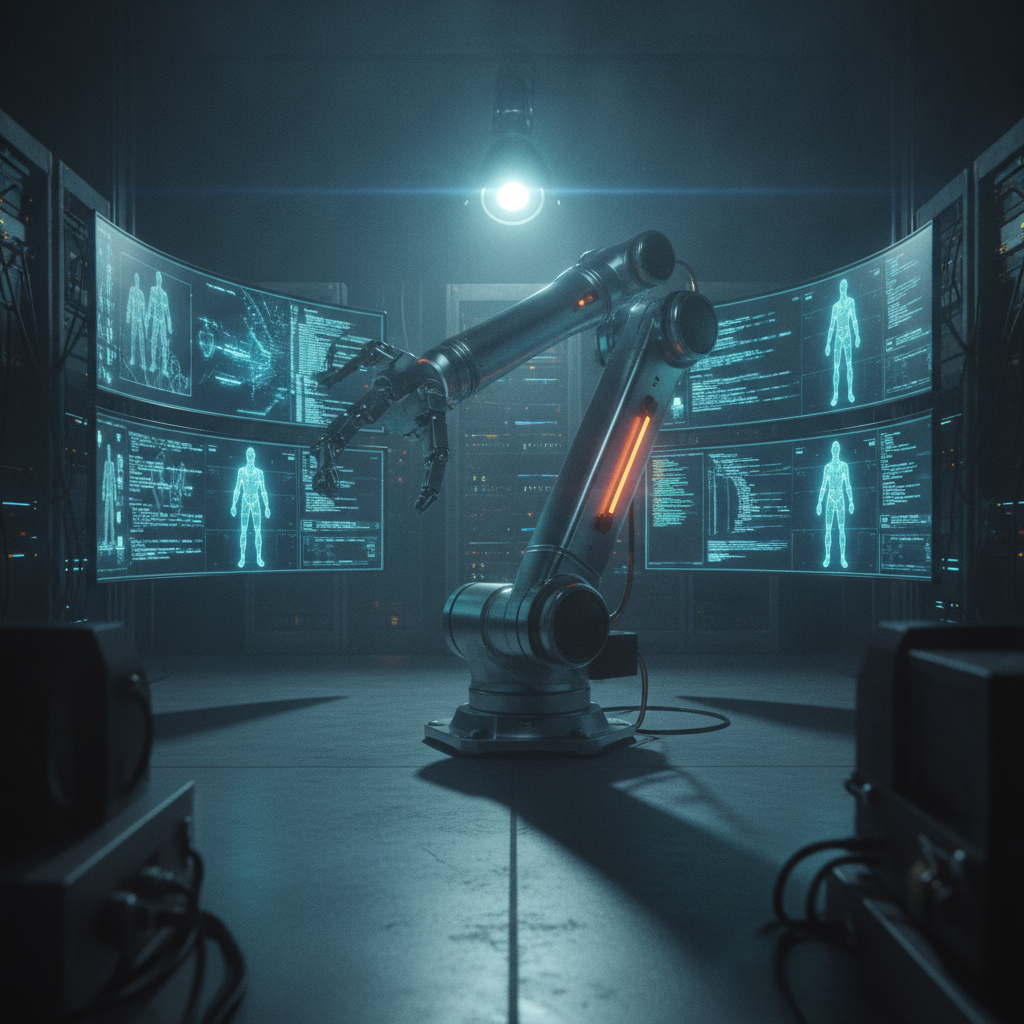
Training a robot to pick a bottle off a shelf sounds like a software problem. In practice, it is five problems stacked on top of each other: collect data, generate more of it synthetically, train a model, test it in simulation, then push it to a machine that has to work first time. AWS wants to collapse that stack into a single open-source workflow. The company launched its Physical AI Toolchain, bringing together AWS services and NVIDIA's Physical AI software stack into a single development workflow, to move robotics teams from raw data to deployed model without switching platforms mid-build. [1]
The toolchain combines five stages: synthetic data generation, model training, simulation and validation, edge deployment, and continuous improvement. NVIDIA contributes Isaac Sim, Isaac Lab, Isaac GR00T, and Cosmos. Teams can wire all five stages together or pull individual components into an existing stack. [1]
The data scarcity problem sits at the center of everything. "The amount of data that you need to train these models is significant, and there's not a lot of data that's available, unlike LLMs where there's a ton of data on the internet," said Sri Elaprolu, director of Frontier AI Science and Engineering at AWS. [1] Synthetic data generation addresses the gap by manufacturing plausible training scenarios that the real world has not yet produced in sufficient volume. The simulation layer then stress-tests models against those scenarios before any physical hardware is involved. [1]
Once robots are in the field, the toolchain closes a feedback loop. AWS IoT Greengrass edge deployment serves a dual purpose: executing ML inference for real-time robot control while simultaneously collecting sensor data for ongoing model improvement and adaptation. [2] Elaprolu described it simply: "As you start scaling out these robotic deployments, the learnings that get captured locally need to be flown back into the cloud. So you continually iterate the brain." [1]
The difficulty is that warehouses are the easy case. Controlled environments offer predictable lighting, fixed shelving, and failure tolerances that can be engineered in advance. The rest of the world is messier, faster, and far less forgiving.
Elaprolu pointed to Telexistence, a Japanese robotics company deploying humanoids inside convenience stores. More than 300 units have been deployed, with more expected. [1] A convenience store introduces variables a fulfillment center does not: shifting stock, unpredictable customers, and the need for fast response. "The fault tolerance levels tend to be much lower, but at the same time, the response rates have to be much higher," Elaprolu said. [1] AWS is positioning the toolchain as hardware-neutral to handle that diversity — prescribing no particular robot body, only the infrastructure for training and deployment across different machines. [1]
The toolchain also reaches into specialist sensing. AWS worked with RLWRLD, a South Korean company developing tactile capabilities for humanoid hands, after finding that existing models weren't sufficiently capable for certain five-finger dexterity tasks. [1] Beyond warehouses, Bedrock Robotics has developed hardware and AI models for autonomous construction robots, with those models trained in the cloud on AWS and then used to operate equipment in real construction zones. [1]
The toolchain is open source, available to startups and large companies alike. The individual AWS and NVIDIA components were already in use by customers, including participants in AWS's Physical AI Fellowship with MassRobotics and NVIDIA. [1] The new release packages those components into a cohesive workflow and publishes guidance on how to wire them together for production-grade autonomous systems. [1][2]
An open-source release is a bid for ecosystem gravity. When the infrastructure becomes shared, the competition shifts to what you build on top of it — which is exactly where AWS wants the conversation to go.
The deeper bet here is that physical AI follows the same trajectory as cloud software: messy, fragmented tooling consolidates into a platform layer, and whoever owns that layer shapes the decade of hardware that follows. AWS, drawing on lessons from its own robotics operations that now include more than 1 million robots, is not a neutral party in that outcome. [1]