Barred but Present: Israel's Defense Giants at Eurosatory
France bars Israeli officials and offensive systems from Eurosatory 2026. Elbit and Rafael are going anyway — smaller firms may not be so lucky.
By The Defense Desk
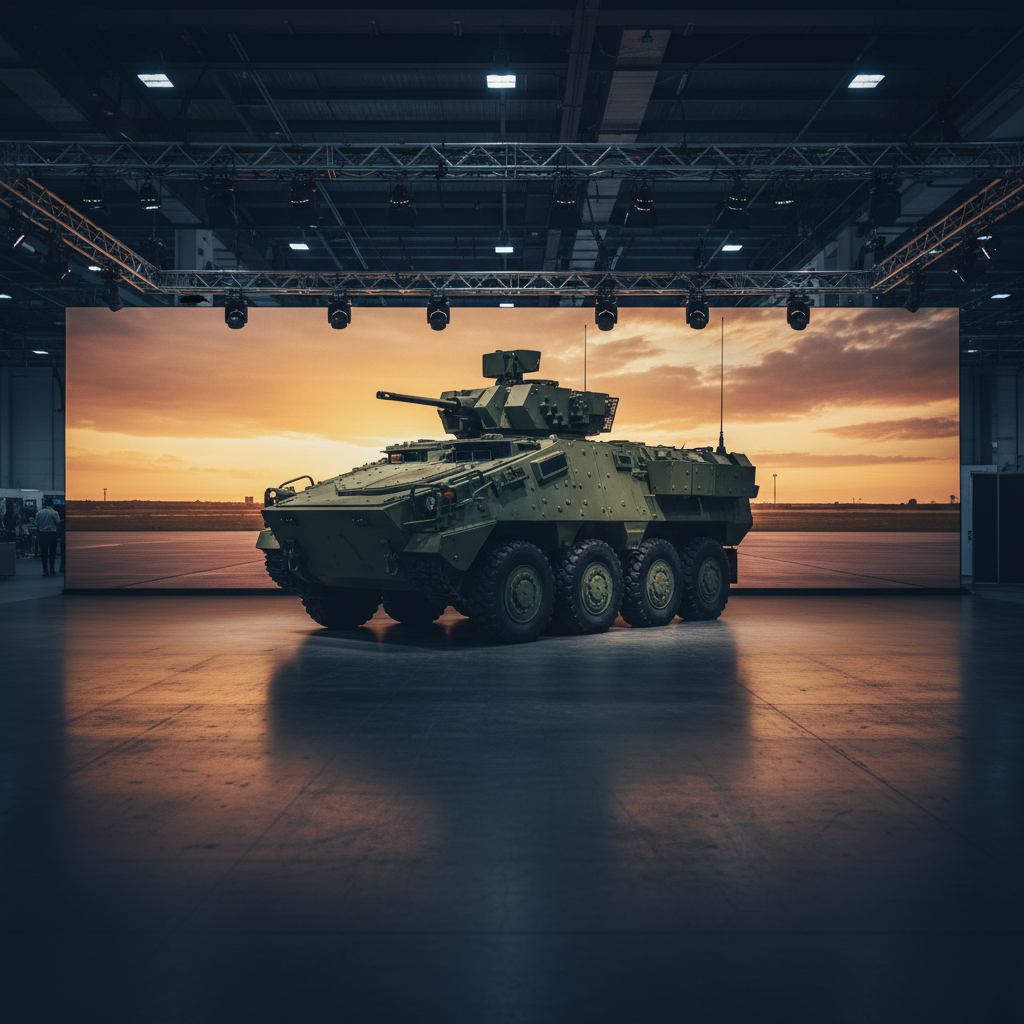
France has told Israel it cannot send government officials, open a national pavilion, or display offensive weapons at Eurosatory 2026, which runs June 15–18 outside Paris. The restrictions are the latest chapter in a two-year pattern of exclusions — but Israel's largest defense firms are attending regardless. [1]
The Israeli Ministry of Defense confirmed that Paris informed Jerusalem of 'its decision to bar Israel's official participation' in the show. The IMOD described the move as a ban on government representatives, a ban on a national pavilion, and a restriction limiting Israeli companies to displaying air defense products only, with offensive systems explicitly excluded. [1]
[2]
That principle has produced a cascade of incidents. Organizers also attempted to have Israeli companies remove offensive weapons from the show. [1]
[2] France's reinstatement of restrictions for Eurosatory 2026 suggests that diplomatic window has since closed. The French Embassy in Israel did not respond to a request for comment. [1]
None of this is happening in a vacuum. European defense procurement is moving fast, and access to trade floors is access to buyers — which helps explain why the restrictions have become a pressure point rather than a deterrent.
The commercial stakes are real. In 2024, Israel recorded $14.7 billion in defense exports, with 54 percent going to European customers. [1] That figure gives Israeli firms a strong incentive to absorb the diplomatic friction and show up anyway.
Rafael has a dedicated webpage for the show, highlighting lasers, counter-UAS systems, and precision strike capabilities. Elbit said it is more focused on the ILA Air Show in Berlin. IAI, the third of Israel's major firms, is also prioritizing ILA, where it is highlighting close cooperation between Germany and Israel, and did not comment on Eurosatory. [1]
The restrictions land hardest on smaller Israeli firms. In mid-May, SIBAT led a delegation of 32 Israeli companies to the second Finnish-Israeli Defense Industry Seminar in Helsinki; it also brought 11 companies to SOF Week in Florida and attended ADEX in Seoul in October 2025. Without a pavilion, smaller firms face the near-impossible task of securing individual booth space, which is both difficult two weeks out from a conference and likely prohibitively expensive for these companies. [1]
The IMOD added a sharper accusation: that France is 'hiding behind a pretense of political justification to exclude Israeli offensive defense systems from an international forum — systems that have proven far superior to their French counterparts.' [1] Paris has not responded publicly to that charge.
The gap between official exclusion and commercial presence tells the deeper story here. Policy draws lines; contracts erase them. For the firms that can afford the friction, Eurosatory remains open for business.
Whether France's restrictions harden into a durable policy or soften again under diplomatic pressure — as they did briefly in late 2025 — is a question that will outlast any single trade show. What is clear is that Israel's defense industry has decided the European market is worth the cost of showing up, barricades and all. [1]