Boeing Wins F/A-XX, Locking Up Sixth-Gen Fighter
The Navy has awarded Boeing a $20B-plus contract to build the F/A-XX, making it the sole supplier of sixth-generation fighters for the US military.
By The Defense Desk
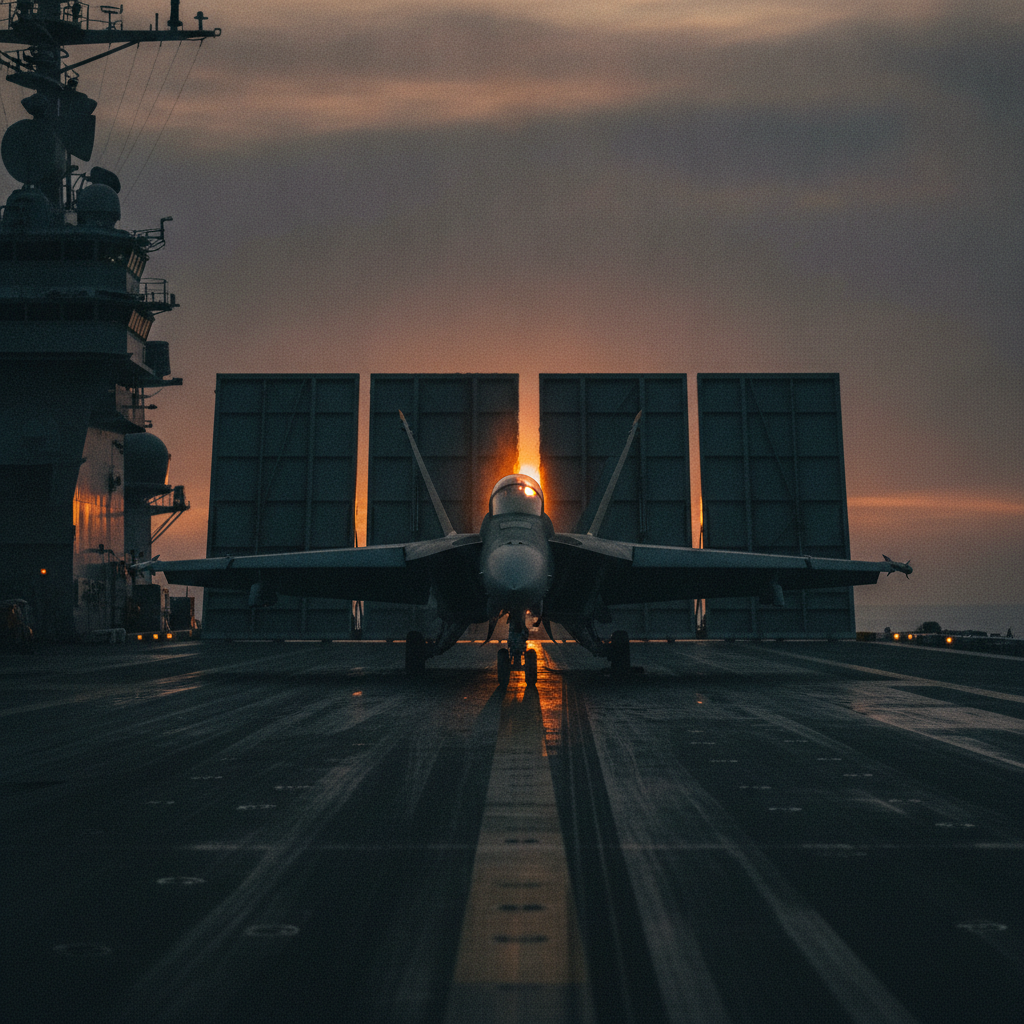
Boeing has won the contract to build the US Navy's next carrier-based strike fighter, the F/A-XX, according to two sources who spoke to Breaking Defense — a deal valued at more than $20 billion for full-scale development. [1] The award makes Boeing the sole supplier of sixth-generation fighters for the US military, following its March 2025 win to develop and produce the Air Force's F-47. [1]
The F/A-XX contract procures multiple test aircraft for ground, airworthiness, systems, and weapons integration testing, with the jet expected to fly "beginning in the 2030s." [1] It will replace the Boeing F/A-18 Super Hornet and EA-18G Growler in the carrier air wing, eventually complementing Lockheed Martin's F-35 Joint Strike Fighter and a still-to-be-determined Collaborative Combat Aircraft. [1]
The back-to-back wins lock out Boeing's two largest competitors — Lockheed Martin and Northrop Grumman — from the sixth-generation fighter market for the foreseeable future. [1] That is a sharp reversal for a company that, in early 2025, was at serious risk of ending its fighter production entirely. Lockheed will continue building the fifth-generation F-35. [1]
The path to this point was far from smooth. [1] Congress and Navy brass pushed back, insisting the F/A-XX would be a crucial part of the carrier air wing of the future. [1]
[2] Using the F-35C's combat radius of roughly 670 nautical miles as a baseline, that puts the F/A-XX's expected unrefueled reach at around 837.5 nautical miles. [2]
That number surprised many observers, given the Navy's stated priority of extending strike-group reach against a threat environment that keeps pushing outward. [2] The F/A-XX's designers are, however, counting on the MQ-25 Stingray carrier-based tanker drone for organic aerial refueling — what Donnelly characterized as effectively indefinite range, saying "with refueling, you could say that's indefinite [range], as long as refueling is available." [2]
The aircraft's role extends well beyond raw range. Acting as aerial quarterback for drones has long been a key expected mission for F/A-XX, and Donnelly described the jet as a platform that, "instead of being man-in-the-loop, will truly be man-on-the-loop, and allow us to have fully integrated architecture with our unmanned systems." [2]
What's taking shape is less a single fighter program than a restructured theory of carrier warfare — one where the manned jet serves as a node in a broader autonomous network rather than the apex predator flying alone.
The Navy has kept public specifications to a minimum, but officials have consistently said the F/A-XX will serve as a stealthy tip of the spear for the carrier air wing, with the ability to penetrate contested airspace and pace threats expected beyond 2040. [1][2] The program uses a separate airframe from the Air Force's F-47, deliberately avoiding the joint-development model used — controversially — for the F-35. [1]
Boeing now builds America's only two sixth-generation fighters. The next question is whether the F/A-XX's modest range numbers reflect a deliberate trade-off for performance and cost — or a ceiling that the Navy will quietly try to raise before the jet ever touches a flight deck.