Castelion Raises $1 Billion to Mass-Produce Hypersonic Missiles
The four-year-old startup is valued at $13 billion and targeting $384,000-per-missile Blackbeard production by 2027.
By The space-quantum Desk
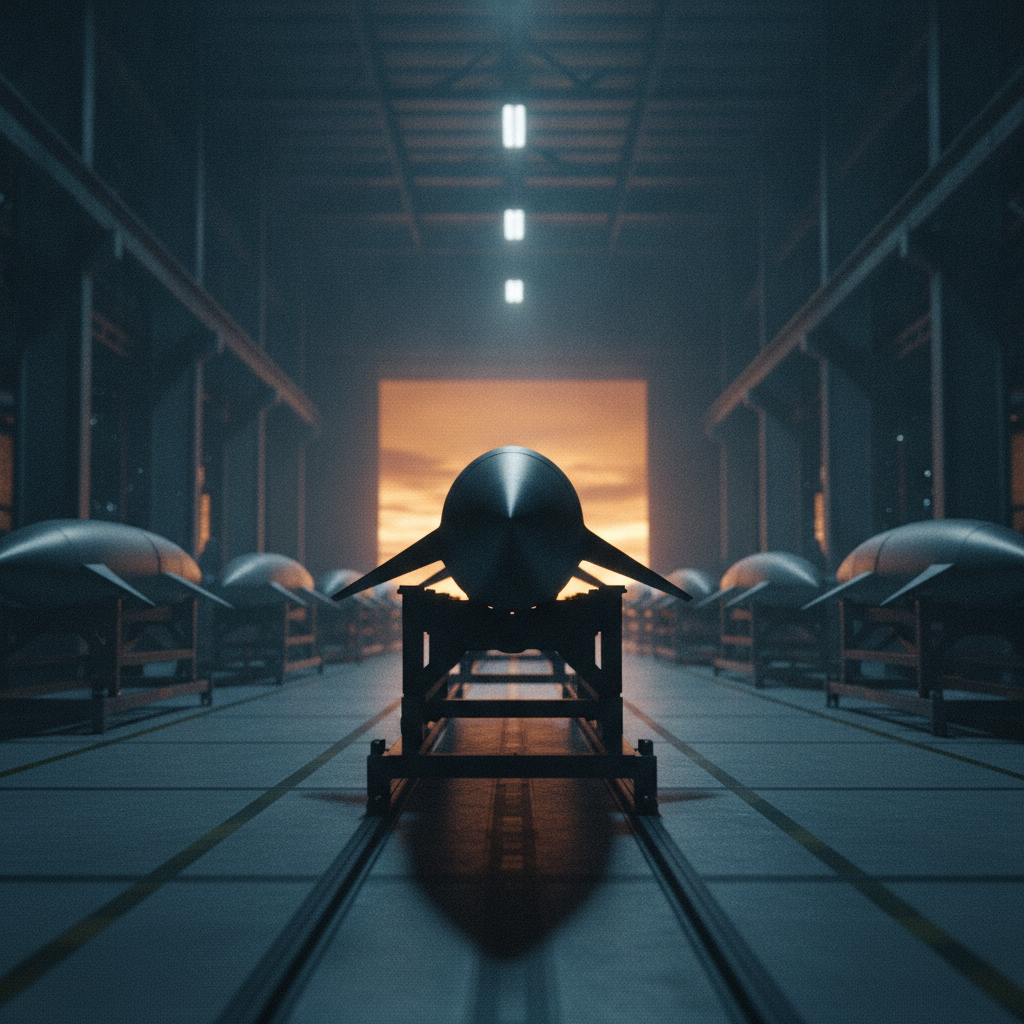
[1]
The round was co-led by JPMorganChase's Strategic Investment Group, Andreessen Horowitz, and funds managed by Carlyle, with T. Rowe Price Associates joining as a new investor. [1] Castelion says it has secured more than $500 million in U.S. military contracts over the past 18 months, with the Navy as its main customer — awarding about $50 million in February to advance Blackbeard toward an early operational capability, followed in April by a roughly $105 million award to integrate, test, and certify the weapon on the F/A-18E/F Super Hornet. [1]
Blackbeard is expected to cost roughly $384,000 per missile, compared with millions or tens of millions of dollars for some existing U.S. hypersonic weapons. [1] The Pentagon in May signed a framework agreement contemplating a two-year Blackbeard production contract with a minimum production rate of 500 missiles annually following successful testing and validation, with initial fielding of Blackbeard targeted for 2027. [1]
The playbook is familiar — apply consumer-tech capital velocity and vertical integration to defense manufacturing — but the stakes here are markedly different from the usual startup pitch.
Castelion was founded in 2022 by Bryon Hargis, Sean Pitt, and Andrew Kreitz, and has applied elements of SpaceX's development model — vertical integration, frequent hardware testing, and designing products for high-rate manufacturing — to missile production. [1] The company still needs to demonstrate it can sustain its promised production rates and costs as manufacturing moves beyond prototypes. [1]
If Castelion hits its cost and cadence targets, the economics of long-range hypersonic strike shift — and so does the Pentagon's procurement calculus.