COMAC's 10-Fan Electric Jet Emerges From the Shadows
Photos of a full-sized CE-25A demonstrator raise fresh questions about how far China's all-electric regional aircraft program has actually come.
By The Defense Desk
A red-and-black aircraft registered B-0EFH has appeared in photographs circulating online, bearing COMAC and CE-25A markings — and with it, a set of questions that China's state aerospace establishment has not yet answered. [1] The images suggest a full-sized demonstrator of the CE-25A, a 19-seat all-electric commuter aircraft developed by the Commercial Aircraft Corporation of China, exists in physical form. [1] What it has done in that form remains unclear.
COMAC first presented the CE-25A concept at the China International Import Expo in Shanghai in November 2023, describing it as a commuter aircraft intended for short- and medium-distance passenger transportation and business aviation. [1] Published design specifications called for a cruising speed of approximately 400 kilometers per hour and a range of around 400 to 500 kilometers. [1] For context, the Beechcraft 1900 — a comparable 19-seat twin-turboprop — achieves a range of around 700 kilometers and a cruising speed of approximately 520 kilometers per hour. [1]
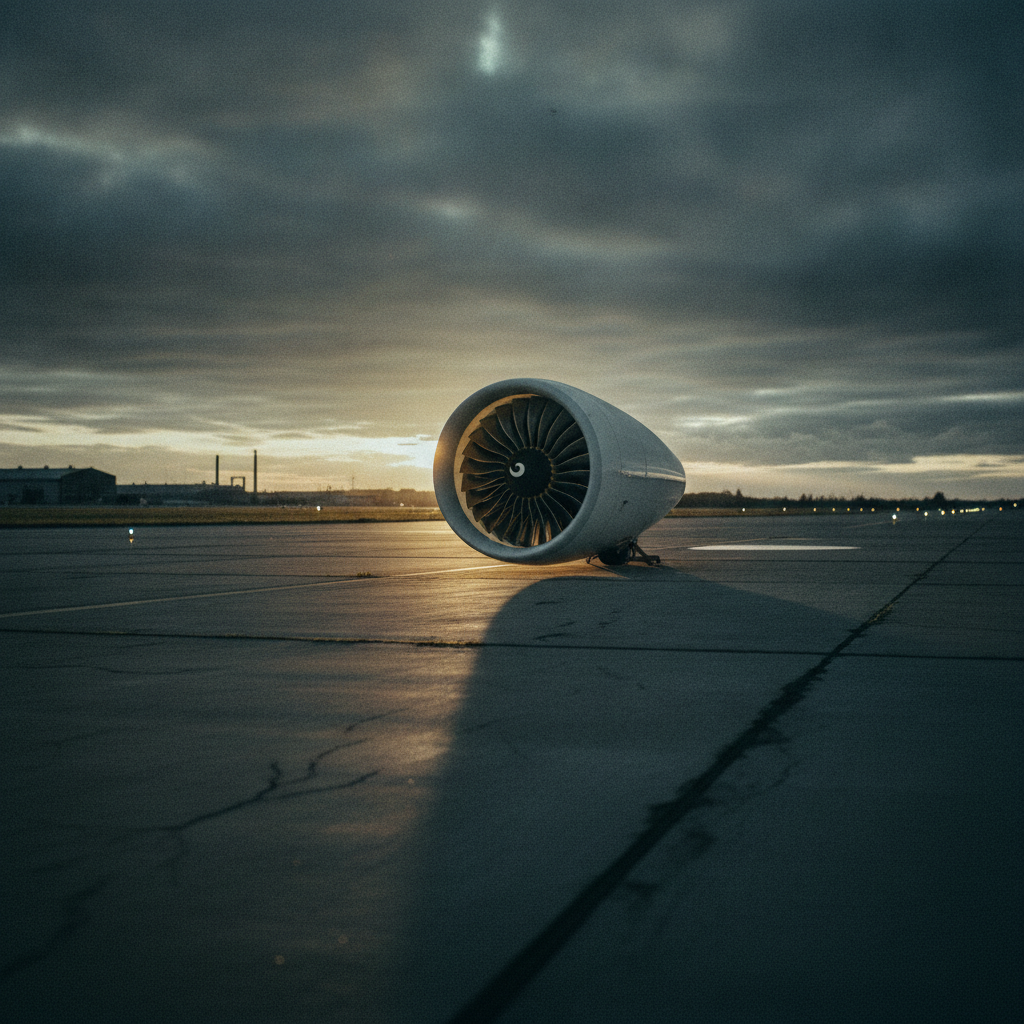
The CE-25A's most distinctive feature is its propulsion architecture: 10 electrically driven ducted fans integrated into the wing structure, rather than the two or four turboprops that define conventional regional aircraft. [1] Aviation Week has reported that COMAC's 19-seat all-electric regional aircraft uses ducted-fan distributed electric propulsion integrated into the wing — a configuration that offers designers greater flexibility in how thrust is generated and tied to the airframe. [1] [2] Aerodynamic benefits are possible depending on configuration, and electric motors can simplify certain aspects of propulsion-system design relative to turbine engines. [1]
Those advantages arrive with significant engineering debt. Batteries remain far less energy-dense than aviation fuel, placing hard limits on range, payload, and endurance. [1] High-power electrical systems require careful thermal management, and integrating 10 propulsion units raises reliability, maintenance, and flight-control challenges that a conventional twin-engine aircraft simply does not face. [1]
The photographs also introduce a continuity problem. In 2023, COMAC referred to experimental aircraft verification flight work involving a scaled demonstrator — yet the aircraft in the new images is full-sized. [1] There may be an unseen subscale demonstrator that has already flown, a missing link in the public record. [1] The images appear to have first been shared by Chinese automotive blogger Han Lu on October 28, and while the source cannot be independently verified, examination using AI image-analysis models found no major indications they were artificially generated. [1]
The CE-25A does not exist in isolation. Distributed electric propulsion for regional aviation is a live competition across continents, and every program — however different in approach — is working against the same physics.
France's AURA AERO is developing ERA, a 16- to 19-seat hybrid-electric aircraft built around eight electric motors and two turbogenerators, advertising a range of approximately 1,500 kilometers — three times the CE-25A's published target. [1] Sweden's Heart Aerospace pursued the ES-19, a 19-seat battery-powered commuter with a proposed range of approximately 400 kilometers, but the company subsequently moved away from that concept toward larger hybrid-electric aircraft. [1] Europe's UNIFIER-19 research effort examined 19-seat zero-emission concepts using distributed electric ducted fans, with some variants exploring hydrogen fuel cells rather than batteries. [1]
COMAC brings one structural advantage to this field: China's substantial battery-manufacturing industry. [1] In 2023, the company announced cooperation with battery manufacturer CATL and Shanghai Jiao Tong University on research related to battery-powered aircraft concepts, though the precise relationship between that work and the CE-25A is not clear. [1] Adapting batteries developed for road vehicles to the demands of sustained flight remains a separate and demanding engineering challenge. [1]
Whether the CE-25A ever carries a paying passenger matters less than what it teaches. Programs at this stage are less about products and more about what the engineers learn on the way.
The CE-25A has been presented strictly as a civilian aircraft, and no public evidence suggests military intent. [1] But distributed propulsion research — advances in electric motors, power distribution, thermal management, and multi-unit flight control — feeds into a broader capability base. [1] COMAC's best-known products are the C919 narrowbody and ARJ21 regional jet; the CE-25A sits at a different edge of the portfolio, one where the outcome is uncertain but the direction is deliberate. [1]