Congress Moves to Cap Navy's Foreign Shipyard Ambitions
The Senate Armed Services Committee wants to rein in presidential waiver authority—and limit offshore builds to fuel ships and ro-ro vessels.
By The Defense Desk
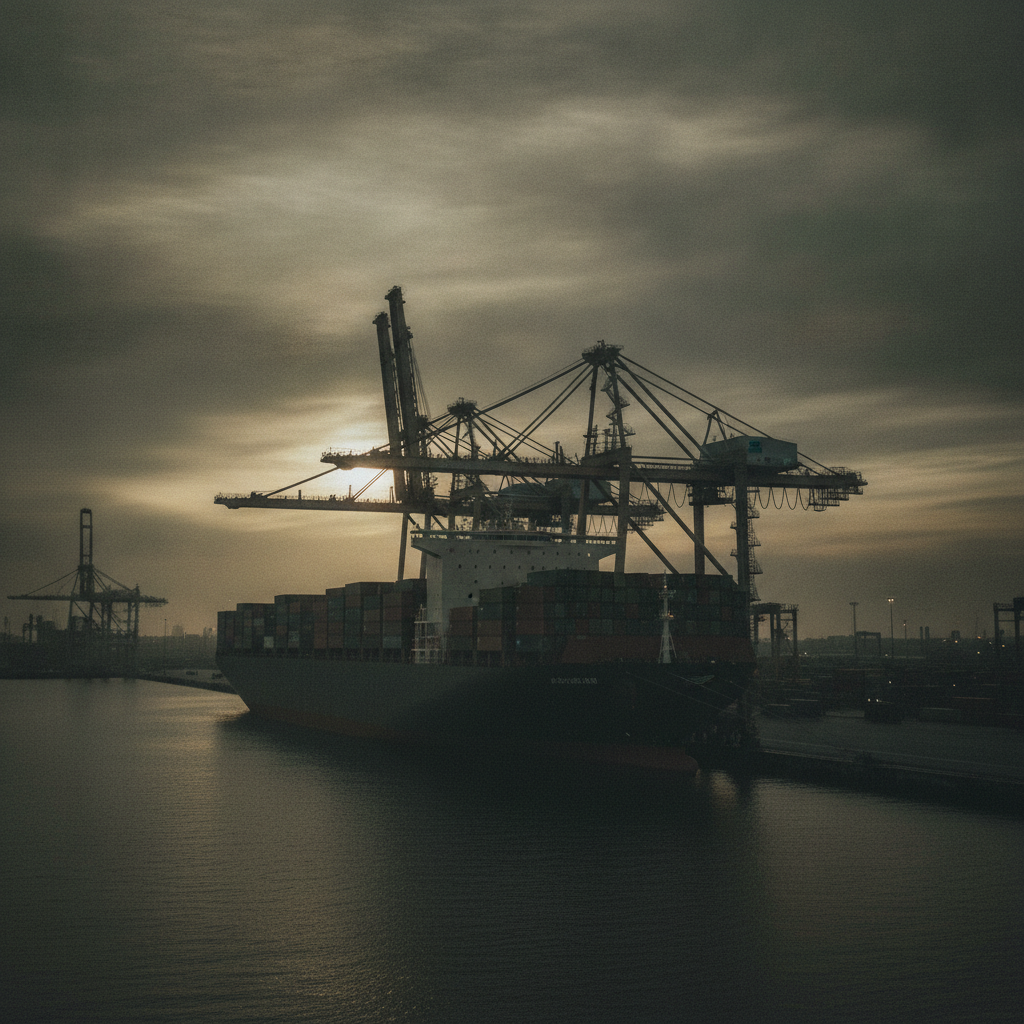
The Trump administration's plan to build U.S. Navy warships in allied yards has run into a wall on Capitol Hill. The Senate Armed Services Committee's markup of the Fiscal Year 2027 defense policy bill seeks to strip the presidential waiver authority in Title 10 section 8679—the provision that would let the president approve offshore ship construction under a vague description of 'national security interest.' [1]
Under the proposed language, the defense secretary may arrange to construct no more than two vessels per class in an allied foreign shipyard—and only for a narrow category of ships. [1] 'Covered vessels' in the markup are limited to bulk fuel vessels and roll-on/roll-off ships, leaving combatant ships firmly off the offshore-build menu. [1]
The restrictions arrive with a reporting burden attached. [1] Critical mission systems, command and control equipment, and secure communications must be installed in the United States or a secure allied facility. [1]
[1] The idea was to extend that logic to auxiliary naval vessels, with allied shipbuilders taking on initial hulls while foreign direct investment flows into U.S. yards for subsequent ships. [1]
A Senate Majority official told the U.S. Naval Institute that the approach would allow allied yards to 'build up to two overseas, which would be concurrent with foreign direct investment into U.S. yards for subsequent ships to be brought, including their supply chain, and other guardrails.' [1] The committee's markup does not kill that logic entirely—it codifies it, narrows it, and surrounds it with conditions.
The tension here is familiar: executive ambition meets legislative specificity. When speed and scale are the goals, Congress tends to want proof, process, and paper trails—especially when construction happens beyond American shores.
The numbers driving the urgency are stark. The Navy currently operates over 290 battle force ships, well short of the 355 vessels required by Navy requirements by law. [1] According to President Donald Trump's proposed $1.[1] Currently, only 10% of shipbuilding takes place at distributed sites; the Navy wants that figure at 50% to increase flexibility, reduce reliance on legacy shipyards and accelerate delivery. [1]
That kind of gap between current capacity and stated ambition is exactly what makes the foreign-yard debate combustible. Domestic yards are congested; allied yards are available. But availability is not a defense policy, and Congress is in the business of making that distinction formal.
The markup's additional requirement—that foreign construction must demonstrably deliver vessels faster than domestic yards, or provide a 'material benefit to readiness or force posture'—sets a measurable bar the Pentagon will need to clear with evidence, not assertion. [1] Whether that bar is achievable for even the narrow class of auxiliary vessels the bill permits remains to be seen.
The final shape of the National Defense Authorization Act is still months away, and the House has its own views. But the Senate's move signals a clear posture: allied shipyards can supplement American capacity, but only under conditions tight enough to keep Congress in the loop—and the president's waiver pen in the drawer.