Cygnus CRS-25 Heads to ISS With Cancer and Muscle Research
Northrop Grumman's 25th resupply run carries DNA-inspired drug-delivery particles, muscle-loss therapeutics, and a compact radiation sensor.
By The space-quantum Desk
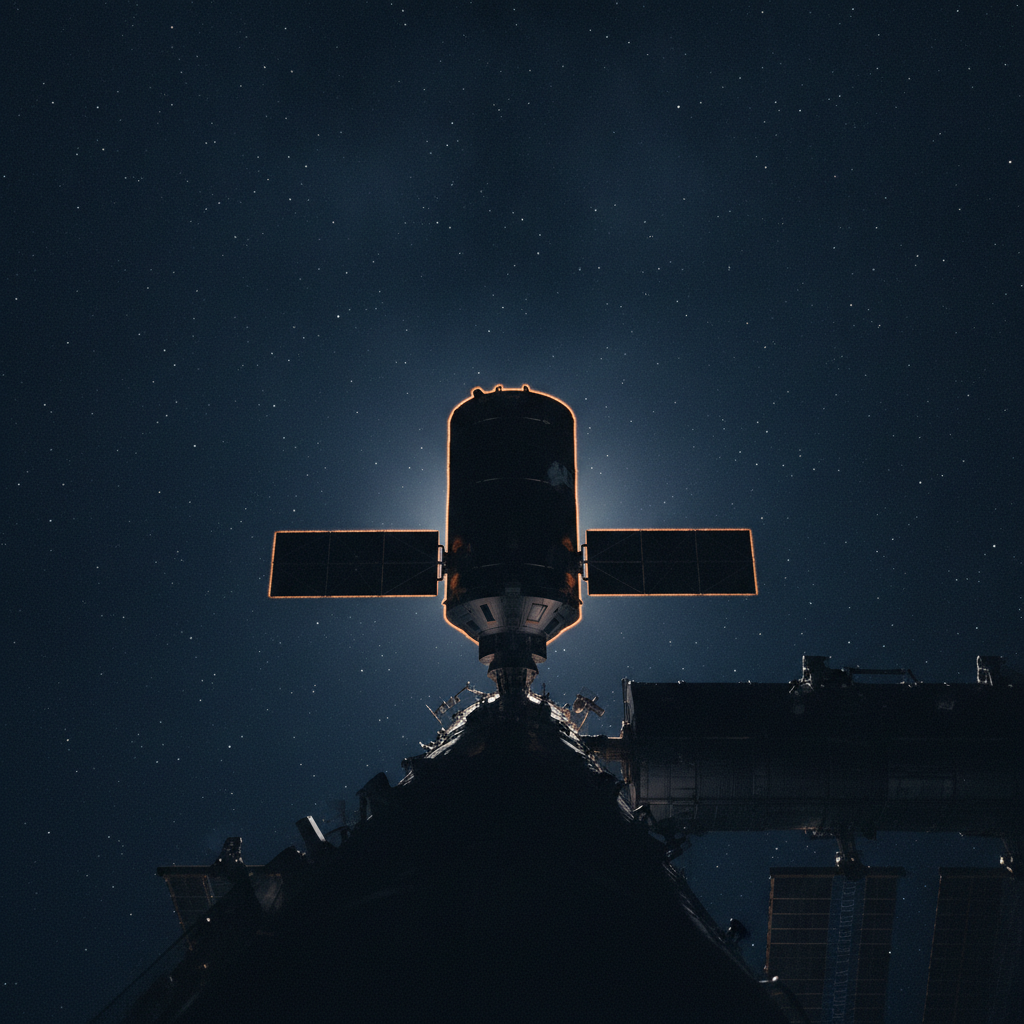
A Northrop Grumman Cygnus XL spacecraft is scheduled to lift off no earlier than 10:49 a.m. EST on November 29 from Space Launch Complex 40 at Cape Canaveral Space Force Station, riding a SpaceX Falcon 9 to the International Space Station with NASA science investigations, supplies, and equipment. [1]
[1] Once it arrives, astronauts will use the Canadarm2 robotic arm to capture Cygnus and install the spacecraft to the Unity module's Earth-facing port for cargo unloading. The spacecraft is expected to remain docked until May 2027. [1]
The headline science payload is hardware designed to manufacture tiny, DNA-inspired particles in microgravity — particles that could improve drug delivery for cancer and osteoarthritis. [1] A companion investigation aims to predict whether a patient's cancer is likely to spread to other parts of the body, a capability that could guide treatment decisions on the ground. [1]
Cygnus will also carry human muscle cells and medications to test therapeutics for muscle loss associated with spaceflight and aging on Earth — two problems that share enough biology to make the ISS a productive laboratory for both. [1] Rounding out the manifest is a compact radiation sensor designed to improve crew safety on future missions. [1]
The pattern here is deliberate: orbit as a proving ground, not a destination in itself. Microgravity strips away the noise of terrestrial biology, letting researchers isolate variables that would take years longer to untangle in a ground-based lab.
Each resupply mission delivers scientific investigations spanning biology and biotechnology, Earth and space science, physical sciences, and technology development and demonstrations. [1] For 26 years, people have lived and worked continuously aboard the ISS, advancing scientific knowledge and making research breakthroughs that are not possible on Earth. [1]
NASA frames the commercial resupply programme as more than logistics: cargo resupply from U.S. companies ensures a national capability to deliver scientific research to the space station, increasing NASA's ability to conduct new investigations aboard humanity's laboratory in space. [1]
That division of labour — industry handles the ferry runs, government pushes the frontier — is quietly reshaping how space science gets funded and prioritised. The resupply cadence keeps orbital biology moving even as the institutional spotlight shifts further out.
Whether the DNA-inspired particles yield a viable drug-delivery platform or the muscle-loss data translates into a treatment, the answers will take time. But the samples need to get off the planet first — and CRS-25 is the ride. [1]
For 26 years, people have lived and worked continuously aboard the International Space Station, advancing scientific knowledge and making research breakthroughs that are not possible on Earth.NASA