Earth as Rehearsal: PANGAEA Turns 10
ESA's field geology programme has trained 19 astronauts across Europe's wildest terrain. Now it feeds directly into Artemis.
By The space-quantum Desk
Three astronauts stand at the lip of a canyon eight kilometres long and 400 metres deep in Italy's Dolomites, staring at 10 billion tonnes of rock transported to the valley since the end of the glacial age — and they are not here to admire the view. [1][2] They are rehearsing the Moon.
ESA's PANGAEA programme, the agency's primary geology training course for astronauts, marked its 10th edition this year with three participants: ESA astronaut Pablo Álvarez Fernández, NASA astronaut Jasmin Moghbeli, and Kimiya Yui of the Japanese space agency. [1] Over three intensive weeks, the cohort moved through the Bletterbach canyon in Italy, the Ries crater in Germany, and the volcanic landscapes of Lanzarote in Spain — each site chosen to replicate conditions astronauts will meet on the lunar surface.
The Bletterbach stop is particularly pointed. [2] The region is part of the Dolomites UNESCO World Heritage. [2]
At the Ries crater in Germany, the crew studied the evidence left by an asteroid impact and applied their growing knowledge to the Moon's cratered surface. [1] The final week in Lanzarote inverted the programme's balance: the astronauts spent more time on field traverses, making their own observations and decisions while a science team supported them remotely. [1]
What PANGAEA is really teaching is not just rock classification. It is a way of seeing — a trained instinct for reading landscapes that were once alive, once wet, once violent, and now hold clues to planetary histories far older than anything human.
"This year we covered a full working cycle, from training individual skills to a deliberate transition to crew operations," said Loredana Bessone, PANGAEA's project lead. [1] "Before heading into the field, the astronauts had to make a plan with the scientists, and afterwards they reviewed the geological results together." [1] The shift matters: on a lunar surface, seconds count, and the crew must triage samples without waiting for Earth-side consensus.
Since 2016, PANGAEA has provided 19 astronauts from four space agencies with a comprehensive set of geology skills and lunar lessons. [1] It now sits inside the formal training prerequisites for Artemis Moon missions. [1] Samuel Payler, PANGAEA's deputy project lead, frames the evolution plainly: "What started as a new astronaut geology course has grown into a programme combining planetary science, field geology, real exploration and crew operations." [1]
Katherine Joy, PANGAEA instructor and professor of lunar and planetary science at the University of Manchester, puts the stakes in geological terms: "Every piece of the Moon we can lay our eyes and hands on is a time capsule and a treasure trove of the history of our Solar System. They are not just rocks. Every sample is critical to completing the puzzle." [1]
This edition carried an additional weight. It was dedicated to Riccardo Pozzobon, a PANGAEA instructor who passed away one year ago while taking part in a scientific expedition in Alaska. [1] His name sits at the centre of a programme that has always insisted fieldwork is irreplaceable — that the body must know the terrain before the spacesuit goes on.
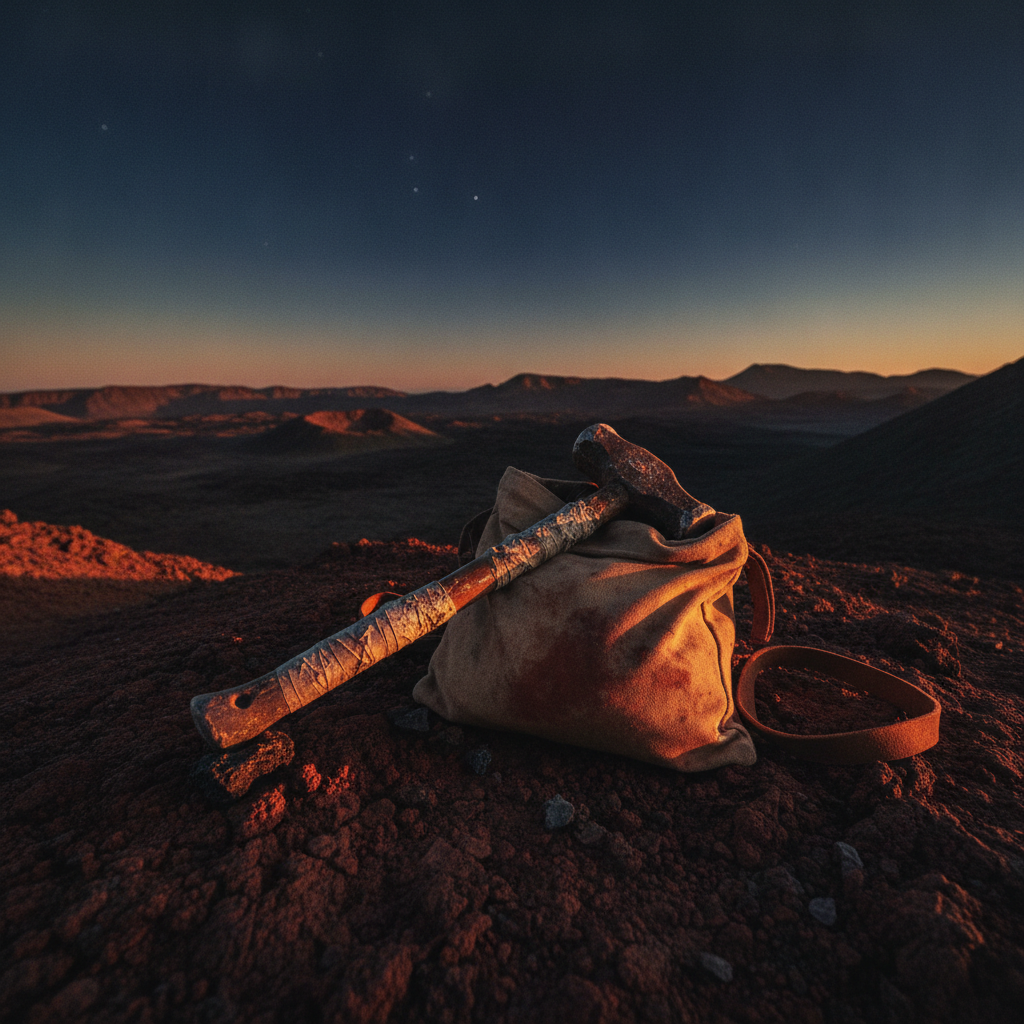
There is something quietly radical about the premise: that the best preparation for another world is a deeper encounter with this one. The canyon, the crater, the lava field — each becomes a grammar lesson in a language astronauts will need to speak fluently, fast, and far from home.
Pablo Álvarez Fernández described experiencing the 'PANGAEA effect' — a geological filter that changes how one sees the world. [1] "We became the eyes and hands of scientists in space, speaking their language and understanding how to find relevant samples," he said. [1] If Artemis puts boots on regolith, those boots will have stood here first.