Europe's Space Ambitions Come to a Head in Paris
At a summit convened by Macron, ESA is asking Europe's leaders a hard question: how much does the continent actually want to lead in space?
By The space-quantum Desk
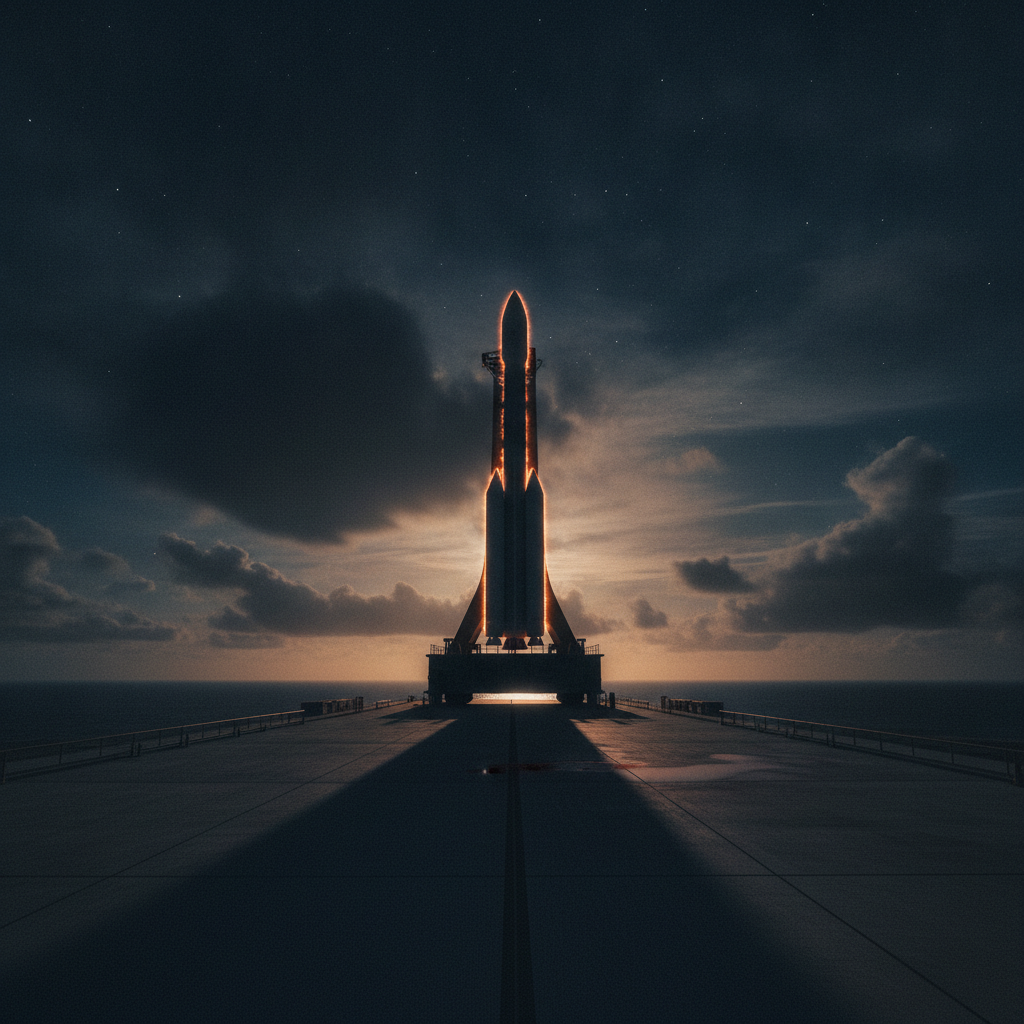
On 9 and 10 September, Paris will host the International Space Summit — a gathering of world leaders, ministers, industry representatives and astronauts convened at the invitation of French President Emmanuel Macron. [1] The agenda is deceptively simple: Europe must decide how much it wants to matter in space.
ESA Director General Josef Aschbacher is expected to frame the stakes plainly during the Summit's exploration session on the evening of 9 September. Human activity in low Earth orbit is entering a new phase, he will tell delegates; the Moon is becoming a destination for sustained operations; and the foundations for future missions to Mars are already being laid. [1] These are not aspirational talking points — they describe a competitive landscape that is moving with or without European participation.
The question at the centre of the summit is not purely technical. It is fundamentally political — about appetite, about will, and about what a continent of interconnected democracies is prepared to commit to when the infrastructure of the next century is being built overhead.
Speaking ahead of the Summit, Aschbacher was direct: "The International Space Summit in Paris is an important opportunity to build momentum around Europe's long-term vision for space exploration in a rapidly changing world. The European Space Agency has a pivotal role to play: giving Europe the capabilities, technologies and confidence to think bigger, move faster and pursue its own ambitions." [1] The language is measured, but the subtext is clear — Europe's window is not indefinitely open.
The mechanics of ESA's role are worth understanding. The agency's job is to present technically sound, scalable and affordable options to Member State governments — not to dictate strategy. [1] Strategic direction belongs to the Member States themselves. That constitutional arrangement has served ESA well as a multilateral science institution, but it also means that moments like this summit are rare: occasions when political will and technical readiness are both present in the same room at the same time.
Among the pathways Aschbacher is expected to outline are options that would strengthen Europe's autonomy of action in space transportation and exploration, while preserving the international partnerships that remain central to its approach to space. [1] That dual emphasis — independence and collaboration — reflects the tension Europe has managed for decades in aerospace: it cannot match the sheer capital outlay of the United States or the state-directed speed of China, but it can build credible, indispensable capabilities that give it a seat at every consequential table.
Autonomy in space is not the same as isolation. The most durable space programmes in history have been built on layered alliances — scientific, commercial and diplomatic. Europe's challenge is to secure the former without sacrificing the latter, at a moment when both are under pressure.
The Summit is explicitly timed to build momentum ahead of a dense sequence of institutional decisions. [1] Together, these processes will help shape Europe's role, competitiveness and influence in space for decades to come. [1] Paris is the political overture to a long and complicated score.
The Summit will bring together a significant number of foreign delegations in Paris at the invitation of the President of the French Republic Emmanuel Macron, alongside his Special Envoys, ESA astronaut Thomas Pesquet and European entrepreneur Hélène Huby — a signal that France views space leadership as a matter of national and continental prestige, not merely scientific interest. [1]
ESA representatives are scheduled to participate across multiple sessions, covering not only exploration but also Earth observation, secure connectivity, resilience, science and industrial competitiveness. [1] That breadth matters. Space is no longer a single-use infrastructure. The same satellite constellations that enable lunar mission telemetry also underpin financial clearing systems, agricultural monitoring and military communications. What Europe decides about its space posture over the next three years will echo through sectors that have nothing to do with rockets.
The difficulty is that the benefits of space investment are diffuse and long-dated, while the costs are immediate and visible. Persuading elected governments to commit at scale requires exactly the kind of summit moment that Paris is designed to provide — a convergence of narrative, urgency and institutional readiness.
In this rapidly evolving environment, the capabilities developed today will determine who participates, who influences decisions and who helps shape the future architecture of human presence beyond Earth — with implications far beyond exploration itself for Europe's economy, technological leadership, security and long-term competitiveness. [1] That formulation, drawn from the framing of the Summit itself, is as close as a technocrat gets to an ultimatum.
The summit's structure reflects a deliberate attempt to move beyond the usual conference format. World leaders, not just space agency heads, are in the room. The exploration session is positioned as an evening event — informal enough to allow real conversation, formal enough to carry political consequence. [1] Whether that design produces genuine commitment, or simply a well-photographed communiqué, is the question that every serious observer will be watching.
Europe has spent a generation being thoughtful about space. The next era will reward those who are also decisive. The gap between those two qualities is where entire industrial sectors — and geopolitical standing — can be lost.
By December 2026, when ministers reconvene in Rome, the decisions seeded in Paris will either have taken root or quietly expired. [1] The Moon will not wait for a third ministerial cycle. Neither will the competitors who are already building the architecture Europe hopes to influence.