FORT Robotics Acquires Mapless AI to Close the Trust Gap
The deal adds remote teleoperation and onboard perception to FORT's Trust Platform, pushing supervised autonomy into airports, construction sites, and beyond.
By The Robotics Desk
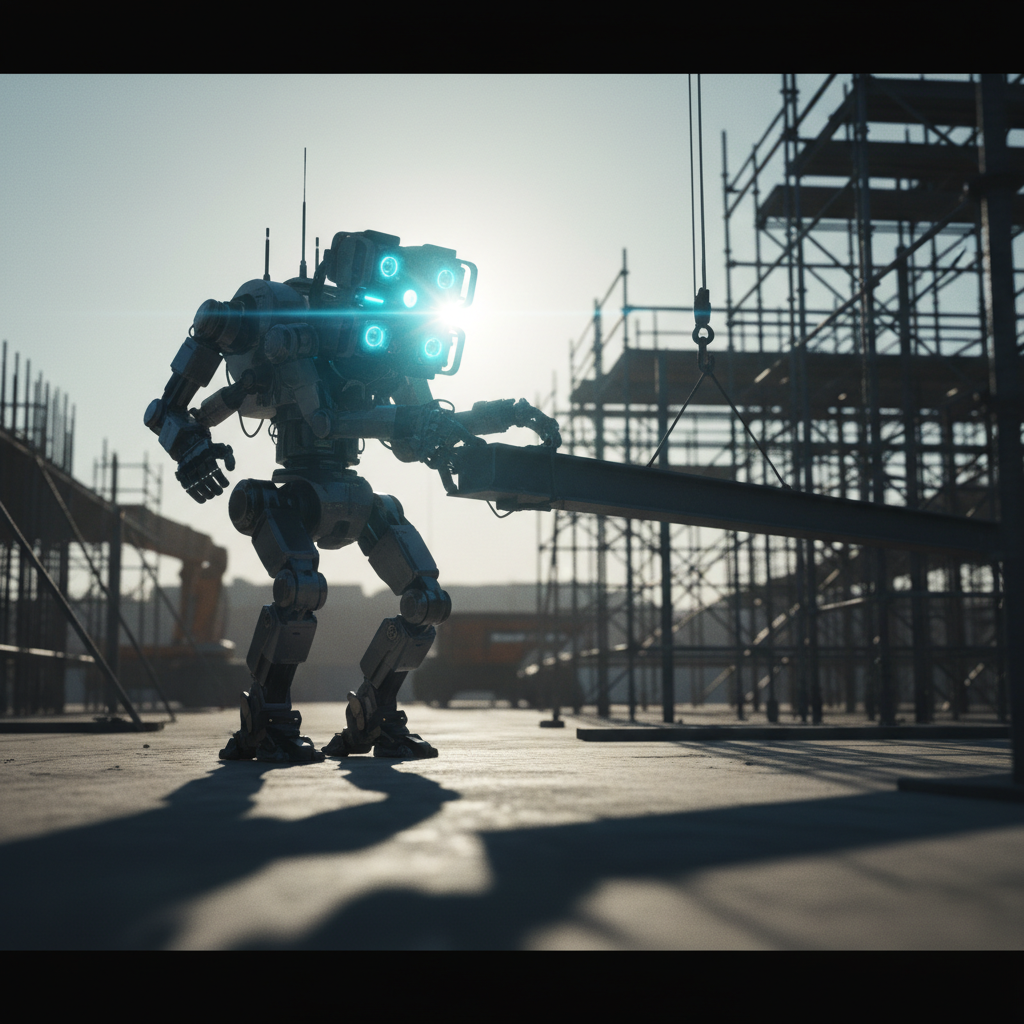
The hardest problem in industrial robotics right now is not making machines move — it is making them trustworthy enough that a fleet manager will let them operate near people. FORT Robotics is betting an acquisition can close that gap. The safety platform has acquired Mapless AI, a Boston- and Pittsburgh-based developer of teleoperation and onboard active safety technology, folding both capabilities into its Trust Platform. [1]
Founded in 2018, FORT has spent years building a safety layer for physical AI across agriculture, construction, warehousing, and defense. To date it has secured 27 patents and deployed more than 19,000 units to a global base of over 600 customers. [1] The Mapless acquisition now extends that stack in two directions: upward into remote human oversight, and outward into unstructured environments where FORT's industrial-grade controls have not traditionally operated.
Two specific technologies transfer with the deal. [1] The second is Onboard Active Safety, a perception system that enables machines to actively detect, anticipate, and respond to their environments in real time. [1] Together, a single off-site operator can safely monitor and intervene across multiple vehicles from anywhere, completely decoupling human workers from high-risk environments while keeping meaningful oversight intact. [1]
Mapless was not a purely theoretical safety shop. [2] That field experience in airports and city streets — messy, people-filled, legally consequential spaces — is precisely what FORT's existing industrial customer base lacks access to. Mapless' proprietary technology provides optimized, low-latency connectivity between remote operators and fleet vehicles, and its retrofits are designed to be installed on existing vehicles, with the temporary installation fully reversible and incurring no cosmetic damage. [2]
FORT CEO Samuel Reeves framed the deal as a response to a specific tension building inside the industry. "The robotics industry is at a critical crossroads where impressive demos are everywhere, but scalability remains rare," he said. [1] The combined capabilities now span the full safety stack — from safety-certified machine control, to active safety, to human-in-the-loop control that augments physical AI. [2]
There is a pattern worth noticing here. The sector keeps colliding with the same wall: machines that perform well in controlled conditions but fall apart when the context gets complicated. The answer emerging from multiple corners of the industry is not more autonomy in isolation — it is layered oversight, with humans kept close enough to intervene but far enough away to stay safe.
Mapless the co-founder Philipp Robbel pointed to the underlying logic: "For robots to work closely with humans and valuable infrastructure, they must be smart enough to understand and anticipate risk." [1] The acquisition, he argued, lets Mapless bring its safety-first vision to a much larger platform. [1]
The integration also addresses a very specific operational request FORT has been hearing from enterprise fleet managers: the ability to maintain a reliable human-in-the-loop safety net for autonomous operations without placing workers in high-risk zones. [2]
What FORT is assembling looks less like a robotics company and more like an insurance architecture — the kind of infrastructure that makes deployers confident enough to commit capital at scale. That shift, from impressive demo to deployable system, is where the real competition in physical AI is about to be fought.
FORT has indicated it will target expansion into construction, logistics, and defense as the integrated platform rolls out — three sectors with a long list of reasons to embrace the kind of proactive safety frameworks the combined company now offers. [1]
Safety is an accelerator rather than a bottleneck.Samuel Reeves