Four Centuries, One Name: Galileo's Long Arc
ESA and Florence's Museo Galileo are building an exhibition that traces satellite navigation back to a telescope and four moons.
By The space-quantum Desk
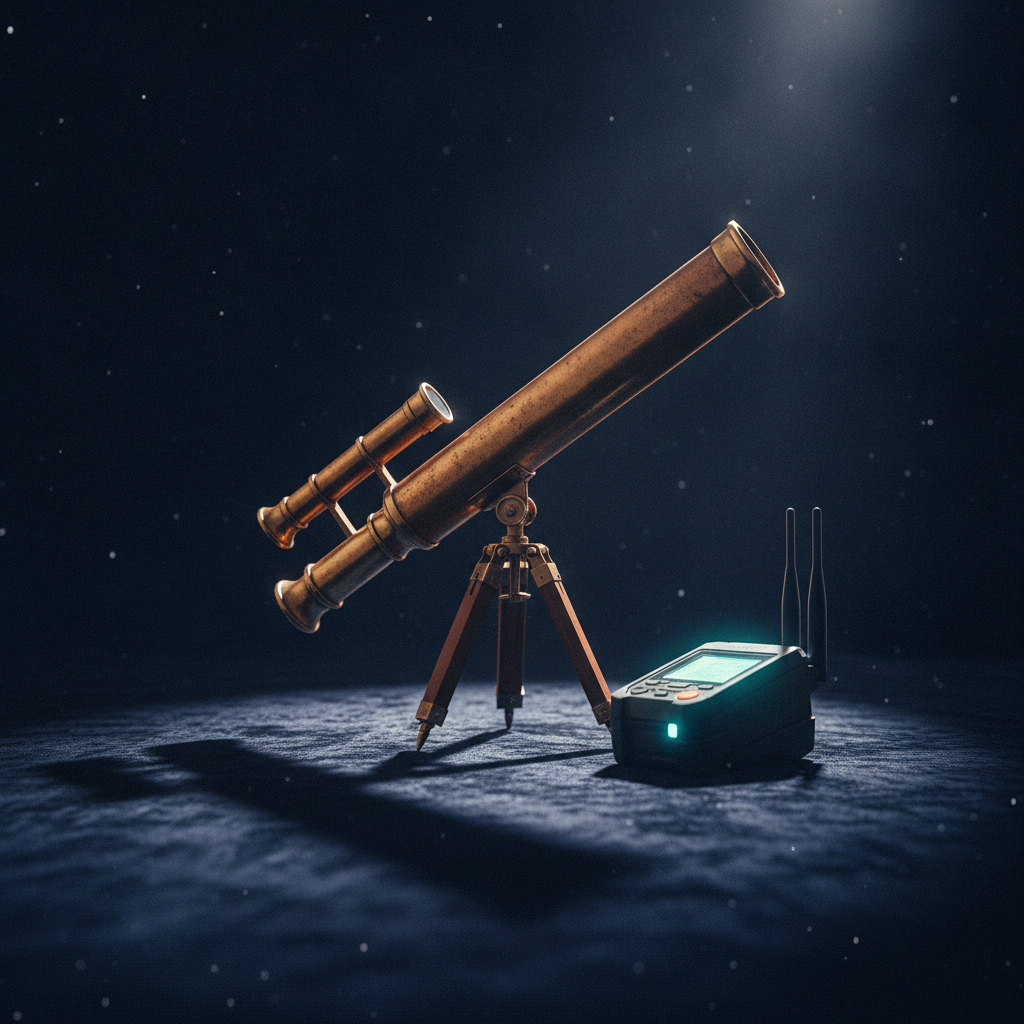
In December 2027, Museo Galileo will open an exhibition tracing the surprising and far-reaching connections between the pioneer astronomer Galileo Galilei and today's most precise satellite navigation system. On 25 June 2026, Javier Benedicto, ESA Director of Navigation at the time, and Roberto Ferrari, Museo Galileo Director, signed an agreement to develop the exhibition. [1]
The intellectual thread is specific. Galileo Galilei's observations of Jupiter's four largest moons inspired a technique used by cartographers to determine longitude; his advancements in physics, timekeeping and scientific instrumentation laid the groundwork for more accurate navigation. [1] The EU eventually named its satellite constellation after him — a tribute, not a coincidence.
Today, the Galileo system serves billions of users worldwide and has been in Open Service since 2016. [1][2]
What the exhibition promises is rarer than another tech showcase: a legible line between curiosity and infrastructure, between a man pointing a lens at the sky and a constellation quietly orienting a continent.
Jointly curated by ESA, the Commission, and Museo Galileo, the show will combine original instruments, documents and objects from the museum's collection with exclusive audiovisual productions, interactive experiences, and technological equipment and models contributed by ESA. [1] The frame is deliberate — conceived as a journey between past and future.
Four hundred years of incremental physics, compressed into a Florence exhibition hall. The satellites overhead already know exactly where you're standing.
It is the story of an idea that after four hundred years becomes reality.Roberto Ferrari