Four Experiments, One Rocket, Zero Gravity
NASA's CRS-35 mission packs brain organoids, fungal crops, antibiotic-resistant bacteria, and a portable lab into a single SpaceX resupply run.
By The space-quantum Desk
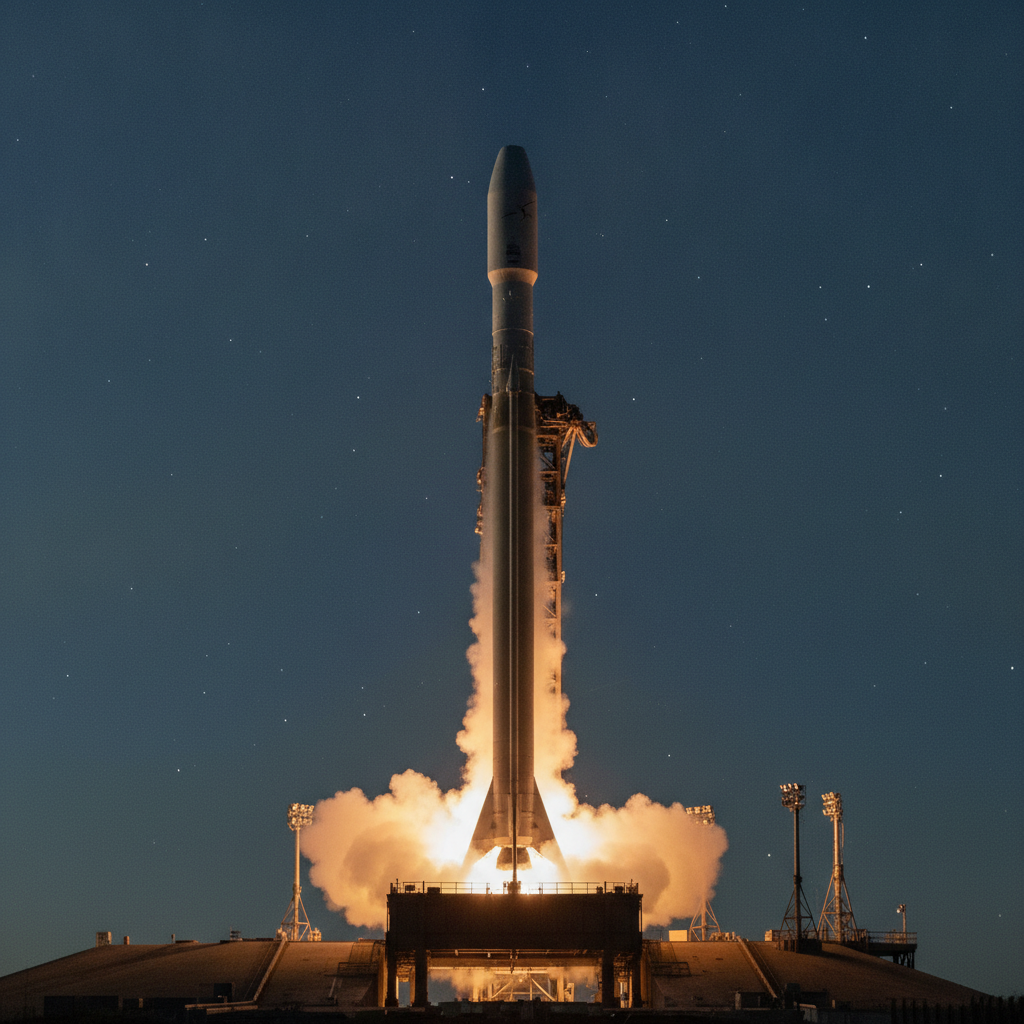
When SpaceX's 35th Commercial Resupply Services mission lifts off from Cape Canaveral Space Force Station in Florida, it will carry four biological investigations that treat the International Space Station not as a destination but as an instrument — a place where microgravity does to living tissue what no Earth-bound lab can replicate. [1]
The most conceptually striking of the four is also the most compact: small, lab-grown models of the human brain, sent to the orbiting laboratory for five weeks. [1] Researchers will compare those tissue models against identical ones kept on Earth to determine how a short spaceflight affects the human brain at the cellular level. [1] The goal is not merely astronaut welfare — it is a deeper map of how the brain responds to stress, with implications that stretch from Moon missions to neurological medicine on the ground.
A second investigation tests whether crop diseases develop faster and more severely in microgravity. The experiment compares molecular and structural changes between Earth-grown and space station-grown plants infected with a disease-causing fungus. [1] If microgravity accelerates infection, the findings could guide plant breeding on Earth to produce disease-resistant crops and help minimize yield losses in future space agriculture systems. [1] The stakes extend beyond orbit — terrestrial food security researchers are watching.
Space crops provide nutrition, increase dietary variety, and offer psychological benefits for astronauts during extended missions, but they also absorb carbon dioxide, produce oxygen, and recycle water — functions that will become increasingly important as human missions extend farther from Earth. [1] Growing food in space is as much life-support engineering as it is agriculture.
What unites these investigations is a logic that space exploration has always carried quietly: the most hostile environments tend to reveal the most durable truths. Distance and deprivation strip away the noise, and what remains tells you something essential about how living systems hold together — or don't.
The mission also carries the first test of a compact microplate reader that arrived aboard the space station earlier this year. [1] The Commercially Enabled Rapid Space Science initiative experiment tests the device's ability to detect and measure certain biomarkers such as antibodies, antigens, and proteins — meaning scientists can analyze samples aboard the space station and obtain data quickly, rather than wait for the samples to return to Earth for analysis. [1] In a future where resupply windows stretch to months or years, that speed matters enormously.
The fourth investigation is perhaps the most earthward-facing of the set. A precision health study returns for its fourth and final planned stay aboard the station to track how antibiotic-resistant bacteria survive and evolve in microgravity. [1] Astronauts will repeatedly sample surfaces throughout the space station to monitor for drug-resistant organisms. [1] The findings could provide insight into how superbugs develop from the overuse of antibiotics — a global clinical problem that has nothing to do with rockets. [1]
The architecture here is deliberately dual-use: every experiment is designed to protect the people who leave the planet while quietly generating knowledge for the billions who never will. That is a difficult design brief, and it is increasingly the standard against which space science justifies its budget.
[1] CRS-35 is a tidy illustration of that dual mandate — four experiments, each with a toehold in the clinic, the farm, or the pharmacy, all riding a rocket because the station is the only place they can run.
Brain organoids in orbit, fungal infections in freefall, superbugs on a steel surface 400 kilometres up — the ISS has always been a laboratory, but CRS-35 makes the case more clearly than most missions that the best reason to go to space is still, in many ways, to understand what it means to stay on Earth.
Use of the plate reader would allow scientists to analyze samples aboard the space station and obtain data quickly, rather than wait for the samples to return to Earth for analysis.NASA