France Wants to Put the Fog Back in War
Drones have made the front line nearly untouchable. The French Army is betting on decoys, jamming, and frugal AI to restore the art of maneuver.
By The Defense Desk
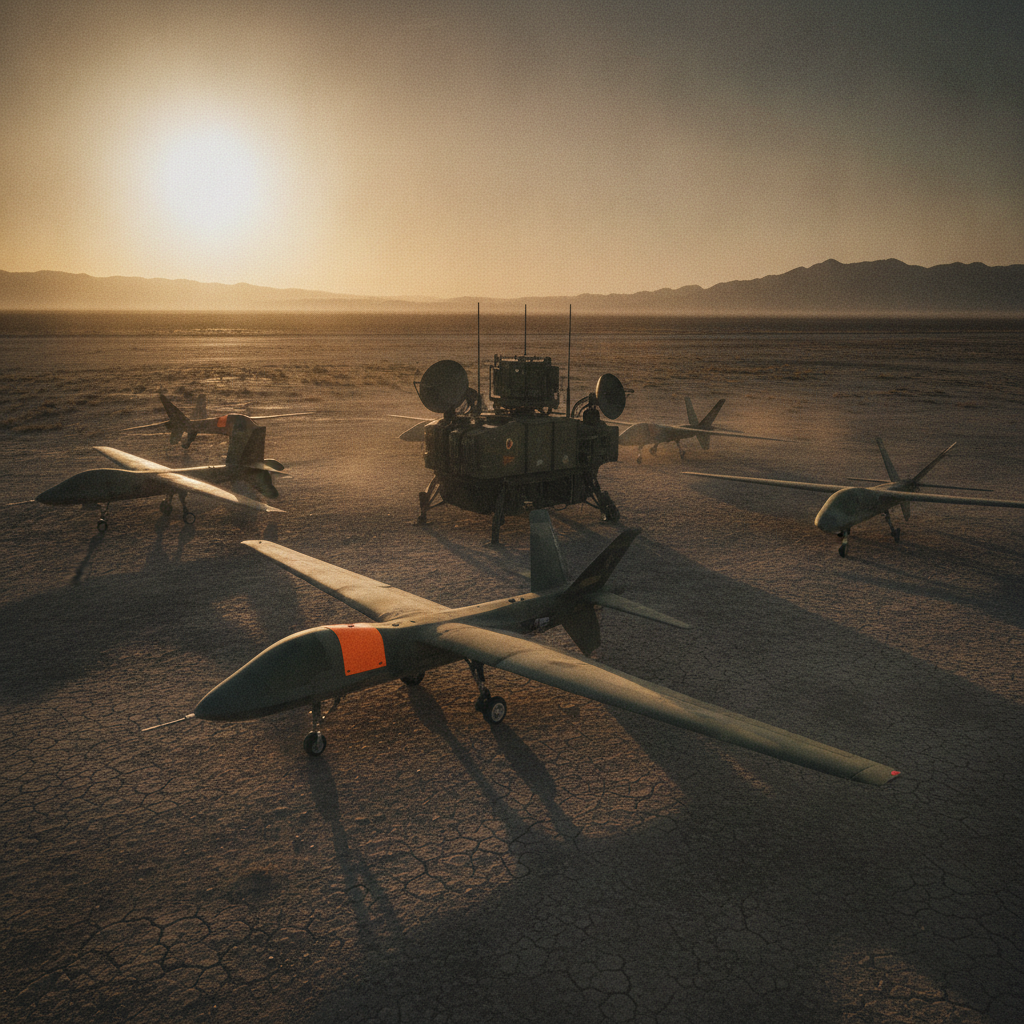
The modern battlefield sees everything — and that visibility is killing offensive warfare. Gen. Bruno Baratz, who heads the French Army's Future Combat Command, told an innovation day in Besançon on Sept. 9 that near-continuous drone observation has created a "zone of death" along the front line where massing forces means exposing them to destruction. [1]
Baratz compared the stalemate to World War I, when artillery and machine guns made offensive maneuver futile or catastrophically costly. Along the Ukrainian front line, neither Ukraine nor Russia can concentrate troops without risking annihilation — the same logic, different weapons. [1]
The French response is a push for what Baratz calls "opacity": physical decoys, electromagnetic jamming, simulated command posts, and multi-spectral image analysis. The 7th Armored Brigade's innovation day displayed inflatable copies of a Caesar howitzer and the VBL light armored vehicle as proof of concept. [1]
Money is flowing to the regiment level. Each French regiment currently receives €150,000 a year for off-the-shelf experiments; the Army's €20 million "subsidiarity credits" account gains an additional €35 million in the 2027 defense budget. Baratz also flagged "frugal artificial intelligence" — AI designed to consume as little energy as possible — as a priority, given that electric power is an area of vulnerability due to the need for intelligence-gathering systems and frontline data hubs that are all power hungry. [1]
The tension here is structural: armies built around top-down procurement cycles are being asked to adapt at the speed of consumer electronics. The side that masters that tempo — not just the technology — may be the one that breaks the stalemate.
Baratz noted the military is "lagging far behind" the civilian sector in bandwidth and data transmission, even as the modern battlefield is organized around data — a gap that the Army's current roster of experimental technologies alone won't close. [1]