France's Inverted Bow Frigate Earns Its Sea Legs
Naval Group's FDI frigate traded a conventional bow for a smoother hull—and proved the skeptics wrong from the Arctic to the Equator.
By The Defense Desk
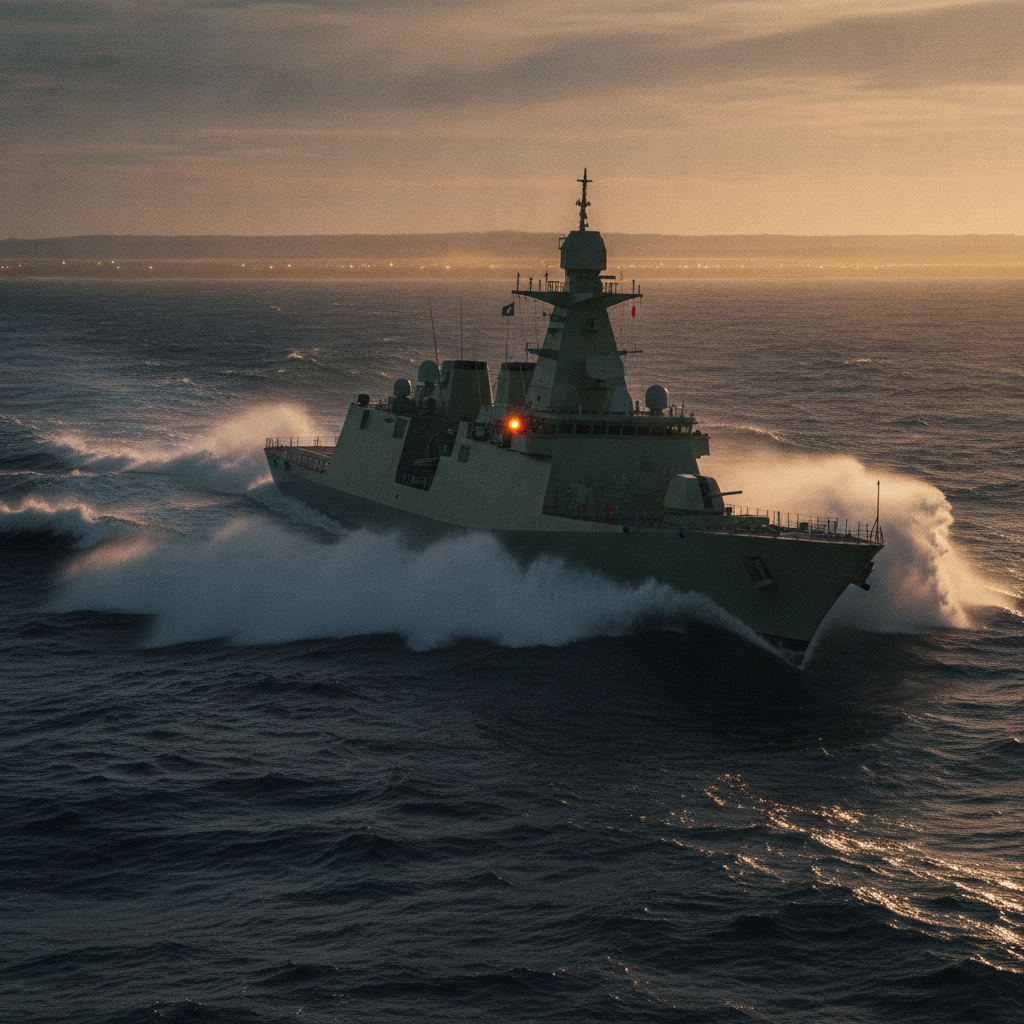
When the French Navy took delivery of the Amiral Ronarc'h in October 2025, its inverted bow raised eyebrows across the naval community. [1] Now, with Sweden having announced plans to buy four of the frigates, the design is converting doubters. [1]
[1]
The numbers bear out the claims. The Amiral Ronarc'h has maintained 20 knots in sea state 6—waves of 4 to 6 meters—and has faced sea state 7, with waves up to 9 meters. [1] The 4,500-metric-ton hull carries the same military capabilities as a 6,000-ton frigate, while Naval Group spent more than a decade on tow-tank trials and hydrodynamic modeling before committing to the form. [1] The inverted bow also delivers a reduced radar profile compared to a flared bow. [1]
[2]
Naval architecture rarely gets a second chance to make a first impression. This bow did—and what was once a source of institutional skepticism is now the organizing logic for an entire design philosophy.
The U.S. Navy's Zumwalt-class destroyers proved the inverted bow could survive a storm of criticism; France's FDI is proving it can survive an actual one. [1]