General Atomics Brings Boeing's Spirit In to Build Combat Drones
GA-ASI taps Spirit Defense as fuselage partner for the FQ-42 Vengeance, as the Air Force races toward a 500-drone CCA fleet by 2032.
By The Defense Desk
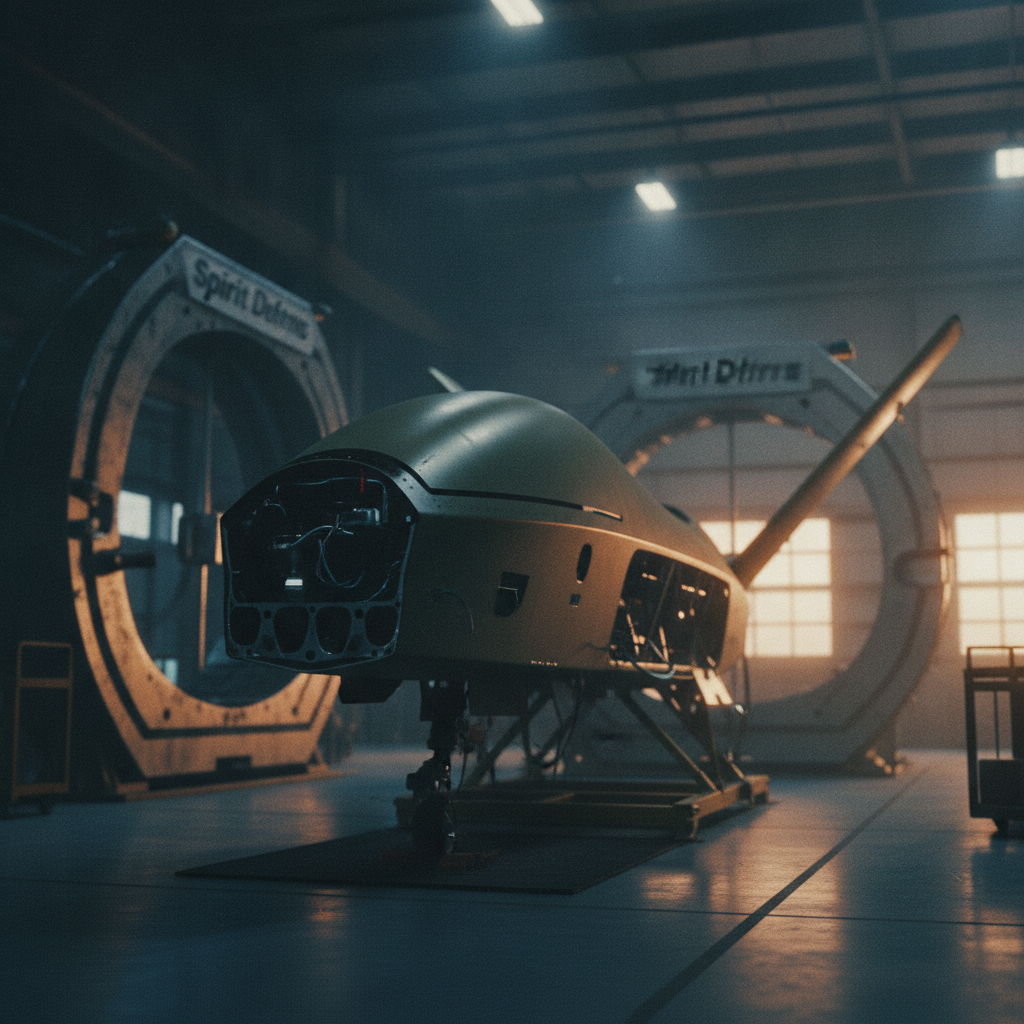
General Atomics Aeronautical Systems, Inc. (GA-ASI) has named Spirit Defense — a Boeing subsidiary headquartered in Wichita, Kansas — as its fuselage design-build partner for the FQ-42 Vengeance Collaborative Combat Aircraft. The announcement was made on 23 October 2026, following GA-ASI's contract win from the U.S. Air Force in June to produce FQ-42. [1][2]
The Air Force wants at least 500 Collaborative Combat Aircraft in inventory by 2032 — a mixed fleet split between the FQ-42 Vengeance and Anduril's FQ-44A Fury, the two designs selected under Increment 1 of the CCA program. [1] A follow-on Increment 2 could add drones with entirely different designs. The volume and pace demanded by that roadmap make solo production by any single prime contractor a practical challenge.
[2] But the FQ-42 is a different production challenge: purpose-built as an uncrewed fighter with a modular design intended to accelerate integration of mission systems and autonomy software. [2] Scaling that quickly enough to hit the Air Force's 2032 target requires manufacturing depth GA-ASI does not carry alone.
Material choices compound the difficulty. [1] Advanced composite and hybrid-structure fabrication is precisely Spirit Defense's core business, and the company brings a track record on military programs including the B-21 Raider bomber. [1]
Spirit's recent history adds a layer of complexity to the partnership. The company was originally a Boeing division before its founding as an independent company in 2005. By the early 2020s it was reporting significant financial losses and quality control lapses; Boeing reacquired it in a multi-billion-dollar deal, a process that began in 2024 and was finalized last year. Boeing has since faced continued challenges in getting the firm back on track. [1]
GA-ASI President David R. Alexander framed the deal as a capacity play rather than a rescue. "With Spirit Defense we add capacity, which is exactly the kind of production resilience our U.S. Air Force customer is looking for with its CCA ramp-up. This kind of partnership represents the scalable industrial base the Air Force and the U.S. Department of War are looking for from industry," he said. [2]
GA-ASI Vice President for Strategy Business Development Mike Shortsleeve put the factory floor itself at the center of the strategic argument. So the ability for companies to be able to manufacture and produce those aircraft in numbers that are needed for the fight rapidly is going to be a key part to going forward in the future." [1] GA-ASI has also been investing in additive manufacturing and advanced robotics to support that ramp. [1]
The teaming logic here extends well beyond one airframe. When production targets are written into national strategy, the supply chain becomes an instrument of deterrence — and its gaps become vulnerabilities just as legible to adversaries as any capability shortfall.
GA-ASI also signaled that the Spirit partnership is not its only industrial move. [2] Meanwhile, GA-ASI is absorbing rising demand for its MQ-9B line, including a recently announced sale to the U.S. Coast Guard. [1]
One caveat hangs over all of it: the Air Force has yet to write the operational playbook for deploying, launching, recovering, and employing CCAs tactically. A full playbook for deploying, launching, recovering, supporting, and otherwise operating CCA-type drones on a day-to-day basis, let alone employing them tactically, still has yet to be written, and answering those questions will matter for CCA programs across the U.S. military and globally. [1] The industrial base is scaling; the concept of operations is still catching up.
Five hundred drones by 2032 is an industrial problem before it is a tactical one. The Spirit Defense deal is evidence that GA-ASI knows it — and that the Air Force's CCA ambitions will be built on networks of partners as much as on any single factory floor.