Germany's €1B Drone-Interceptor Bet on Ukraine
Merz flew to Kyiv under fire, signed €6.6B in deals, and handed Ukraine the turbojet killers it needs before winter.
By The Defense Desk
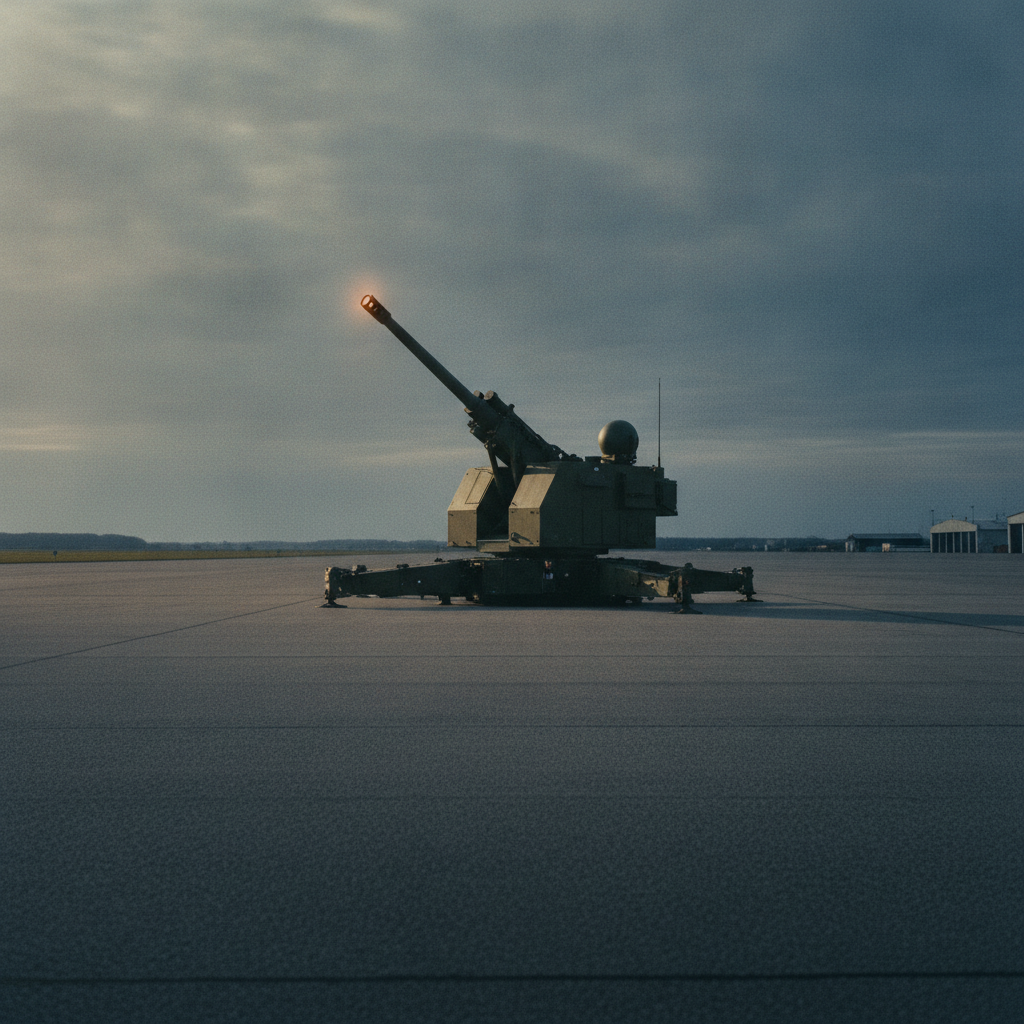
Chancellor Friedrich Merz touched down in Kyiv on a Sunday morning, air-raid sirens still echoing from a Russian strike that had destroyed a bridge in the city hours earlier. He left with something more consequential than optics: a €1 billion ($1.1 billion) military aid package centered on drone interceptors, standoff weapons, and space-based technology—and a public refusal to be intimidated by what he called an "escalation of Russia's war of aggression." [1]
The headline hardware is the Quantum Systems interceptor drone, built for one purpose: hunting Russia's Geran turbojet-powered kamikaze aircraft, itself a license-built variant of Iran's Shahed drone. [1]
The numbers explain the urgency. Analysis from the Institute for Science and International Security found that Russia launched "at least 5,166 Shahed-type UAVs, including decoys" during the month of August. [1] Ukraine shot down or suppressed roughly 4,288 of the uncrewed systems, according to the September report. [1] Meanwhile, CSIS analysis noted that the Geran's satellite-navigation antennas have been progressively upgraded to resist electronic warfare, meaning passive jamming is losing its edge. [1]
Company executives who traveled with Merz signed 14 agreements with Kyiv totaling roughly €6.6 billion, according to the UK Guardian newspaper's reporting on German officials. [1] The deals span Diehl-produced IRIS-T air defense missiles, Hensoldt-made radar systems, and the Quantum Systems interceptors. [2]
Merz was direct about the technology's maturity: "Significant technical breakthroughs have already been achieved in recent weeks" with regard to the interceptors "and these are now accelerating production. This will strengthen Ukrainian air defenses quickly and noticeably." [1] Quantum Systems shared in a Sunday statement that the interceptors have been developed by the Ukrainian team at Quantum WIY Industries to help protect cities, civilian facilities, and critical infrastructure, and integrate into Quantum Systems' MOSAIC UXS software suite. [1]
The visit carried a second message: Germany's defense industry needs the war as much as Ukraine needs Germany. Merz said plainly that the cooperation benefits both sides—German firms traveling with him are learning from Ukrainian combat experience, while joint ventures are pushing innovation that feeds back into Bundeswehr procurement. [2] He pointed to the August 4 incident at Leipzig airport—where a Russian drone loaded with explosives was found, avoided catastrophe only by luck—as evidence that drone defense is no longer a distant concern for German civilians. [1][2]
The logic of the trip was inseparable from its symbolism. Arriving under fire, signing contracts while sirens ran, Merz was staging a counter-narrative to Russian coercion—one where European resolve is demonstrated through hardware agreements rather than diplomatic statements alone.
Merz also extended Germany's posture well beyond Ukrainian airspace. Russia must understand, he said, that Berlin will act against any further escalation—"This applies to the shadow fleet in the Baltic and North Seas. It applies to flights violating our airspace. It applies to drone attacks." [2]
Russia's foreign ministry reissued warnings calling on "foreign nationals and diplomatic personnel" to leave Kyiv the day before the visit. [1] The response from Western ambassadors was terse. Australian Ambassador Geoff Brown wrote on X: "Together with other Heads of Mission in Kyiv we take note with concern of the Russian MFA's threat against diplomats and foreign citizens in Ukraine. We stay in Kyiv." [1]
What makes this package different from prior tranches is its production logic. Rather than shipping finished weapons from German stockpiles, Berlin is funding manufacturing capacity on Ukrainian soil—a structural shift in how European allies approach the attrition economics of drone warfare.
Russia's Geran fleet has grown more sophisticated, its navigation systems hardening against jamming with each iteration. [1] Germany's answer is to mass-produce the counter inside the country being attacked, turning Ukrainian factories into the front line of air defense before the first snow falls.