GRIZZLY Kills Its First Attack Drone
Lockheed's containerized missile launcher downed a Group 3 one-way attack drone at Yuma Proving Ground — from cold start to kill chain in under 45 days.
By The Defense Desk
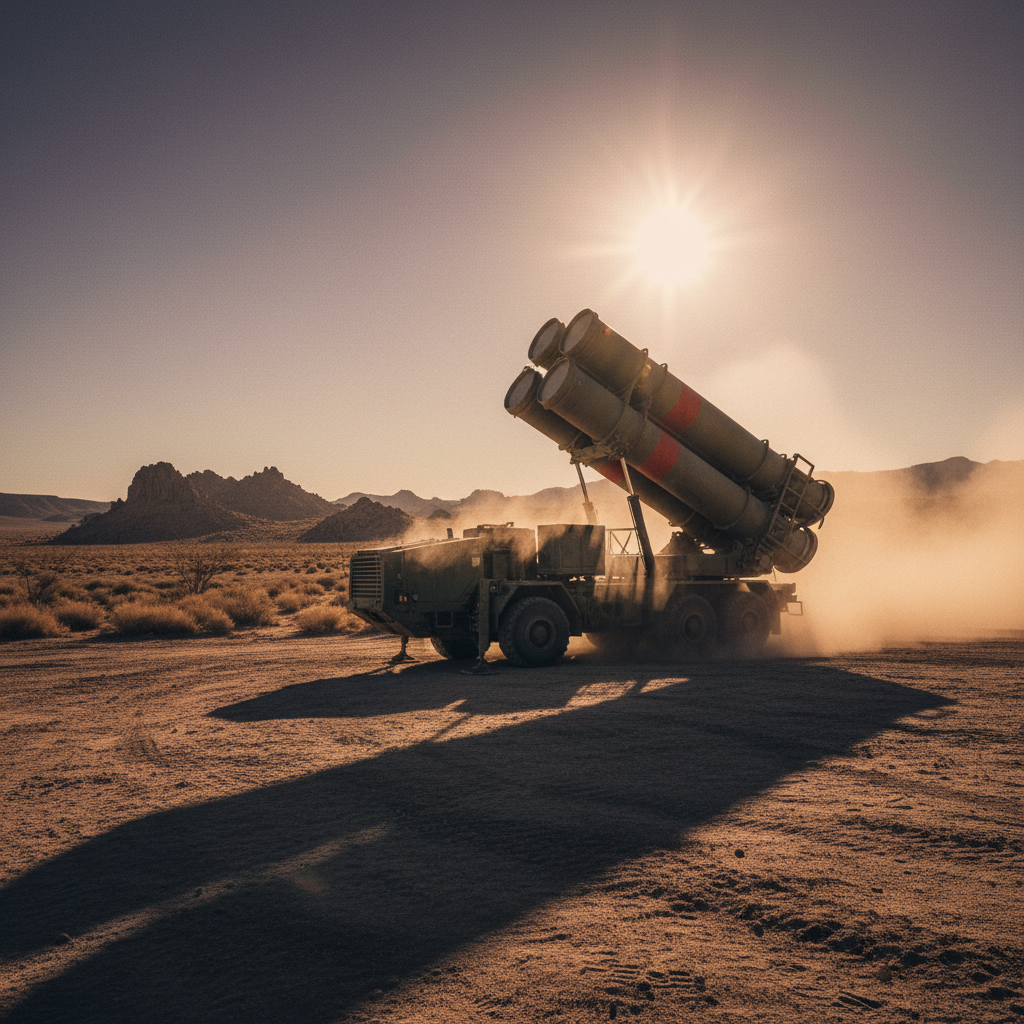
On June 3, Lockheed Martin fired a Joint Air-to-Ground Missile from its GRIZZLY containerized launcher and destroyed a Group 3 one-way attack drone — the system's first successful intercept of that class. The live-fire took place at Yuma Proving Ground, Arizona, with Fortem R-40 radars and the Sanctum battle manager handling detection, tracking, and engagement. [1]
Lockheed integrated the full system and completed live-fire testing in under 45 days. [1] The Fortem R-40 radars came from a partnership Lockheed deepened in April, when it invested $25 million into the Utah-based firm to incorporate its radars and interceptors more tightly into the Sanctum system. [1]
The June test builds on GRIZZLY's first live-fire in March, when a Hellfire missile was fired from the same container in a vertical-launch test at Yakima Training Center, Washington — six months after the program began. [1] The launcher holds up to eight missiles in a 10-foot shipping container, offers toolless reloading, and can operate from ground sites or ships. Wireless links among the radars, battle manager, and launcher allow for quick setup. [1]
The pressure to intercept cheap, fast, and lethal drones is reshaping what a missile system needs to look like — smaller footprint, faster deployment, fewer dependencies on fixed infrastructure.
Lockheed billed GRIZZLY as a low-cost way to shield forward bases, key assets and vessels, and the maritime pitch tracks with Navy interest in containerized weapons that can ride on unmanned surface vessels to add firepower at sea, a demand signal Lockheed cited when it first showed the launcher in March. [1] The Pentagon's wider push for layered drone defense makes that timing deliberate.