Hello Robot's Stretch Named a WEF Tech Pioneer
The mobile manipulator that helps people with quadriplegia fetch water and feed themselves just earned one of tech's most-watched validations.
By The Robotics Desk
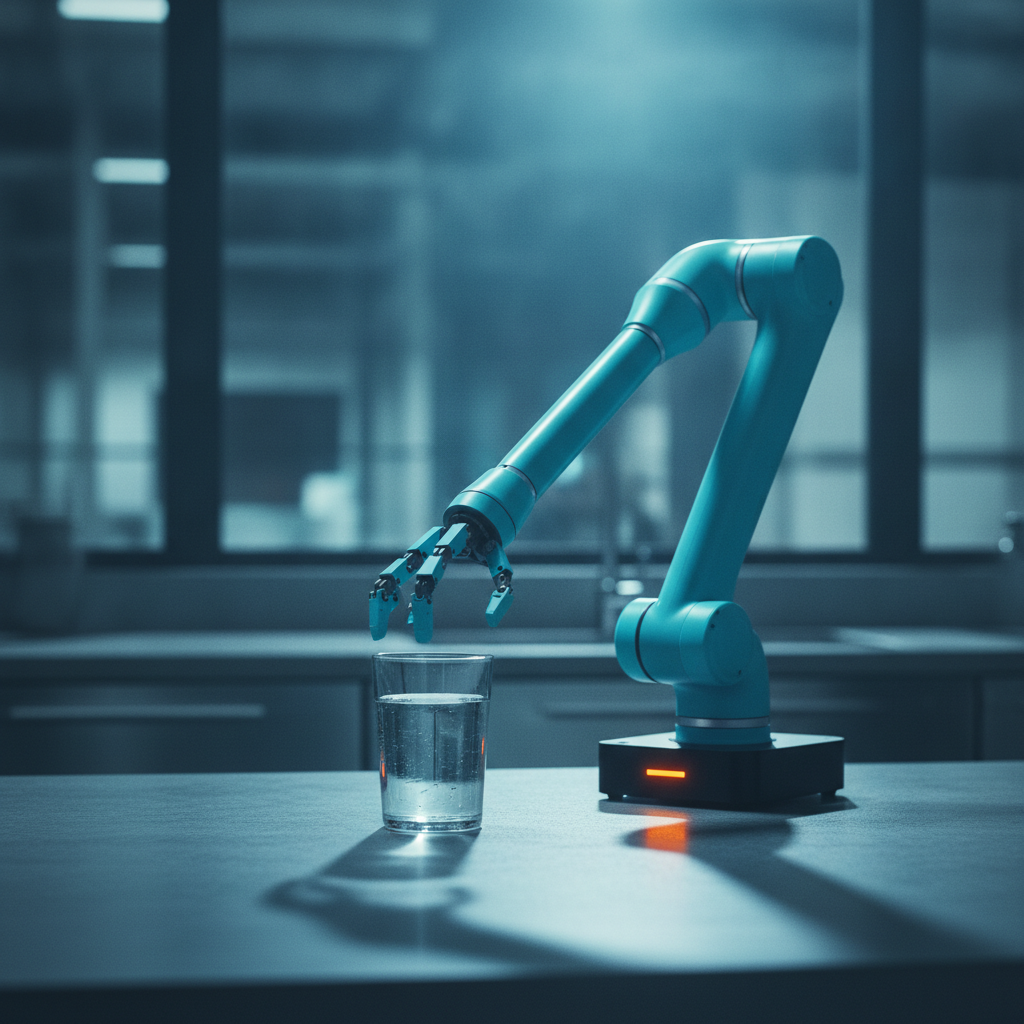
The World Economic Forum has named Hello Robot Inc. a 2026 Technology Pioneer — putting the Martinez, Calif.-based maker of the Stretch mobile manipulator among the 100 early-stage companies the Forum selects each year as transforming business and society. [1] For a firm that has spent nearly a decade arguing that usefulness beats spectacle, the designation lands as more than a badge.
Stretch is an open-source platform for mobile manipulation, built to operate close to people in homes, workplaces, and care settings. [1] Its pilots with individuals who have severe mobility impairments — including people with quadriplegia — offer a specific measure of what that means in practice: users control the robot through a mobile phone app to accomplish daily tasks such as fetching a drink of water, feeding themselves, and closing the blinds. [1] For many users, the company says, these tasks represent a profound increase in independence and agency.
Hello Robot was founded in 2017 by Aaron Edsinger and Charlie Kemp, who bring more than 50 years of combined robotics experience from MIT, Google, and the Georgia Institute of Technology. [1] The company's stated goal is to develop practical, safe, and accessible robots for people. [1] Stretch 3 won the inaugural RBR50 Robotics Innovation Award for Robots for Good last year; Stretch 4, introduced in May of this year, completed a major redesign based on customer feedback to provide a versatile and easy-to-use platform for developers. [1]
The WEF's Technology Pioneers program, now in its 26th year, annually selects 100 companies whose innovations are transforming business and society at large. [1] This year's cohort, Hello Robot noted, represents "a new generation of robotics companies that prioritize human benefit over spectacle" — robots "designed to operate shoulder-to-shoulder with the people they serve." [1]
The distinction between a robot that performs for cameras and one that quietly hands someone a glass of water is not merely philosophical — it reflects a genuine fork in how the industry allocates its energy. Assistive robotics has long occupied a corner of the field that attracts admiration but rarely the loudest investment. That calculus may be shifting.
Stretch is already deployed at hundreds of research, academic, and corporate locations. [1] The WEF recognition adds institutional weight to a positioning Hello Robot has staked its identity on: that the robot the world actually needs is one that is simply useful, not merely impressive. CEO Aaron Edsinger framed the award in those terms directly, saying: "Being named a WEF Technology Pioneer is a meaningful validation that the world is ready for robots that are simply useful — robots that work with people, not just in front of a camera." [1]
What makes the recognition worth watching is not the trophy itself but the signal embedded in who gives it. When a body built for public-private cooperation turns its spotlight toward assistive technology, it shapes what funders, policymakers, and procurement officers consider worth backing next. Recognition has a way of becoming a roadmap.
Hello Robot's arc — from a 2017 founding mission to a WEF stage — traces the slow, methodical work of building robots around human need rather than engineered drama. Whether the broader industry follows that heading is the more consequential question the award quietly poses.