India Joins the BMD Club
Three flight tests over two days put New Delhi in rare company—and signal a decade-long bet on homegrown missile defense.
By The Defense Desk
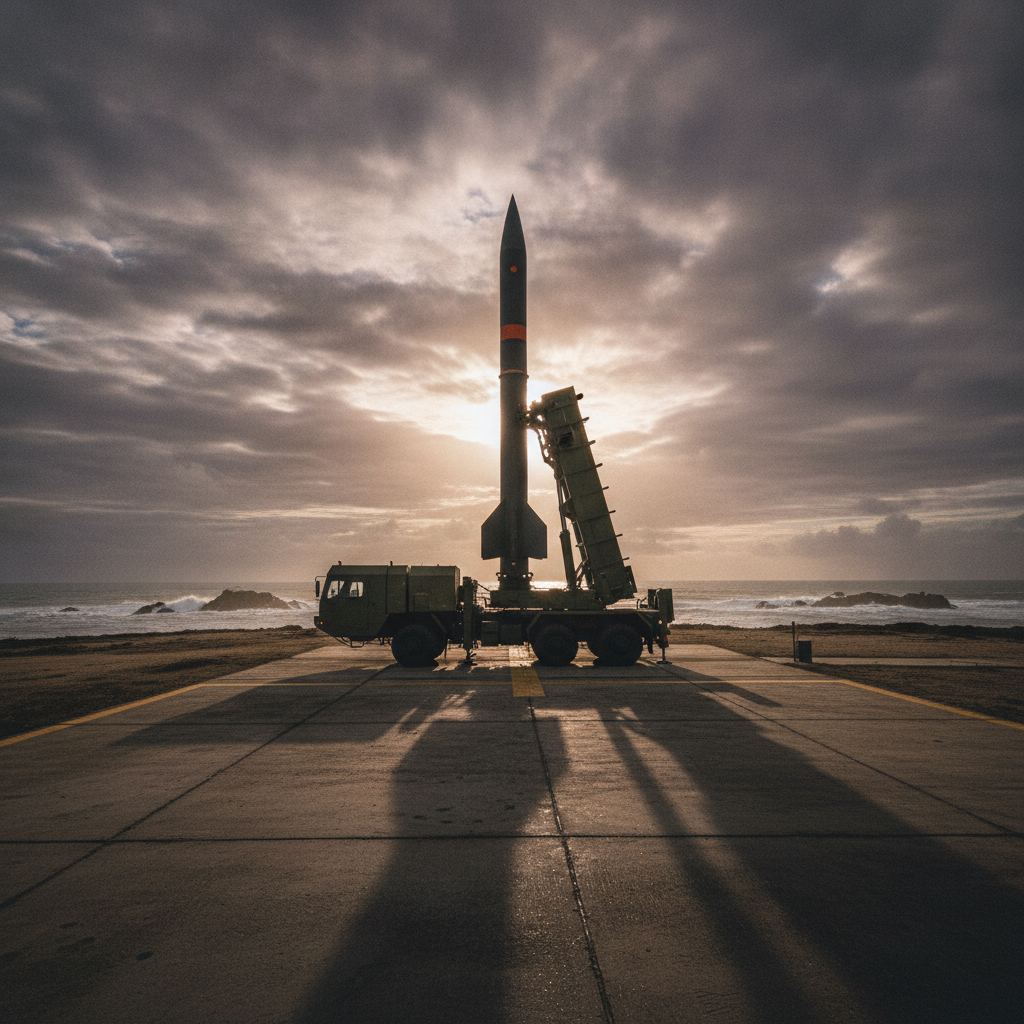
The Ministry of Defense called it a demonstration of "multi-layered defense" against long-range ballistic missile threats, plus an anti-ship capability at medium range. [1] When the smoke cleared, New Delhi had a new line on its defense résumé: membership in the small club of nations able to engage intercontinental ballistic missiles.
The ministry was direct about what the tests meant for India's standing. "These tests have put the country in the elite group of nations having BMD capability to engage up to Intercontinental Ballistic Missiles," the official statement read. [1] Until now, that list has been confined to a handful of countries such as the United States, Russia, China, and Israel—countries with highly advanced missile defense systems. [1] India has now, at least in test conditions, demonstrated it can do the same.
The significance of that milestone is inseparable from the geography it was designed to address. India does not sit in a benign neighborhood, and the pressure to develop a credible, domestic shield has been building for years. What changed this month was not the ambition—that has been stated policy for some time—but the evidence.
Pakistan fields a range of short- and medium-range ballistic missiles. China's arsenal is far larger and more sophisticated, and it includes intercontinental ballistic missiles. [1] Unresolved border disputes have triggered military tensions with both countries in the past, and analysts have long argued that India's existing defenses—primarily oriented against short- and medium-range threats—left a meaningful gap at the top end of the threat spectrum. [1]
Ajay Lele, deputy director-general at the Manohar Parrikar Institute for Defence Studies and Analyses in New Delhi, put the strategic logic plainly: "India requires a robust missile defense shield because China has a potent intercontinental ballistic missile capacity. We cannot depend on imported systems." [1] That last sentence carries weight. India has spent years navigating the tension between buying proven foreign hardware quickly and building sovereign capability slowly. These tests suggest the domestic track is producing results.
Self-reliance in defense technology is rarely a clean story. Domestic programs run long, cost more than forecast, and produce systems that often lag behind what allied or adversary nations already field. The interesting question is not whether India can test an interceptor—it just did, three times—but whether it can turn a successful test into an operational network at the scale and speed its threat environment demands.
The trials were conducted by India's Defense Research and Development Organization, the state agency at the forefront of efforts to build indigenous air defense systems. [1] Over the last decade, New Delhi has pushed to boost defense self-reliance through greater domestic manufacturing and technology development. [1] The DRDO tests are the most visible output yet of that push in the missile defense domain.
The ministry's statement noted that the systems are "designed and developed with latest technologies to address the emerging missile threats." [1] That phrasing is carefully hedged—emerging, not current—and it points to a harder problem. India's neighbors are not standing still. China is expanding its missile inventory and refining its warhead technology. Pakistan continues to develop shorter-cycle, harder-to-track systems. Any Indian shield capable of addressing today's threat may need significant upgrades by the time it is fielded.
Lele acknowledged that gap directly. "The systems tested will be part of the country's ballistic missile defense architecture, although it remains to be seen when they can be operationalized," he said. [1] Separately, Lele noted: "These recent tests could be a starting point for that project." [1] The proposed architecture would cover ballistic threats and hypersonic missiles—a category that most existing defense systems, globally, are still struggling to address.
The 2035 horizon matters because it frames what these tests actually are: a proof of concept, not a fielded capability. The distance between a successful flight test and a network of interceptors covering major population centers and military installations is measured in years of engineering, procurement cycles, and operational doctrine. India has closed the technical credibility gap. The institutional and logistical gaps remain.
Defense Minister Rajnath Singh pointed to recent conflict zones as context for the urgency. [1] The lesson regional militaries drew from those conflicts was consistent: layered, high-volume interception capability is no longer optional for any state that expects to be targeted by precision missiles.
India's existing BMD architecture has historically focused on the lower tiers of the threat spectrum. Its full operational capabilities have not been publicly disclosed, which makes external assessment difficult. [1] What the June tests add is a public data point at the upper end—ICBM-class interception—that India had not previously demonstrated. Whether the tested interceptor is production-ready, how many units exist, and what their reload time and radar integration look like are questions the Ministry of Defense did not answer.
That opacity is standard practice in missile defense programs worldwide. Nations rarely publish the operational specifications of systems designed to be the last line before a warhead reaches a city. What governments do publish are demonstrations—and India just published three of them in two days.
Singh's post on X after the tests was terse: "Multi-layered BMD capability was successfully demonstrated." [1] Seven words. In the grammar of defense ministry communications, that brevity is its own kind of signal—confident enough not to oversell, specific enough to be legible to every defense ministry in the region watching the same footage.
India has spent a decade arguing that it can build its own shield. On June 10 and 11, it showed its math. The harder test—turning three flight intercepts into a national defense network before 2035—starts now. [1]