Japan's 3D-Printed Interceptor Drone Goes to Mass Production
Terra Drone's rocket-launched B1 cleared procurement in three months—and its distributed print farms are designed to survive a Shahed strike.
By The Defense Desk
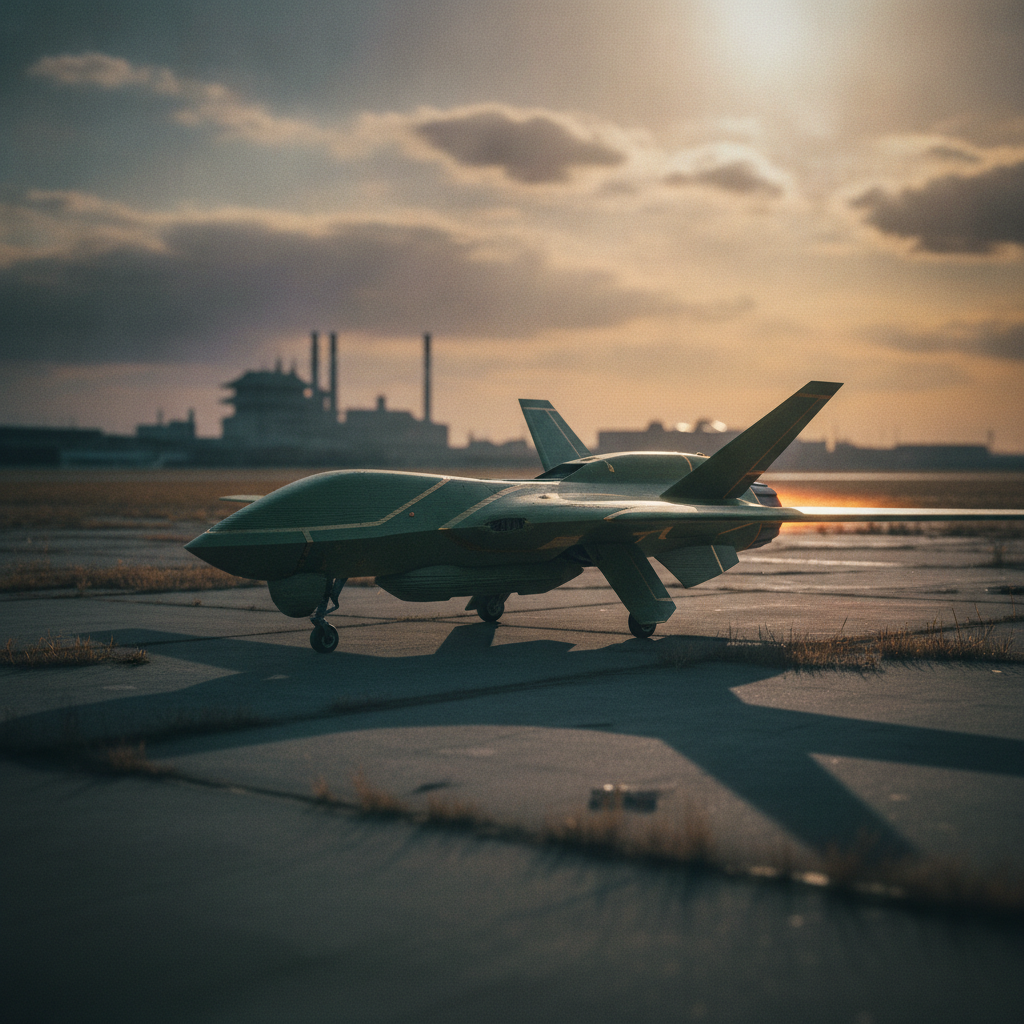
[1]
ATLA selected the Terra B1 following a demonstration with the Maritime Self-Defense Forces last month. The drone is developed by Terra Drone and serves as the Japan-made counterpart to Terra A1, which had been fielded on Ukraine's battlefields earlier this year. Neither the unit count nor the contract price was disclosed. [1]
Speed is the story. In late May, the defense ministry issued a tender targeting one-way attack drones such as the Shahed and anti-radar loitering munitions such as the IAI Harpy. The latest decision is the fastest to date, industry insiders say, as the tender took only three months compared to previous bids which took one to two years. [1]
3D printing is central to that pace. [1]
Beyond speed, additive manufacturing gives Terra Drone the ability to modify the interceptors mid-production cycle—adapting to evolving threats and the fast-changing drone landscape without delaying the deployment schedule. [1]
The company is also building resilience into the supply chain itself. Terra Drone plans to spread production across multiple locations and eventually expand to local printing farms—a precautionary measure to ensure manufacturing can continue even if one facility comes under attack. [1]
"Even if one production site were attacked by a system such as a Shahed-type drone, this distributed model could significantly reduce the risk of the entire supply chain being disrupted," Tokushige said. [1]
That logic—dispersed, redundant, printable—marks a meaningful departure from the centralized, capital-intensive model that has defined defense manufacturing for decades. The factory is no longer a fixed target; it is a network.
3D printing has been changing military and defense logistics since the U.S. Army and Navy deployed printers in the field in 2012. In Ukraine, printing farms have become a frontline necessity, producing drone parts and a range of tools to support brigades in the ongoing war. [1]
Japan's defense industry is watching the procurement closely. [1]
What Tokyo is building is not just a drone program. It is a template for how a mid-sized defense industry can compress procurement cycles, absorb design iteration, and harden its own supply chain—all at once.
If the Terra B1 performs as advertised against Shahed-class threats, the distributed print-farm model may well become the default architecture for drone counter-proliferation programs across the Indo-Pacific. [1]