JPL at 90: From a Dry Riverbed to Interstellar Space
The lab that started with amateur rocket tests in Pasadena is now sending helicopters to Mars and drones to the Moon's South Pole.
By The space-quantum Desk
On Oct. 31, 1936, a group of Caltech graduate students lit rocket motors in a dry patch of Pasadena riverbed called Arroyo Seco. They were not thinking about Mars helicopters. Ninety years later, the institution those tests spawned — the Jet Propulsion Laboratory — is deploying exactly that, and considerably more. [1]
JPL's first major act of consequence came on Jan. 31, 1958, when it launched Explorer 1 — America's first satellite. The Soviet Union had already launched two satellites in 1957, and the previous U.S. attempt on a Vanguard rocket exploded only a few seconds after liftoff. Explorer 1 did more than survive: its onboard Geiger counter discovered the radiation belts encircling Earth, making it the first spacecraft to conduct science. [1][2]
From that debut, the lab's record of firsts compounded steadily. JPL sent the first U.S. mission to the Moon — Ranger 7 — in 1964, led the first planetary flyby, dispatched the first probe to visit all four gas giants, launched the first infrared telescope, and put the first rovers and the first rotorcraft on Mars. [1]
What makes the arc remarkable is not the sheer volume of milestones but the institutional restlessness behind them — a culture that treats each answered question as a prompt for a harder one.
The next chapter is already on the schedule. That same year, MoonFall will land a group of large propulsive drones at the lunar South Pole to advance NASA's Moon Base. [1]
Closer to the Sun, SunRISE — the Sun Radio Interferometer Space Experiment — is set for a 2027 launch. It features six toaster-oven-size satellites flying in formation to create a miles-wide radio antenna dish, giving scientists an unprecedented view of solar activity. What it reveals could help make space exploration safer for humans. [1]
JPL's asteroid-hunting NEO Surveyor will search for potentially hazardous space rocks that other telescopes cannot find. Once an object is spotted, NASA can offer a threat assessment and plan accordingly — a function that did not exist when those Arroyo Seco students were packing solid propellant. [1]
The lab's gaze also tilts downward. Another instrument, AVIRIS (Airborne Visible Infrared Imaging Spectrometer), flown on airplanes, can detect rare Earth elements critical to modern technology; its sensors were developed at JPL's Microdevices Laboratory, which invented the "camera on a chip" technology that enables cellphones to take pictures. [1]
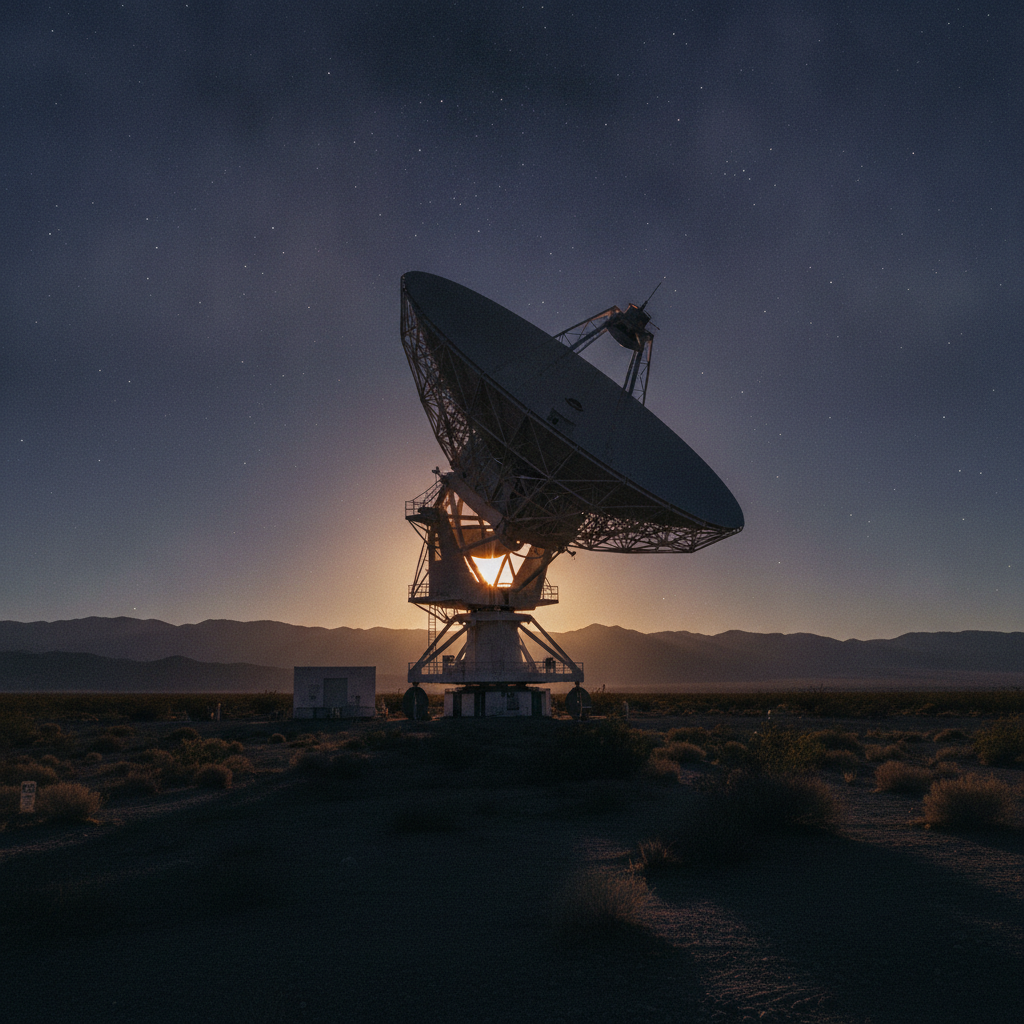
The anniversary carries a quieter milestone in its shadow. On Nov. 18, Voyager 1 will reach a full light-day from Earth — some 16 billion miles, or 26 billion kilometers — the distance light travels in 24 hours. Both spacecraft continue deeper into interstellar space, relying on NASA's Deep Space Network, itself developed by JPL in the Apollo era, to receive commands and send back science data. [1]
There is something instructive in the pairing: a lab marking its ninth decade while one of its oldest spacecraft crosses a boundary no human object has crossed before. The institution and its machines keep moving in the same direction — outward.
Stone once said that with both Voyagers exploring regions never before visited, "every day is a day of discovery." JPL is betting its next 90 years on the same premise. [1]
every day is a day of discoveryEd Stone