Made in America, Fired at Ukraine
Despite nearly 24,000 sanctions, U.S.-made chips keep turning up inside Russian ballistic missiles — routed through a global shell game of re-exporters.
By The Defense Desk
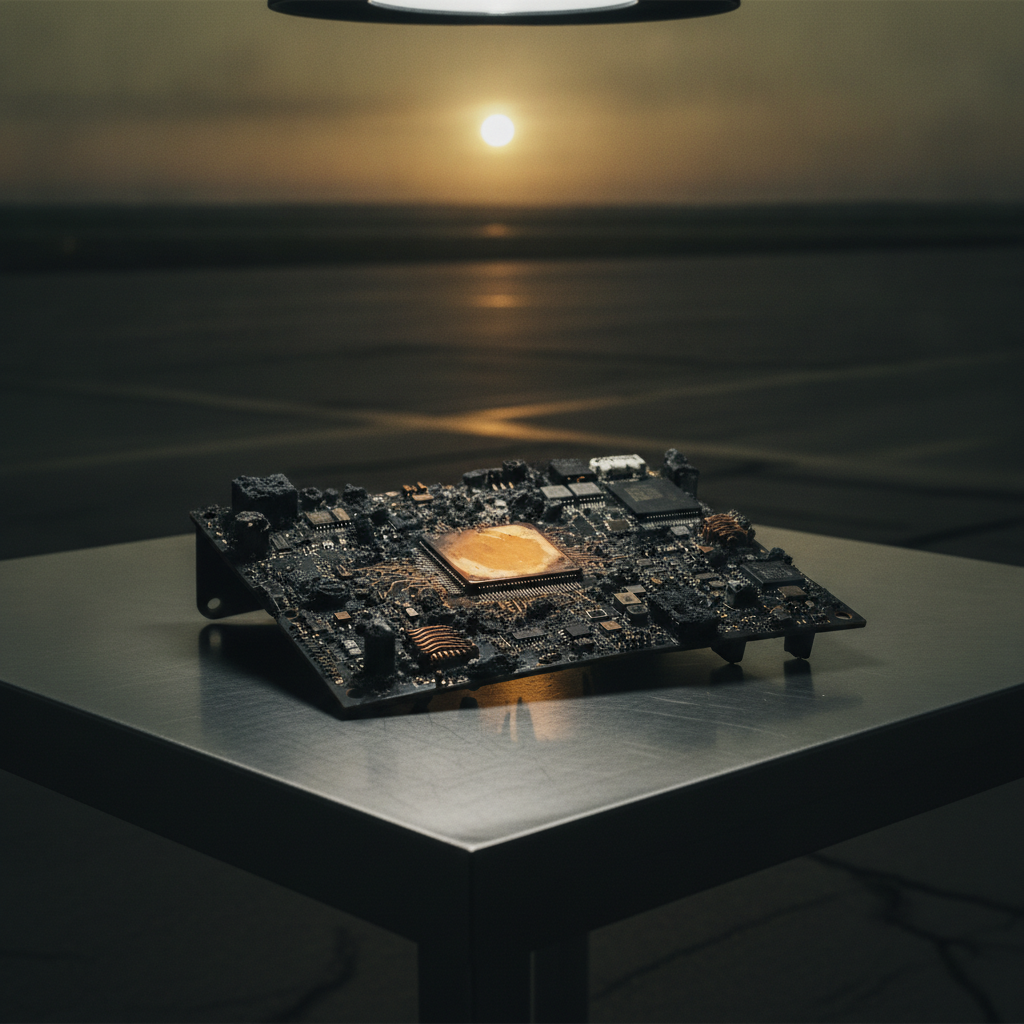
On Aug. 25, Ukraine's sanctions commissioner Vladyslav Vlasiuk laid out a table of missile parts for reporters — each cluster of components flagged with the country that made it. The display, pulled from Iskander missiles and 48N6-family rounds fired from S-400 launchers, traced guidance and navigation electronics to the United States, Japan, Germany, Taiwan, France, Britain and Switzerland. [1]
One origin dominated. A 2024 investigation found that roughly 70% of the foreign components recovered from Russian missiles came from U.S. companies, according to RBC-Ukraine — and a separate study by the Kyiv Institute of Economics and the Yermak-McFaul Group found that practically 95% of components are produced by companies headquartered in countries of the sanctions coalition. [1][2] Named suppliers whose components have been recovered include Nvidia, Texas Instruments, Analog Devices and Microchip Technology. [1]
The route in is rarely direct. [2] Russian missile makers can replace sanctioned third-country suppliers almost as quickly as they are designated, leaving a structural gap that nearly 24,000 sanctions have not closed. [1]
The stakes are sharpening. Russia now produces more than 100 ballistic and high-speed missiles a month, while allies supply Ukraine with only about 50 to 60 Patriot interceptors monthly — a fraction of what Kyiv needs. [1] Vlasiuk's three-part fix: synchronize designations on every identified Russian ballistic manufacturer across allied jurisdictions; impose sectoral restrictions on roughly 110 missile-production materials; and tighten export licensing on sensitive electronics. [1]
Sanctions work when every door closes at once. When one stays open, the traffic simply reroutes.
The commissioner arrived in Washington on Tuesday to lobby House members to take up the Senate-passed Lindsey O. Graham Sanctioning Russia and Iran Act of 2026, which would address many of these loopholes but has yet to be approved by both houses. [1]
In ballistic systems, it is the United States above all, because ballistic missiles are especially demanding in terms of quality and product characteristics.Vladyslav Vlasiuk