NASA's Marshall Gets a Director Who Built It
Stephen Cash started his career at Marshall in 1982. Forty-three years later, he's back — this time running the place.
By The space-quantum Desk
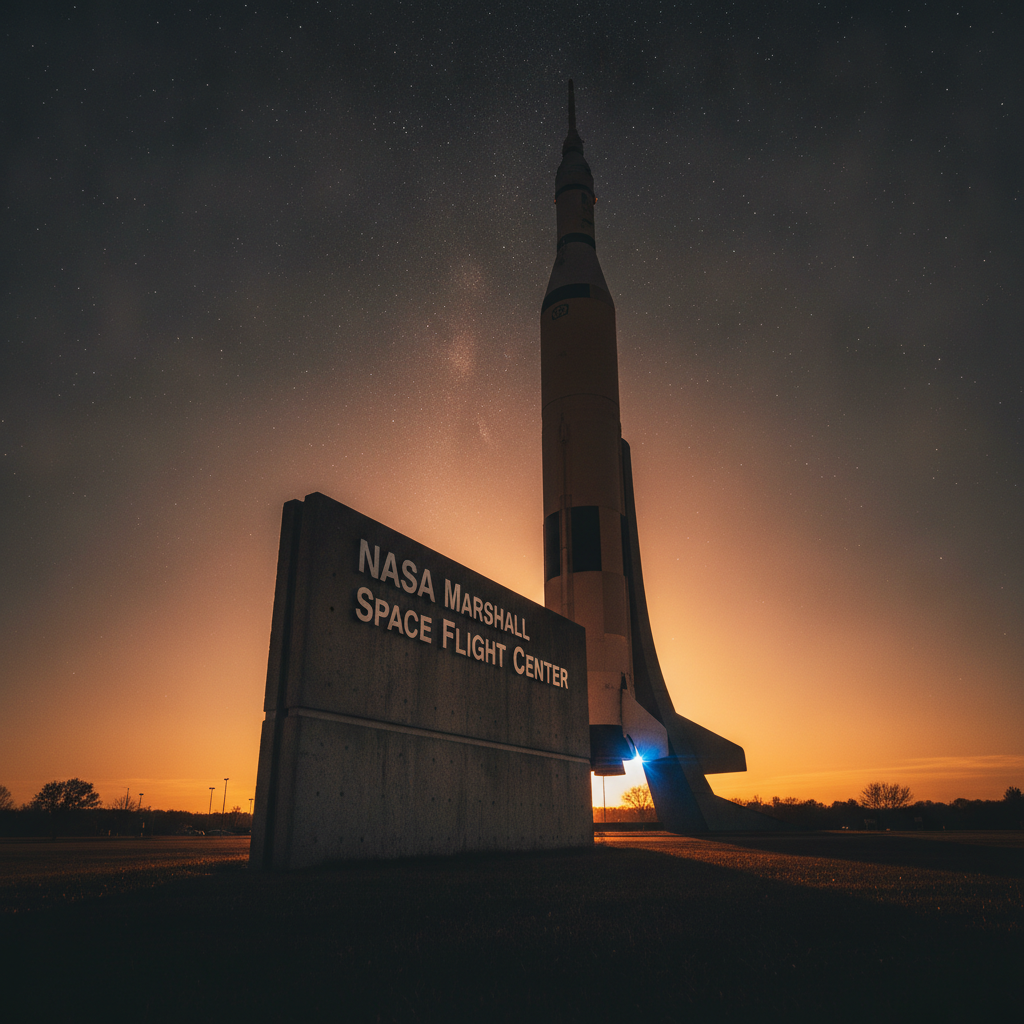
NASA Administrator Jared Isaacman has named Stephen Cash director of Marshall Space Flight Center in Huntsville, Alabama, effective Monday, Oct. 19 [1]. Cash began his career at Marshall in 1982 — and spent 34 years with the agency before retiring in 2016 [1].
The appointment is a deliberate callback. He later served as director of Marshall's Safety and Mission Assurance Directorate from 2011 until his retirement in 2016 [1]. After leaving NASA, he served as vice president for advanced space systems at Axient, supporting major spaceflight programs [1]. In 2024, he was inducted into the Alabama Engineering Hall of Fame [1].
Marshall's current workload is substantial. The center is responsible for developing NASA's SLS (Space Launch System) rocket and managing the Human Landing System Program under the Artemis banner [1]. It is also taking on an expanding role in nuclear power and propulsion — capabilities that NASA considers essential for eventual crewed missions to Mars [1].
Appointing a director who has worked the hardware, navigated the politics, and felt the weight of human spaceflight decisions is a statement about what NASA thinks the next phase demands. Experience over optics. Institutional memory over fresh eyes.
Isaacman framed the choice in technical and biographical terms: "Steve Cash is a Marshall legend, has spent his career around the hardware, the people and has been in the seat before making the decisions when human spaceflight is on the line" [1].
Cash succeeds Rae Ann Meyer, who has served as Marshall's acting center director since September 2025 [1]. Meyer, who previously served as Marshall's deputy center director and associate director, will return to her role as Deputy Center Director [1].
Marshall's institutional arc is long. Established in 1960, the center developed the Saturn rockets that lifted Apollo astronauts to the Moon [1]. Today it continues advancing the propulsion systems, infrastructure, and technologies supporting the next era of human spaceflight [1].
There is a kind of logic to returning a veteran to a center at a moment when the missions are getting harder and the margins for error are shrinking. Nuclear propulsion, Mars timelines, the weight of Artemis — these are not problems you hand to someone reading the manual for the first time.
Cash put it plainly: "It is a profound honor to be back home at the Marshall Space Flight Center" [1]. Whether that sense of homecoming translates into the momentum NASA needs on SLS, nuclear propulsion, and the long road to Mars will be the actual measure of the appointment.
Steve Cash is a Marshall legend, has spent his career around the hardware, the people and has been in the seat before making the decisions when human spaceflight is on the line.Jared Isaacman