NASA's SR-71 Revival Is About Engines, Not Nostalgia
A former Blackbird propulsion engineer says Tail 844's return from the dead is really a high-Mach engine test bed program in disguise.
By The Defense Desk
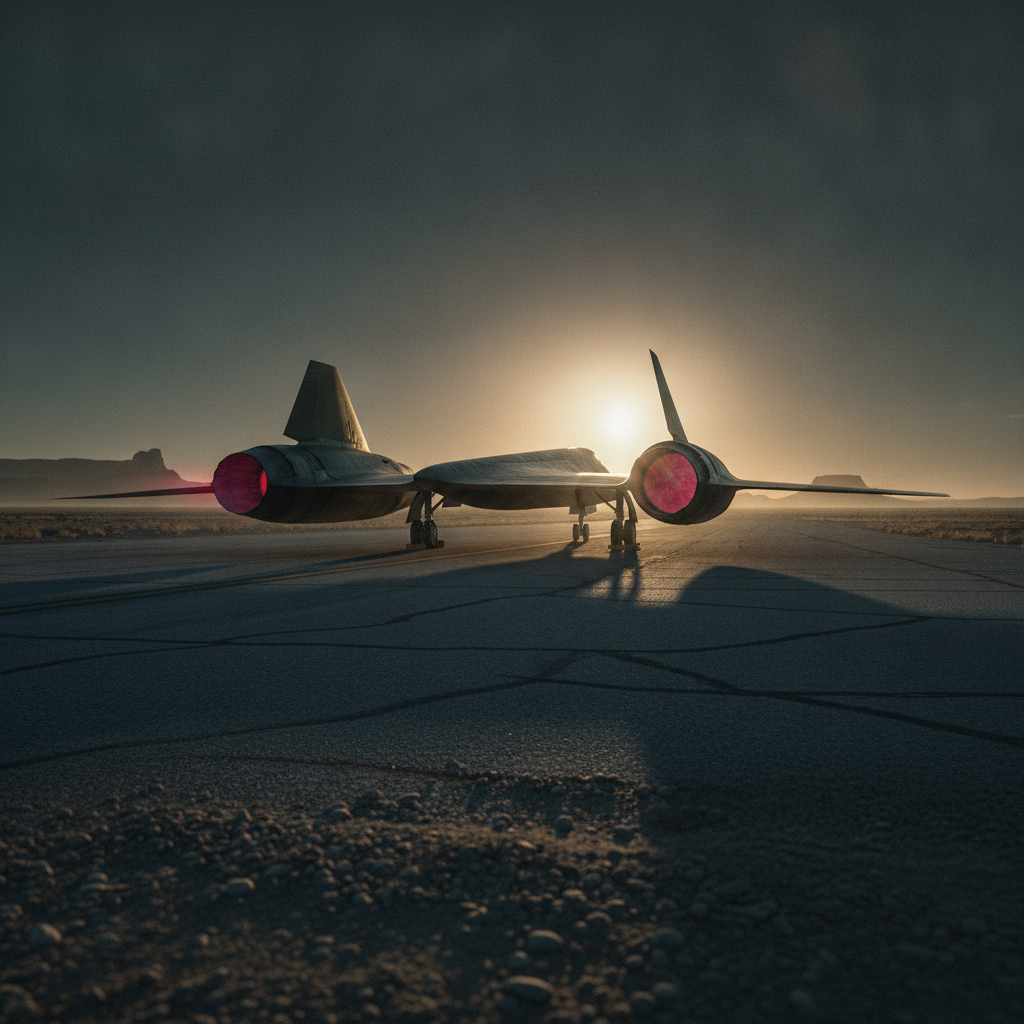
Satellite imagery taken over Armstrong showed that SR-71 Tail 844 had been missing since at least May. [1] Now, Tim Conners — lead propulsion engineer on NASA's SR-71 program in the 1990s — is offering the clearest picture yet of what the agency is actually building toward.
[1] NASA received two A-model airframes and a trainer. Conners joined the propulsion group, eventually became lead propulsion engineer on the NASA side, and supported two years of flight testing before leaving the agency in 1998. [1]
His read on the current revival effort is pointed. Aerodynamic research is not the driver — computational fluid dynamics modeling in this speed regime is fast, cheap, and accurate enough that a physical aircraft adds little value. [1] What CFD cannot replicate is the installed behavior of a new engine type running at sustained high-Mach conditions inside an actual airframe. "What you cannot do is an accurate representation of a new type of engine integrated into a high-speed airframe," Conners told The War Zone. [1] In his assessment, NASA is building a high-speed engine test bed.
That hypothesis is shaped by what Conners has heard about the jet's current condition. [1] The bearings will have flattened. Seals will have cracked. Trapped fuel turns to gunk and clogs up lines. [1] If the J58s are genuinely off the table, the only path forward is installing engines already under development elsewhere — high-Mach bypass systems in the J58 size class, Conners speculates. [1]
The fuel situation adds another layer. NASA stockpiled a large supply of JP-7 — the Blackbird's low-volatility fuel — received from the Air Force in the early 1990s, but that supply was discarded roughly 20 years ago. [1] Conners says dialogue with refineries about a surrogate or replacement is already underway, and early signals suggest the fuel gap is not a program-stopper. [1]
What NASA has confirmed through action, if not words, is that the work is progressing. [1] One confirmed contact is Mike Relja, a former Blackbird crew chief. [1] Power-on testing — applying external electrical power to the airframe to assess which systems still function — is reported to be imminent, a step Conners describes as significant: it means the aircraft has already passed visual airworthiness inspection. [1]
The logic of bringing back a Cold War relic becomes cleaner when you stop thinking about it as preservation and start thinking about it as infrastructure. The airframe is not the point. The airframe is the rig.
Hypersonic programs absorbed most defense research investment for years, but the cost and complexity of those systems are now working against them. [1] The SR-71 already proved it could operate continuously in that envelope; its airframe is the proof of concept the new engines need.
On timeline and cost, Conners is cautious. Speed depends entirely on institutional agility. [1] The critical fork is whether the team needs to modify the titanium airframe extensively or can bolt new engines onto existing interface hardpoints — the latter being far faster and cheaper. [1]
A 1960s airframe designed to survive sustained Mach 3.2 flight for an hour, an hour plus, may turn out to be the most pragmatic platform available for testing the propulsion systems that will define the next decade of high-speed aerospace. The Blackbird was always a machine that outpaced its moment. It may be doing so again.
What you cannot do is an accurate representation of a new type of engine integrated into a high-speed airframe.Tim Conners