Natilus Lands Air Force Deal for Its Blended Wing Cargo Plane
A $3.5 million contract puts the KONA aircraft on a path to first flight—and opens a new front in the Air Force's bet on blended wing body designs.
By The Defense Desk
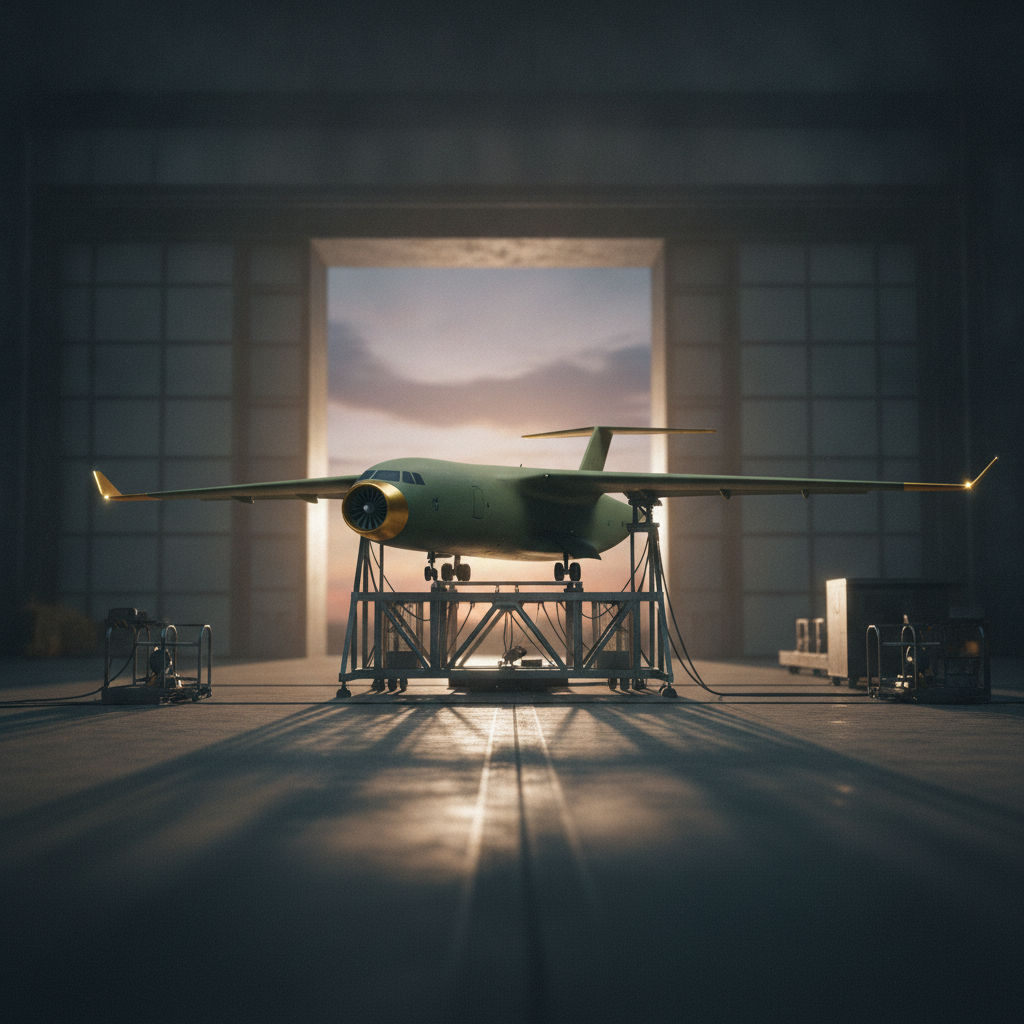
The US Air Force has awarded aircraft startup Natilus a $3.5 million contract to develop its blended wing body aircraft, KONA, for military cargo missions—marking the company's first US government investment and adding a second funded BWB program to the service's portfolio. [1]
KONA occupies a different niche: Natilus is targeting what it calls "sub-tactical lift" missions in the Indo-Pacific, filling the gap between the Cessna C-208 and the Lockheed Martin C-130. [1]
BWB concepts have circled aerospace drawing boards for decades. The design shares similarities with a flying wing like the B-2 bomber, with some key differences—consisting of an aircraft whose wings and fuselage are blended together, leaving no clean break between the two, while still sporting smaller, distinct wings—delivering more aerodynamic lift and greater fuel efficiency than tube-and-wing configurations. Complexity and aeronautical challenges, however, have kept any BWB from reaching commercial or military service. [1]
KONA carries an 85-foot wingspan and a max takeoff weight of 19,000 pounds, powered by Pratt & Whitney's PT6 turboprop engine. Natilus COO Nolan Giblin says the Air Force contract complements privately raised capital and helps "de-risk" key technologies ahead of a first flight targeted for late next year or early 2028. [1]
The timing matters. Defense planners are reassessing what a distributed, contested theater actually demands from cargo aircraft—and the answer increasingly looks less like a fleet of large transports and more like a spectrum of smaller, efficient platforms that can operate where bigger jets cannot go.
Natilus has made a deliberate choice to keep KONA platform-agnostic: there are currently no "defense-specific" modifications, and commercial customers remain the firm's primary target. The aircraft will initially fly with a traditional cable and pulley system, though Giblin says the company is "making provisions" for a pathway to optionally piloted or fully autonomous flight, drawing on either an in-house autonomy stack or an outside vendor. [1]
Prototype assembly is underway at Natilus's San Diego facilities. At full-rate production, the company is planning output of roughly five aircraft per month—a cadence that would need to scale significantly to serve both military and commercial buyers simultaneously. [1]
For the Air Force, spreading relatively modest contracts across multiple BWB bets is a hedge rather than a commitment. It keeps optionality open while the service continues studying its future mobility fleet—a study with no published end date and plenty of competing priorities.
"No one's really done that yet for aviation, so that's what we're striving to do," he said. [1]
A $3.5 million contract is a long way from a production line—but for a technology that has spent decades as a promising concept, it is at least a runway.