NATO's Hormuz Question Is Not New
As U.S. strikes hit Iranian radar sites and a blockade chokes the strait, the alliance debates a mission it has already rehearsed.
By The Defense Desk
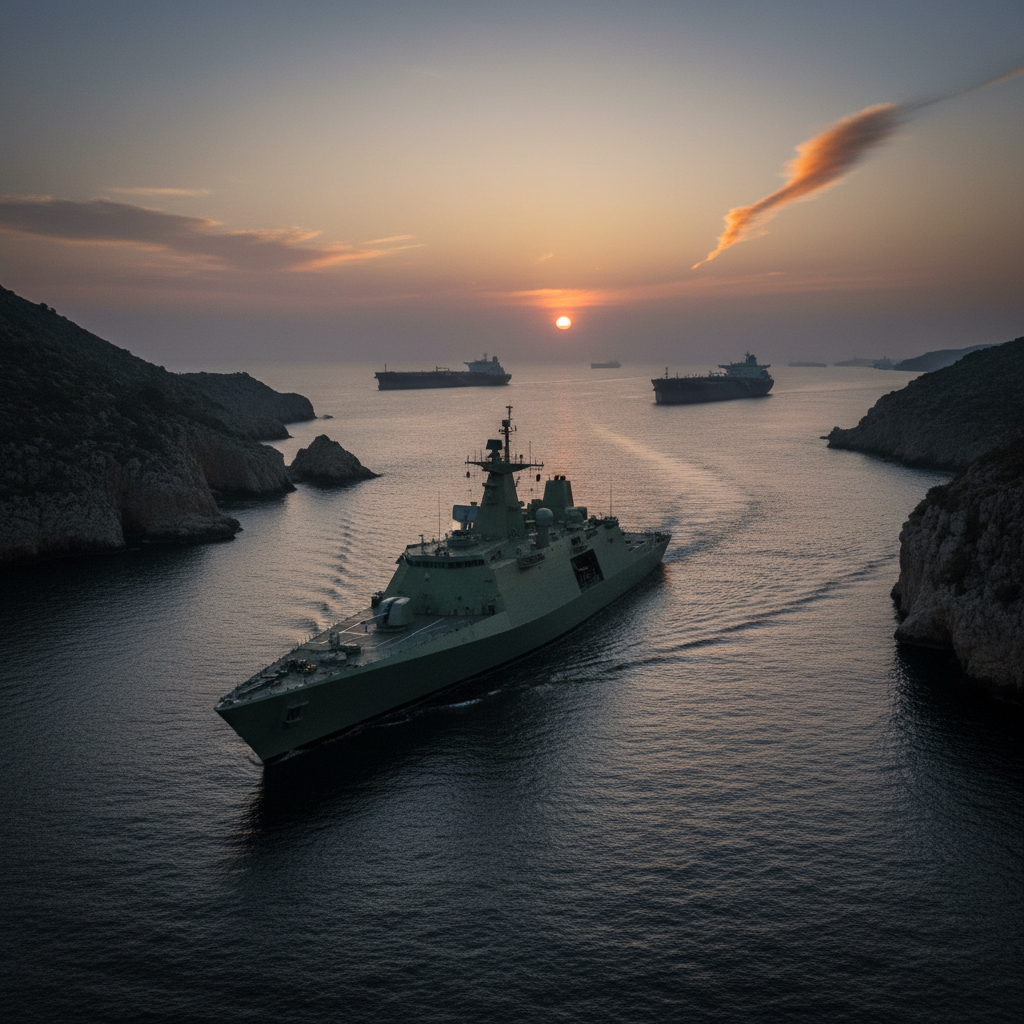
The Strait of Hormuz is blockaded, U.S. [2] Now comes the familiar question: should NATO be involved?
U.S. S. MQ-1 drone operating over international waters. [2] On May 25, American forces also struck missile launch sites and Iranian boats laying mines. [2] Two ballistic missiles aimed at U.S. forces in Kuwait were intercepted the same weekend. [2]
Critics argue Hormuz sits outside NATO's remit — not allied territory, no ally under direct attack. [1] That position, however, ignores three decades of alliance practice. From Bosnia and Kosovo to Afghanistan, and from Operation Active Endeavour to Operation Ocean Shield off the Horn of Africa, NATO repeatedly demonstrated its willingness to protect allied interests beyond the Washington Treaty area. [1] The 2010 Strategic Concept identified the proliferation of ballistic missiles as a direct threat, explicitly highlighting Iran's missile activities and nuclear ambitions — agreed NATO policy, adopted unanimously. [1]
Disruption at Hormuz affects energy prices, industrial output, defense production, and ultimately military readiness across the Euro-Atlantic area. [1] European navies — even under EU command — operate routinely close to, in, and around the Gulf. [1]
The gap between what alliances do and what they are willing to say they do has always been a political vulnerability. When that gap widens under pressure, strategic ambiguity starts to look less like sophistication and more like paralysis.
A proposed peace deal would see Iran lift its blockade of the Strait of Hormuz. [2] Whether NATO chooses to speak plainly about its stake in that outcome may determine how much leverage the alliance actually has.
The practical question was largely settled years ago; what remains unsettled is the narrative.Vytautas Leškevičius