New Glenn Slips to January as Blue Origin Eyes 2027
A launchpad explosion, a new engine, and a global rocket shortage frame the industry's most consequential month in years.
By The space-quantum Desk
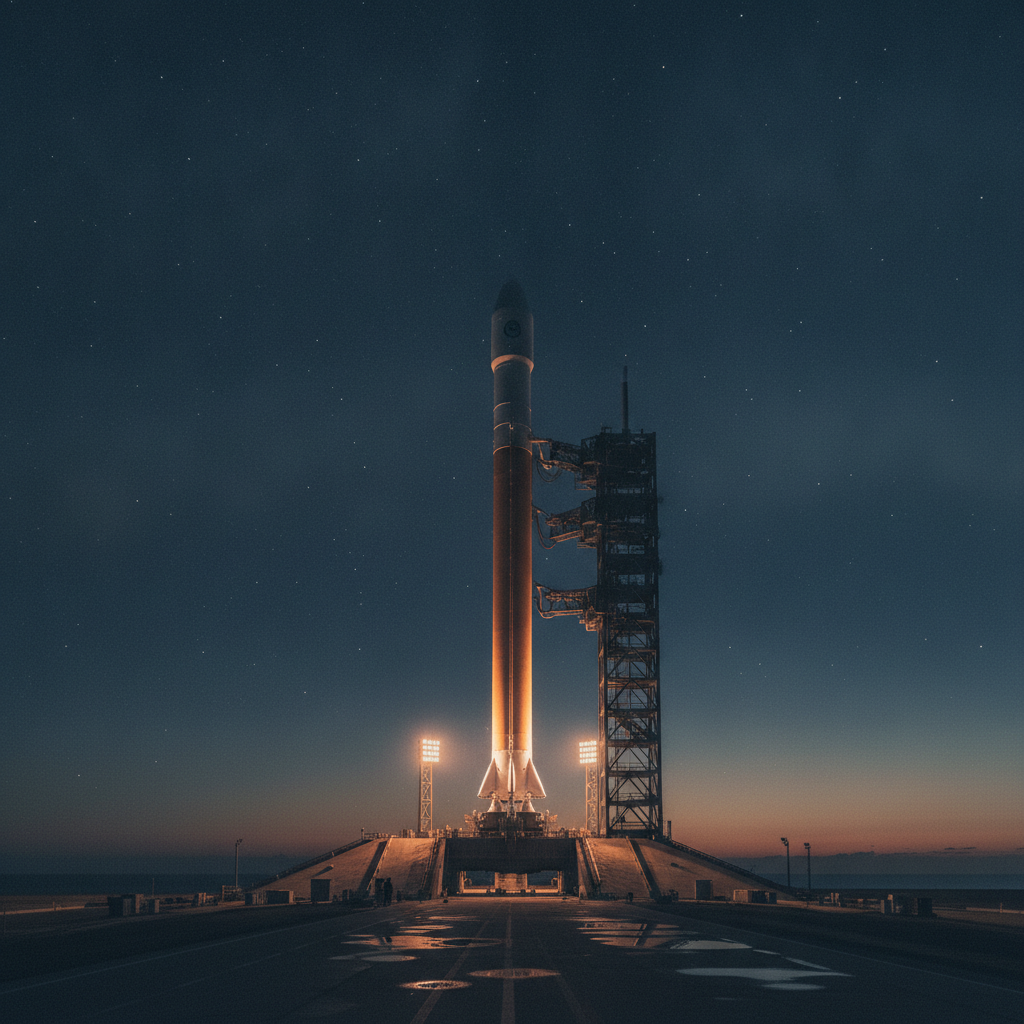
[1][2] NASA, Amazon, and the Space Force are all waiting. [1]
Blue Origin says the architecture could eventually support more than 1,000 launches a year. [1]
The urgency behind those ambitions is sharpening. Analytics firm Quilty Space estimates a shortfall of about 150 launches between now and 2030 outside China — a gap that could double if US military demand is factored in and SpaceX does not extend its Falcon 9 and Falcon Heavy programs. [1]
[1]
The gap between ambition and hardware has rarely felt this structural. Every delay tightens the queue; every new design announcement pushes resolution further down the manifest.
Quilty Space's director of research Caleb Henry put it plainly: "What we learned is that the launch crisis is more severe than we thought and that it will not go away this decade for sure, and it might not abate until sometime late in the 2030s." [1] New Glenn's January window is one data point in a very long curve.
What we learned is that the launch crisis is more severe than we thought and that it will not go away this decade for sure, and it might not abate until sometime late in the 2030s.Caleb Henry