NSA Bahrain's Destruction Exposes U.S. Navy's Logistics Spine
Iran's ballistic missile strikes on the Fifth Fleet's home base have stretched supply lines from hundreds to thousands of miles—with no clear fix in sight.
By The Defense Desk
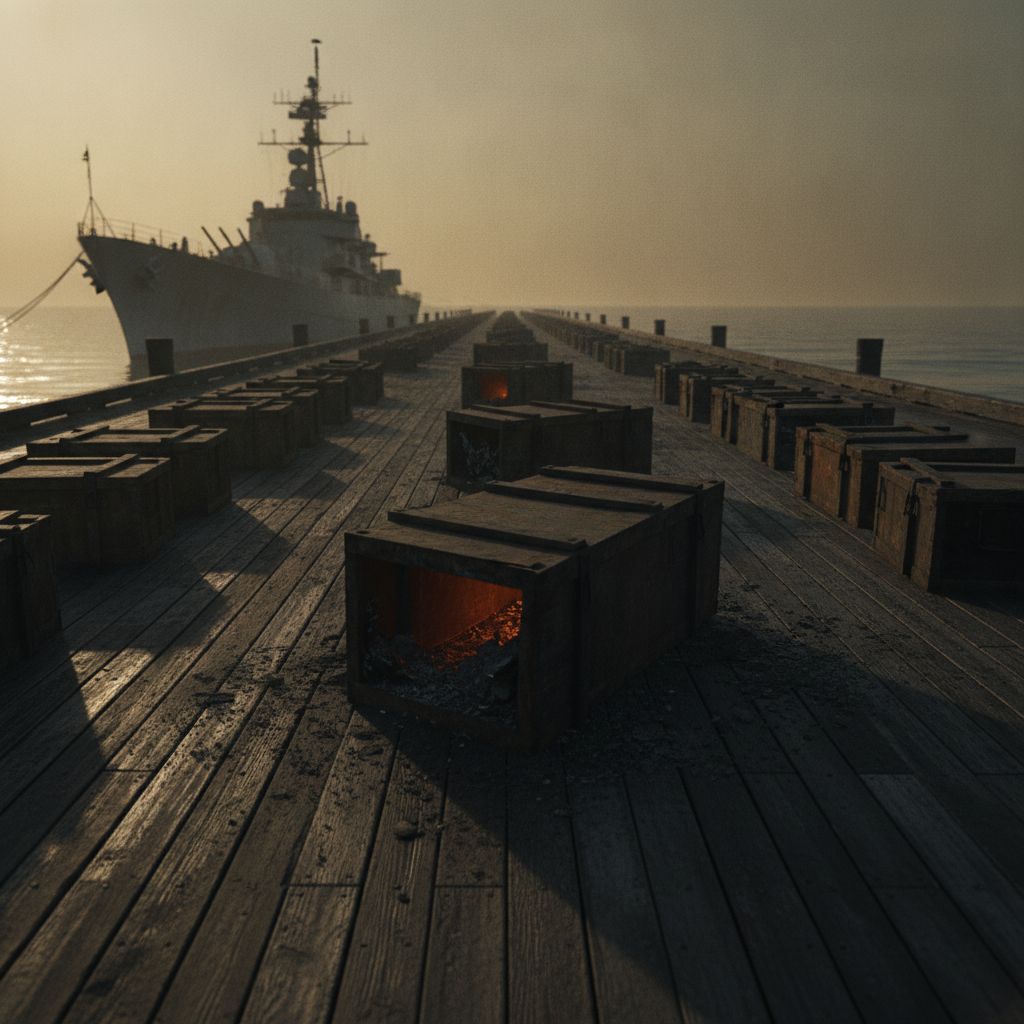
During the opening days of Operation Epic Fury, Iranian ballistic missiles left Naval Support Activity Bahrain virtually uninhabitable—home to NAVCENT, U.S. Fifth Fleet, and the installation that provides the physical infrastructure keeping American military power continuously available across the Middle East. Damage is estimated at close to $400 million. [1]
The ripple effects were concrete and immediate. [1][2] Chief of Naval Operations Adm. [2]
Caudle is now working with Fifth Fleet commander Vice Adm. Curt Renshaw to identify port call alternatives—Kenya, Diego Garcia, and India among them—though each comes with what Caudle called a "transit tax" in time off-station and resources. [2] Meanwhile, well over a thousand evacuated troops and their families remain in limbo six months after the attack, many separated from pets and belongings. [1]
What the Bahrain disaster exposes is not simply a base lost to missiles—it is the fragility of a posture built on geographic certainty in a theater that no longer offers it.
If NSA Bahrain is not reconstituted to something near its pre-attack capabilities, it will fundamentally change how the U.S. Navy operates, supplies and maintains its ships—and how it supports coalition partners across the Gulf. [1] The Pentagon, for now, is talking about "reducing the footprint." [1]