One Screen to Rule Every Drone Sensor
Honeywell Aerospace's SAMURAI system collapses up to eight separate sensor feeds into a single operator interface — and is going airborne.
By The Defense Desk
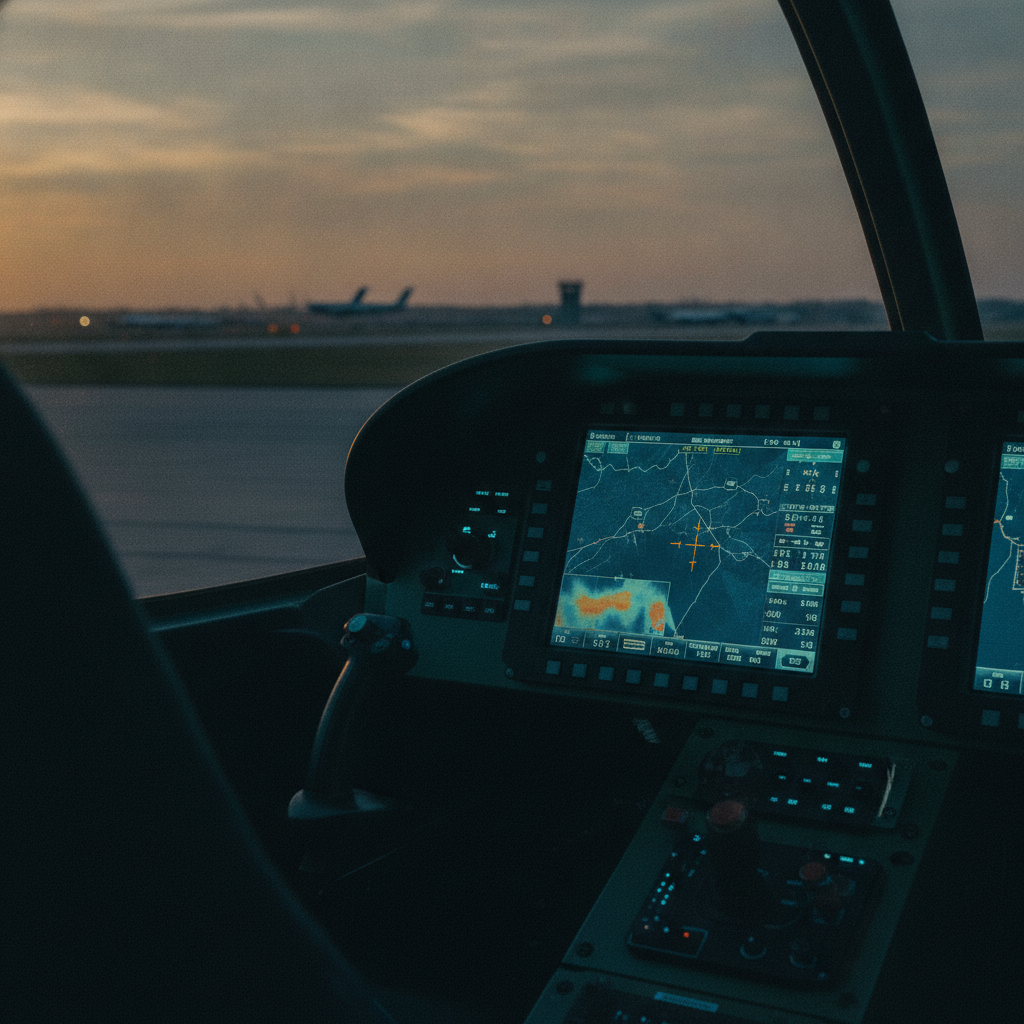
Operators defending a military installation today might juggle six, seven or eight separate screens — radar, cameras, radio-frequency sensors, jamming equipment — simultaneously [1]. [1]
SAMURAI — Stationary and Mobile UAS Reveal and Intercept — runs on UNITAS, Honeywell Aerospace's battle-management software, which integrates sensors and effectors from different manufacturers [1]. The open-architecture approach lets customers plug in equipment they already own rather than replacing it wholesale [1]. "We're not asking them to go buy new stuff," said retired Air Force Col. Tom Konicki, director of business at Honeywell Aerospace [1].
Counter-drone systems can respond with electronic warfare, directed-energy systems, conventional weapons, interceptor drones, or even nets designed to reduce the risk of debris falling onto people or property [1]. EMS Defense Technologies, a wholly owned Honeywell Aerospace subsidiary, was selected for a Department of Homeland Security counter-drone contract vehicle with a $1.5 billion ceiling [1].
The system is also going airborne. Laila eliminates the need for dedicated charging infrastructure, enabling rapid deployment in remote, expeditionary and offshore environments [2]. The Laila-SAMURAI combination is designed to fill the gap between ground-based sensors and high-end missile defense systems [2].
As drone threats multiply in form and intent, the pressure on defenders is less about firepower than about clarity — knowing which sensor to trust, which feed to act on, which threat is real.
"The threat is real, and the threat is now," Konicki said [1]. SAMURAI's pitch is that situational awareness, not just countermeasures, is where the contest is won.