Pentagon Reviews Nuclear Options as B61-13 Rolls Off Line
A classified posture review eyes tactical weapons for regional conflicts, just as the first B61-13 gravity bomb completes production ahead of schedule.
By The Defense Desk
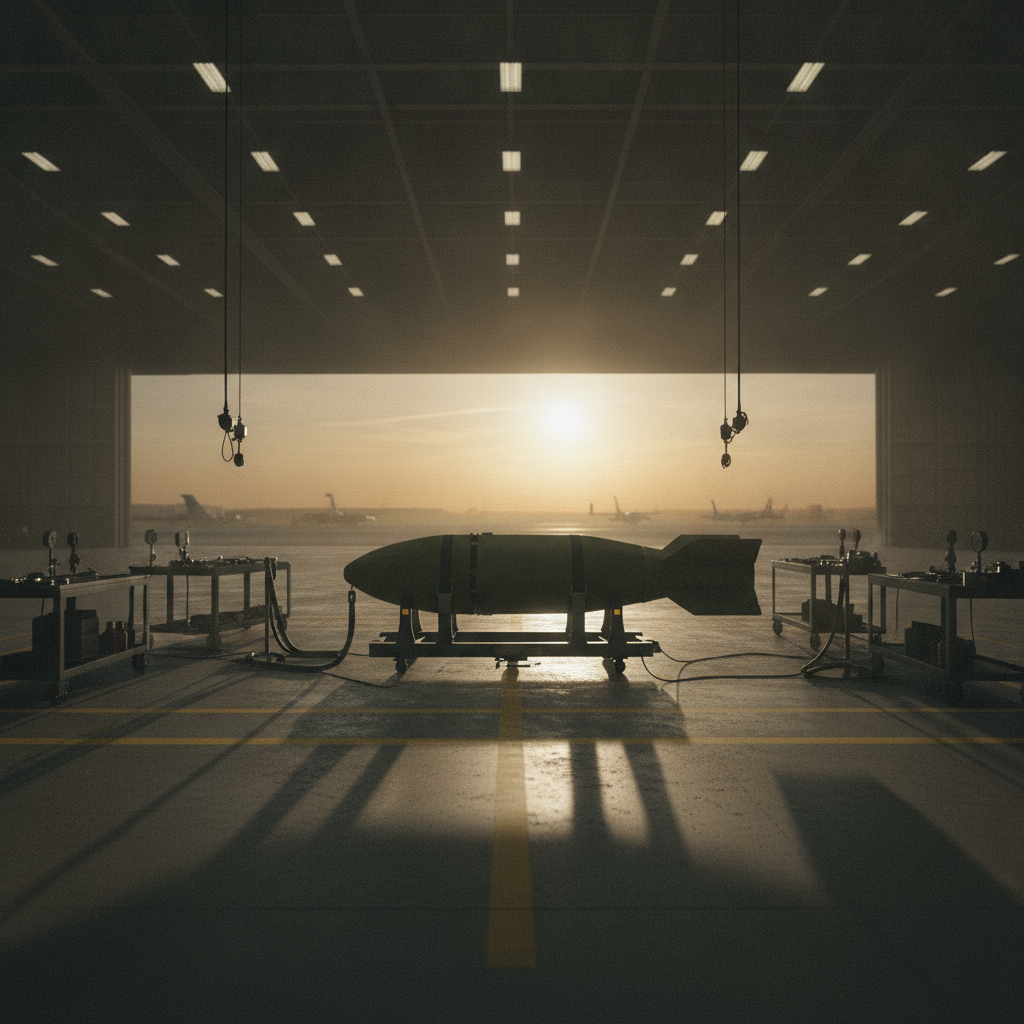
The Pentagon has launched a review of America's nuclear posture focused on providing more "options" for the White House, two top officials said this week — arriving just as the first production unit of the B61-13 gravity bomb was completed at the Pantex Plant, about a year ahead of schedule. [1][2]
Undersecretary of Defense for Policy Elbridge Colby announced the review during a keynote speech Wednesday at the 2026 Deterrence Symposium in Omaha, Neb., stressing he had "no announcement of any kind of change" to declaratory policy, while US Strategic Command head Adm. Richard Correll hosted a call with reporters shortly after Colby got off stage, emphasizing that the department is looking at "expanding options" available to the president and providing "decision space for any conceivable escalation scenario." [1]
The review responds to over a decade of concerns that Russia and China are developing lower-yield tactical nuclear warheads, while the US arsenal is largely reliant on heavier strategic weapons. The fear, as Colby framed it, is a regional war that could escalate from conventional to limited nuclear exchange — a scenario in which the president is left with no rational middle option. [1]
The B61-13 sits at the center of that calculus. With Sandia serving as the lead systems integrator and design agency for the B61-13's nonnuclear components — and with assembly completed at the Pantex Plant in close collaboration among Sandia and Los Alamos national laboratories, the Kansas City National Security Campus, Y-12 National Security Complex, Savannah River Site, the National Nuclear Security Administration, and the U.S. Air Force — it will offer increased yield compared to the B61-12 while retaining the same modern safety, security, and accuracy features — and will not increase the overall number of weapons in the US stockpile. [2] The first production unit was completed just 13 months after Congress approved funding for the program. [2]
What's shifting is not the arsenal's size but its texture — a deliberate move toward weapons that fit between conventional force and strategic annihilation, designed to complicate an adversary's calculations rather than simply raise the stakes.
[1] The review will not be released to the general public. [1]