Perseverance Sets the Interplanetary Distance Record
At 45.22 km driven on Mars, NASA's rover has rewritten the rulebook on autonomous planetary navigation.
By The space-quantum Desk
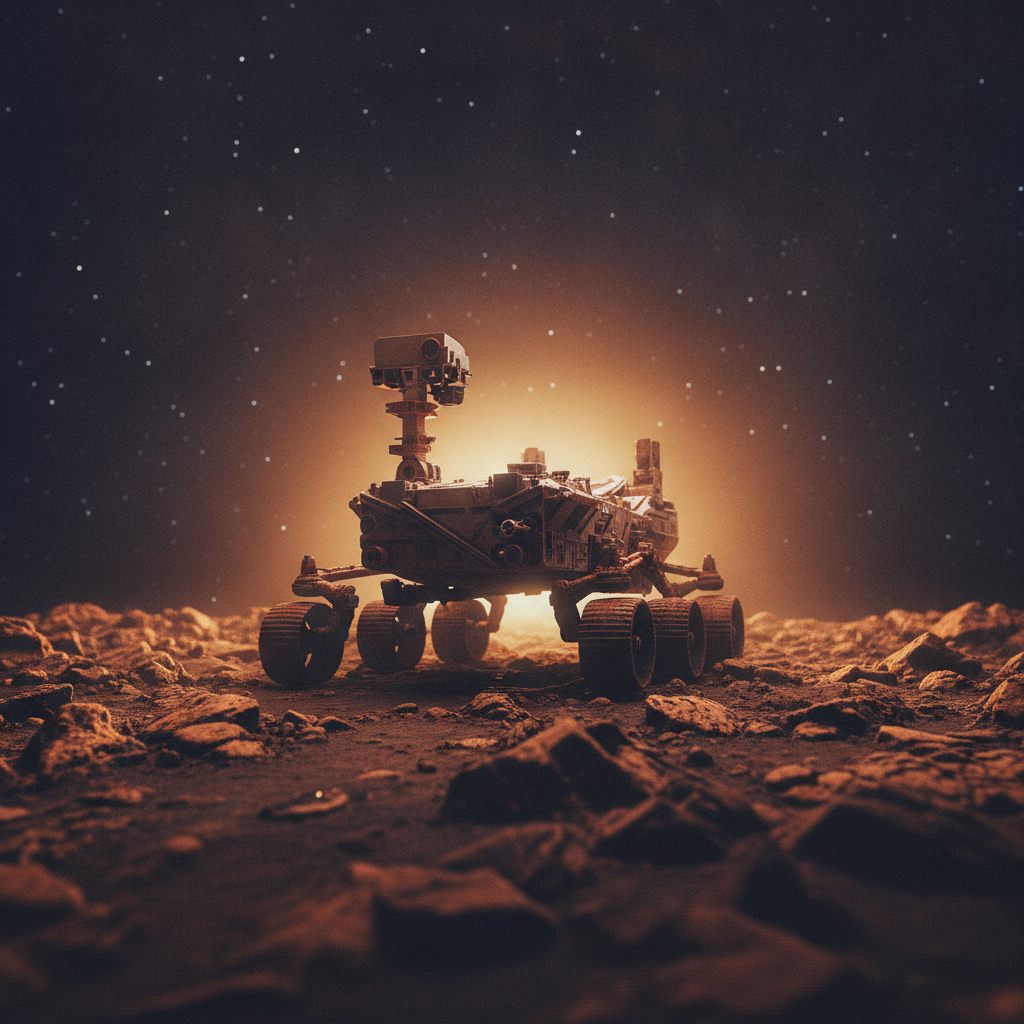
On Sol 2006 — October 11, 2026 — NASA's Perseverance rover clicked past 45.22 kilometers on its odometer, becoming the farthest-traveling vehicle ever driven on another celestial body. Guinness World Records marked the occasion with a plaque for the rover's engineering twin back on Earth. [1]
The record almost arrived quietly. Two months earlier, on Sol 1947, the rover sat just 200 meters short of the milestone — one easy autonomous drive away — but the terrain was too scientifically compelling to rush. Perseverance lingered to perform rock abrasions and proximity science on ancient rock outcrops before sailing past the mark. [1]
Getting there required rewriting how the rover moves. After thousands of simulations, the JPL team raised Perseverance's tilt limit to 24 degrees and reduced the belly-pan clearance requirement to 20 centimeters. [1]
[1]
Distance is only the most legible measure of what the mission has achieved. The deeper story is how each kilometer forced a smarter, more resilient machine — one that now navigates more like an explorer and less like a remote-controlled toy.
The team is also exploring the use of generative SI to help efficiently propose solutions to steer AutoNav along the many legs of a strategic path. [1]
The team is using hard-won lessons from 45 kilometers (more than 28 miles) of driving to reinvent how the rover drives across the Martian surface.Vandi Verma