Poland Wants to Sell the Tank, Not Just Buy It
At MSPO 2026, Warsaw unveiled a heavy IFV demonstrator and declared itself a defense exporter. The ambition is real. So are the gaps.
By The Defense Desk
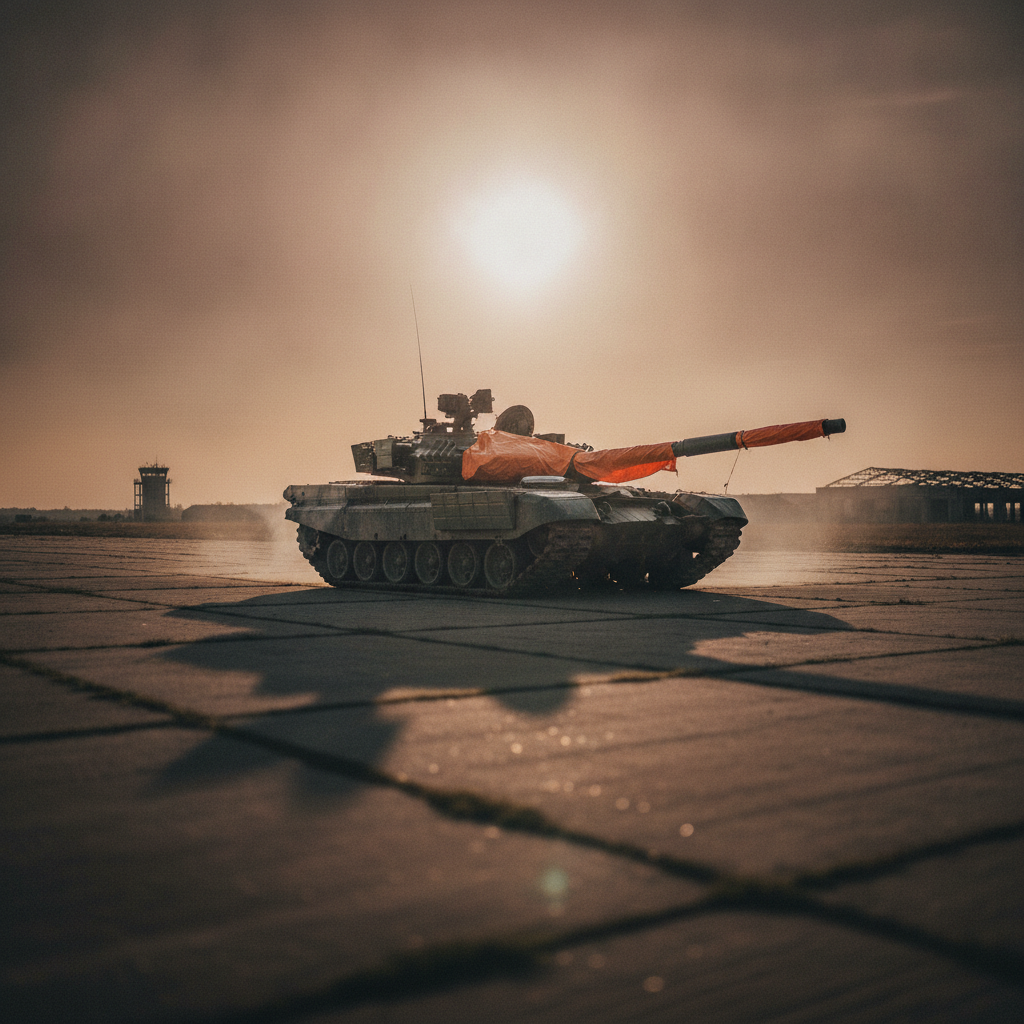
On the opening morning of Poland's MSPO defense show in Kielce, Deputy Prime Minister and National Defence Minister Władysław Kosiniak-Kamysz walked past rows of armored vehicles and made a declaration that would have seemed implausible five years ago: Poland, he said, is becoming not just a buyer of military gear but a major producer of it. [1] The crowd was not surprised. The hardware on the floor made the case before he opened his mouth.
The centerpiece of that argument was a technology demonstrator for a new heavy tracked infantry fighting vehicle developed by state-owned defense group PGZ — a machine that weighs between 40 and 43 tons and is, in the words of a PGZ representative, "a modern platform, with a weight of between 40 and 43 tons, which maximizes troop protection." [1] It is not yet a prototype. That comes next year. Serial production, if schedules hold, is penciled in for 2029. [1]
The demonstrator sits alongside PGZ's existing light tracked IFV, the Borsuk — Polish for Badger — which is already rolling off production lines. [1] The Polish Ministry of National Defence has ordered 257 Borsuks to date, with a 2023 framework agreement envisioning deliveries of up to 1,400 units across different variants. [1] Military officials expect around 700 of the new heavy IFVs could eventually be procured for the Polish Army as well. [1] Together, these platforms sketch out the shape of a domestic armored vehicle industry that did not meaningfully exist a decade ago.
What is happening in Poland is a collision between necessity and ambition — a country reading the map of its neighborhood and deciding that dependence is a vulnerability. The question is whether a defense industrial base can be willed into existence at the speed that threat calendars seem to demand.
The financial scaffolding behind the ambition is substantial. Poland has been allocated up to €43.7 billion ($50.8 billion) in low-interest loans for military acquisitions under the European Union's Security Action For Europe, or SAFE, scheme. [1] Kosiniak-Kamysz was direct about what that money has meant: "We have reached a level of fifty-fifty [between domestic military gear purchases and imports]. This would not happen without the SAFE mechanism." [1]
The fifty-fifty split is a striking benchmark for a country that spent much of the post-Cold War era as a straightforward importer. Poland has placed orders in recent years for Abrams tanks, F-35 fighter jets, AH-64E Apache helicopters, Patriot missiles, and M142 HIMARS rocket launchers, among other equipment. [1] That procurement portfolio does not disappear overnight. But the direction of travel is clear: Warsaw wants to be on the selling end of future arms catalogues, not just the buying end.
There is a particular logic to building weapons at home when your eastern border has become the defining geopolitical fault line of the decade. Domestic production means supply chains that do not stretch across oceans, maintenance ecosystems that live in the same time zone, and industrial capacity that doubles as economic policy. None of that is new thinking. But the urgency driving it is.
Poland's defense sector is dominated by PGZ, a state-owned group that serves as the organizational spine of the country's industrial ambitions, but it is not alone. [1] A cohort of emerging private companies has begun to take shape around it, drawn by contract volumes that would have been unthinkable before defense budgets started climbing toward their current record levels. [1] The mix matters: state anchors provide the scale and long-term commitment that platform development requires, while private entrants bring pace and competition. Whether that ecosystem matures fast enough to meet Warsaw's export ambitions is a different question.
Kosiniak-Kamysz named the heavy IFV demonstrator as one of the flagship export products Poland's industry could eventually put on the world market. [1] That framing — demonstrator today, export product tomorrow — requires a chain of steps that defense programs routinely underestimate: prototype completion, trials, certification, foreign certification, pricing, and finding buyers who prefer Polish-made over established Western alternatives. The 2029 serial production target implies a compressed timeline for a program still in demonstrator phase.
Defense exports are not simply a function of having a good vehicle. They are a function of reputation, reliability of delivery, after-sales infrastructure, and political relationships. Poland is building all of those simultaneously, which is either a sign of serious institutional ambition or a recipe for overextension — probably both.
The European context matters here. The SAFE instrument represents Brussels placing a structural bet on member states developing their own defense industrial capacity, rather than routing every major procurement to the United States or a handful of larger European manufacturers. [1] For Poland, that bet arrives with an enormous number attached — €43.7 billion ($50.8 billion) in low-interest financing — and a political incentive to spend as much of it domestically as the industrial base can absorb. [1] The fifty-fifty split Kosiniak-Kamysz cited is both a result of that incentive and a signal of how seriously Warsaw is taking it.
What the Kielce show made visible is an ecosystem in transition. The Borsuk is real, in production, and ordered in quantity. [1] The heavy IFV is a credible demonstrator from a group that has delivered before. [1] The financing architecture exists. The political will, at least at ministerial level, is audible. The remaining variables — industrial throughput, export sales cycles, program execution risk — are the ones that tend to outlast press conference confidence.
Every country that has successfully built a defense export industry started somewhere that looked insufficient. The difference between aspiration and trajectory is usually not the first announcement but the fifth delivery. Poland is somewhere in between those two points right now, which makes this moment worth watching rather than either celebrating or dismissing.
The heavy IFV demonstrator in Kielce is a machine made of steel and ambition in roughly equal measure. Whether the ambition hardens into an industry — with export customers, delivered units, and a reputation that survives first contact with procurement reality — will become clear somewhere around 2029. Warsaw has placed its bet. The clock is running.