Promise Robotics Lands D.R. Horton Deal for 1,250 Homes
The Toronto startup's Factory-as-a-Service model brings KUKA arms and physical AI to America's largest homebuilder — one component at a time.
By The Robotics Desk
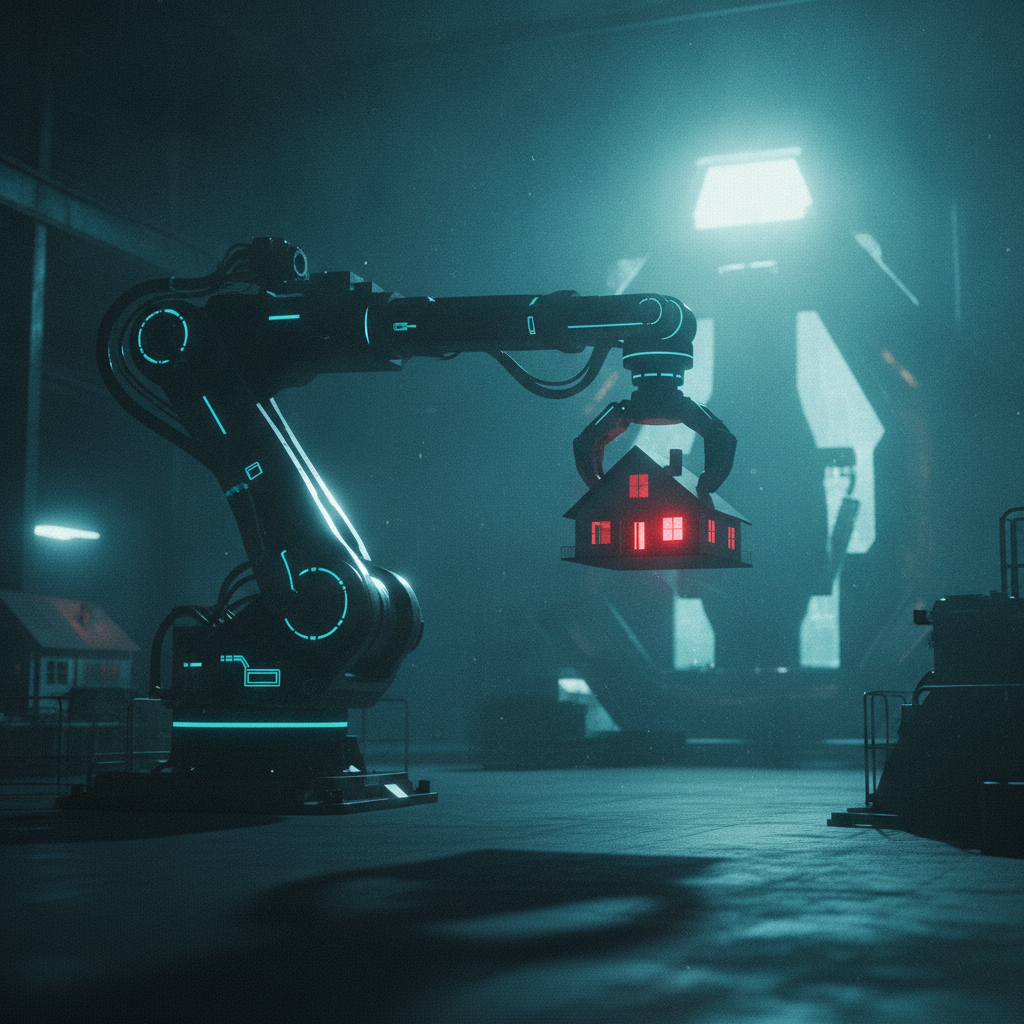
Promise Robotics, the Toronto-based physical AI company founded in 2021, has signed a multi-year agreement with D.R. Horton — America's largest homebuilder by volume — to produce more than 1,250 homes in the U.S. [1]. It is the first major partnership of its kind between an AI-driven component manufacturer and a top-tier national builder, and it puts a very specific thesis to the test: that software-directed robots can tame the notoriously idiosyncratic chaos of residential construction. [1]
The core problem Promise Robotics is solving is not automation for its own sake. It is repeatability in an industry that has never really had it. "There's no such thing as productization, in which the same car is built millions of times with small variations," CEO Ramtin Attar told The Robot Report. "Even in the same home, every floor or wall is different. The clearances, components, and layouts are different." [1] His company's answer is a Factory-as-a-Service (FaaS) model that enables homebuilders to access advanced production infrastructure without the cost, complexity, or risk of developing and operating it themselves. [1]
[1] For every home built, Promise Robotics generates 300 new images and 5,000 new tactile sources — a feedback loop the company says makes its platform smarter with each deployment. [1] Cloud-based software, production logic, and operating intelligence extend across projects and factories, using real-world production feedback to improve the platform and carry stronger capabilities into each new deployment. [2] The company currently uses KUKA industrial robot arms but describes itself as robot-agnostic. [1]
The geometry of what Promise Robotics manufactures is precise: floors of 45 ft. and walls of 20 ft., with windows and doors in them, and stair cages that can be dropped in for fast assembly. [1] Its sweet spot is townhomes of three to four stories. [1] The company claims it can build a two-family home with two stories, a basement, and a garage in a single day — a process that typically takes two to three weeks using conventional methods. [1]
What makes this moment legible is not the robots alone — it is the model. The construction industry has long absorbed waves of point-solution automation without fundamentally changing how homes get built. Connecting design intent, factory production, and site installation in a single operating layer is a different kind of offer entirely.
Initial FaaS facilities are being set up in Edmonton, Calgary, and Phoenix. [1] The geographic spread is deliberate: Phoenix required 50% less sheeting and different bracing than Canadian sites, and the system is built to adjust its fastening algorithms and code compliance rules to local market conditions. [1] Brad Conlon, senior vice president for strategic growth and innovation at D.R. Horton, framed the deal in operational terms: "At D.R. Horton, we are always looking for innovations that can help us improve how we build. We are continuously focused on improving cycle times, increasing production capacity, and bringing greater consistency and predictability to our operations. Promise Robotics' integrated platform gives us a new capability to support those goals." [1]
Promise Robotics is explicit about what it is not. Attar distinguishes his company from vertically integrated developers or home designers. "We're more about the advancements in robotics, and we're here to scale when companies need to scale," he said. [1] The FaaS structure means builders buy as much capacity as they need, then expand — a model that mirrors cloud infrastructure more than traditional construction subcontracting. [1]
The housing shortage is structural, not cyclical, and every tool that chips away at it deserves scrutiny rather than applause. The interesting question now is whether a platform that gets demonstrably better with each build can outpace the industry's habit of absorbing new technology slowly and incompletely.
With D.R. Horton as its first major U.S. partner and three active factory cities, Promise Robotics has moved from proof-of-concept to production at speed. [1] Whether the FaaS model can replicate across enough markets to move the needle on North American housing supply is the next, harder test. [2]