Saildrone and Umoe Mandal to Build USVs in Norway
A new manufacturing pact brings Saildrone's Baltic surveillance ambitions closer to home — and to production scale.
By The Defense Desk
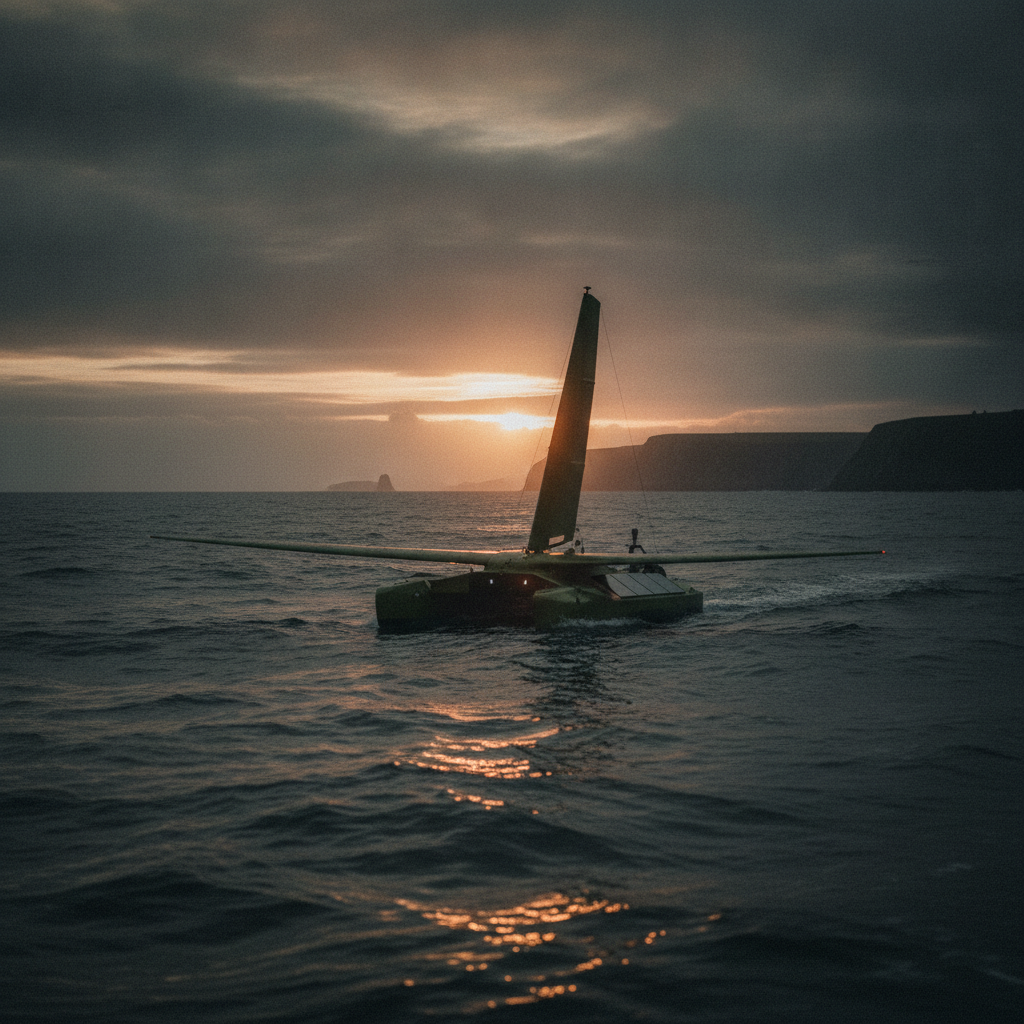
At the Euronaval defense show in Paris, Saildrone and Norwegian shipbuilder Umoe Mandal signed an agreement to produce the Saildrone Surveyor — a 20-meter unmanned surface vessel — with hull construction handled in Norway and the autonomy suite, electronics, and navigation systems supplied by the US manufacturer. [1]
The deal splits responsibilities along each company's strengths. Umoe Mandal was chosen for its expertise in composite structures — glass and carbon fiber — and already supplies the mast for the British Type-26 frigates. [1] Saildrone retains control of the software and sensor stack, keeping the intelligence layer firmly in American hands.
Umoe Mandal CEO Tom Fidgeland confirmed that his company has already begun building a new manufacturing site near its main plant, dedicated to producing the USVs — before a single firm order is on the books. "We can easily reach two vessels a month, but that can be expanded more than that for sure," Fidgeland told reporters. [1]
Building factory capacity ahead of confirmed demand is a bet on a particular reading of history — that the appetite for maritime surveillance will outpace the bureaucratic machinery of procurement.
The Norway deal is the latest step in Saildrone's accelerating European push. Over the summer, the company opened a headquarters in Copenhagen, and in August it signed an agreement with Polish company Southern Spars to manufacture the Surveyor's wings in Poland. [1] The supply chain is quietly becoming a NATO-adjacent industrial network.
Sales strategy in Northern Europe is expected to run through the Nordic Defence Cooperation framework — NORDEFCO — which allows Norway, Denmark, Finland, and Iceland to rapidly procure systems including USVs. [1] Rather than selling hardware outright, Saildrone is pitching a surveillance-as-a-service model: member countries contract for maritime intelligence, not vessels. [1]
Sweden has already activated the model. In October, the Swedish Armed Forces became the first country to execute a national deployment under the NORDEFCO framework, launching a year-long Baltic Sea surveillance mission using four Saildrone Voyager USVs. [1] Saildrone operates the vessels under the Swedish flag; the Swedish Navy sets mission parameters and receives a continuous data feed.
Saildrone's European managing director Robert Kleist argued that multi-nation uptake would amplify the value: countries watching the same waters could share the resulting intelligence, turning individual deployments into a collective picture. [1] Kleist cited Denmark, Finland, Sweden, and Norway as anticipated interested parties for Saildrone USVs. [1]
The Baltic context matters. Russia reaches the sea through Saint Petersburg, the Leningrad Oblast, and the Kaliningrad exclave wedged between Poland and Lithuania. [1] The region has seen a rise in hybrid warfare and sabotage incidents targeting critical underwater infrastructure in recent months, sharpening demand for persistent maritime domain awareness. [1]
When a theater is defined by ambiguity — ships that may or may not be hostile, cables that may or may not be sabotaged — the premium shifts from firepower to observation. Knowing where every vessel is, all the time, becomes its own form of deterrence.
On the question of Russian vessels approaching or seizing a USV, Fidgeland was characteristically direct: "We have radars, we have cameras… We can see them [Russians] miles away. If they have bad intentions, we can take nice photographs of them." [1]
The harder question isn't whether Nordic navies will want persistent Baltic surveillance — they clearly do. It's whether a surveillance-as-a-service contract can survive a political moment when every allied nation wants sovereign kit, not cloud-managed data streams. Saildrone is betting the answer is both. [1]