Saudi Arabia's Missile Plant Is Getting Bigger
Commercial satellite images reveal a new casting-pit building at al-Duwadimi—likely built to produce longer-range, solid-fuel ballistic missiles.
By The Defense Desk
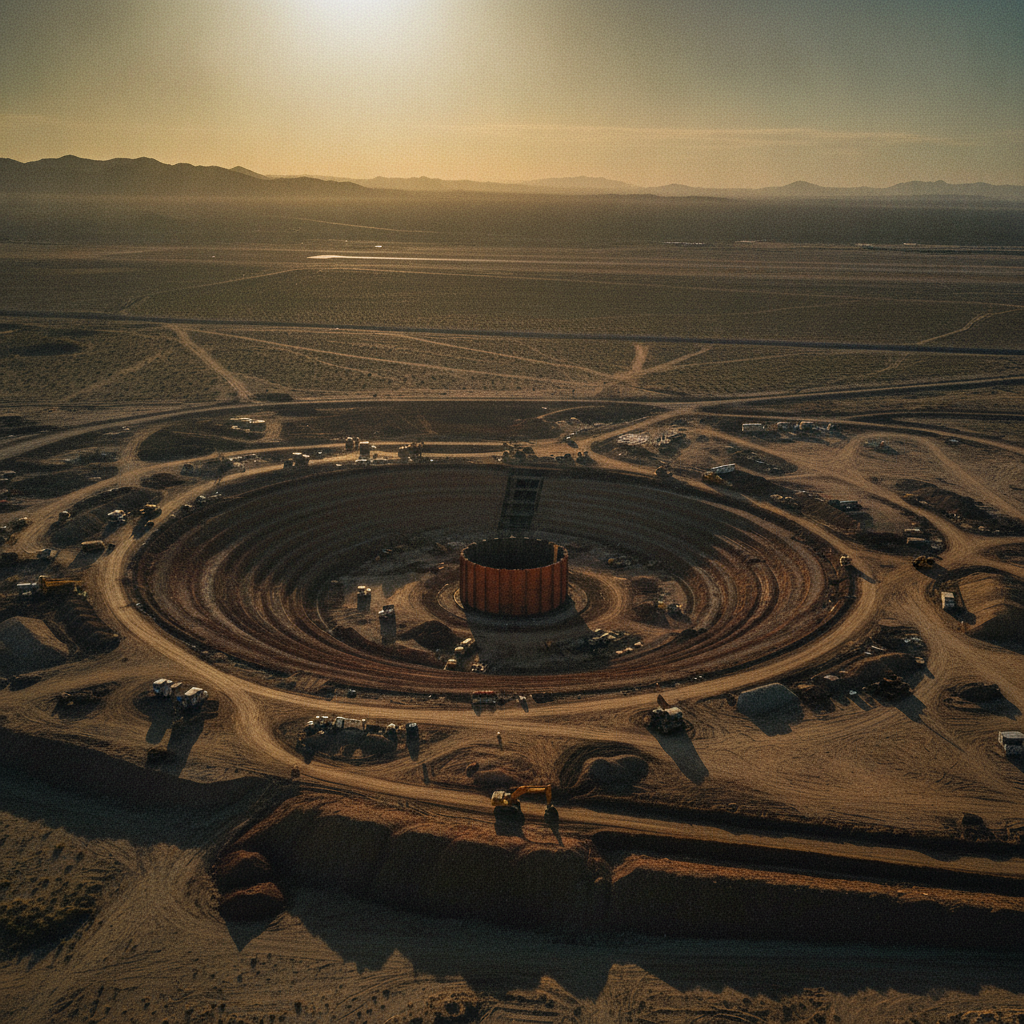
Saudi Arabia appears to be expanding its ballistic missile factory to build larger solid-fuel missiles that could fly farther or carry heavier payloads, according to two U.S. researchers who analyzed more than a year of commercial satellite images. [1]
Sam Lair and Michael Duitsman of the Foreign Policy Research Institute studied Planet Labs imagery of the al-Duwadimi complex—about 125 miles west of Riyadh—taken between April 2025 and September 2026. They found a new casting-pit building at least twice the size of the existing one, flanked by heavy duty blast diverting walls on either side to prevent accidental explosions from damaging adjacent structures, somewhat similar to those depicted in imagery of U.S. and Iranian missile plants. [1]
Lair assessed that Saudi Arabia may now be producing the solid-fuel DF-15, and that the al-Duwadimi expansion is likely aimed at the longer-range DF-21 or a comparable missile. Lair and Duitsman, along with experts from the International Institute for Strategic Studies and CNA, told Reuters that the makeup of Saudi Arabia's missile force suggests that the al-Duwadimi complex relies on Chinese technology—a turn Riyadh made because Washington has long restricted exports of longer-range missile systems. [1]
The facility could be ready to start producing missiles as early as the end of the year, FPRI said. More capable missiles could help Saudi Arabia deter Iran and close what IISS research fellow Sascha Bruchmann called a capability gap—but the expansion also risks deepening congressional opposition to a U.S.-Saudi civilian nuclear agreement already under scrutiny for proliferation concerns. [1]
What unfolds at one desert complex rarely stays contained to its borders. When neighbors watch, they calculate—and build accordingly.
CNA analyst Decker Eveleth, tracking al-Duwadimi's construction with commercial satellite imagery, put it plainly: the same thing is happening in the UAE, in Turkey—across the Middle East. [1] The race is already running.
Iran has a lead because its missiles and drones can strike Saudi wherever it wants. The Saudis could close that capability gap a bit.Sascha Bruchmann