Sesame-Seed Magnets Give Prosthetic Limbs a Better Signal
MIT's magnetomicrometry system implants 3mm beads in muscle to track movement with accuracy that skin electrodes never achieved.
By The Neurotech Desk
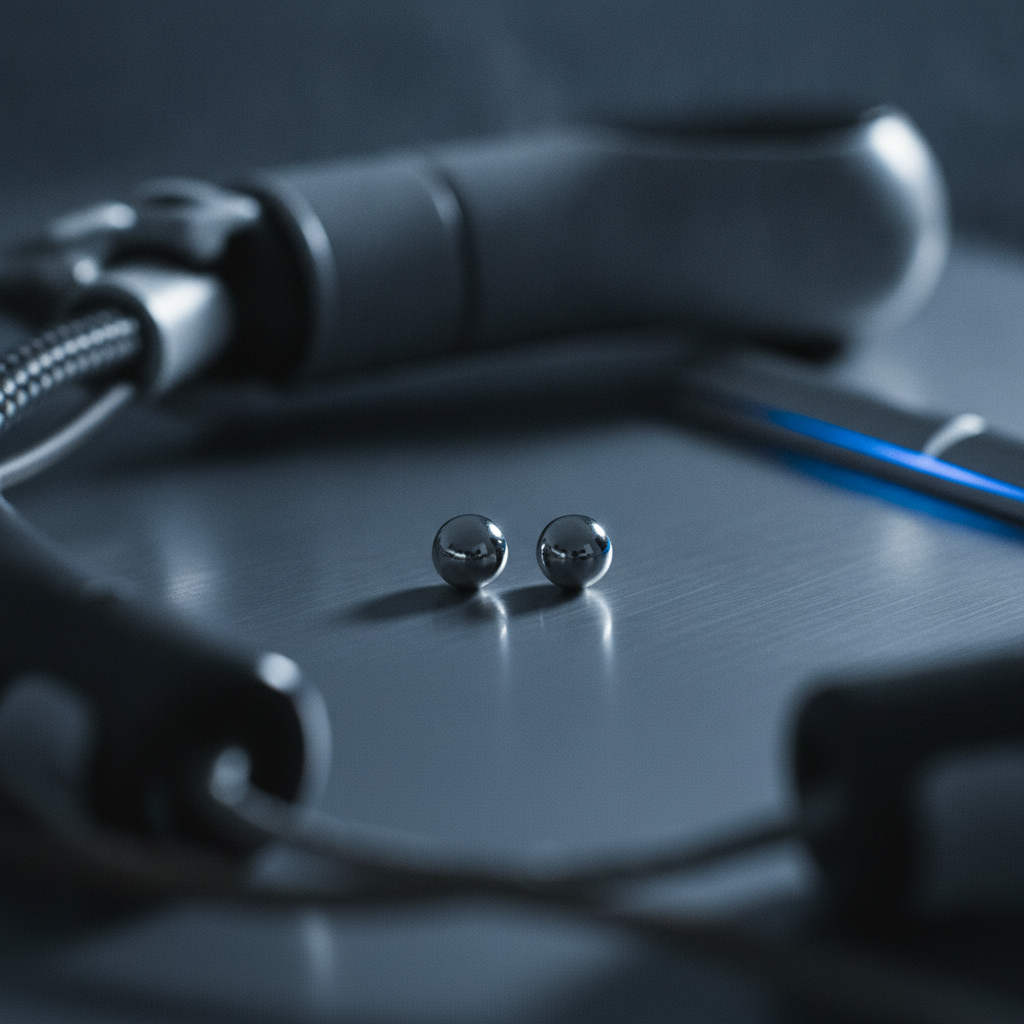
MIT researchers have shown they can accurately track muscle movement using tiny magnetic beads implanted in muscle tissue — a development that could finally give people with amputations reliable, natural control over their prosthetic limbs. [1]
The method is flawed. When a muscle holds a fixed length for several seconds, the signal fades; sweat can interfere with detection of the signal; and the electrodes may pick up signals from muscles other than the intended target. [1]
The new technique, called magnetomicrometry, implants pairs of magnets into muscles. The beads are 3 millimeters in diameter — about the size of a sesame seed — and made from an alloy of neodymium, iron, and boron, coated with gold and parylene C for biocompatibility. An external sensor array reads their position through up to 6 centimeters of tissue, translating muscle length and velocity into prosthetic control signals in real time. [1]
The study, published in Nature Sensors, tested three participants with below-knee amputations who had previously undergone agonist-antagonist myoneural interface surgery — a procedure that reconnects severed muscle pairs so they continue communicating within the residual limb. Results showed the magnet-based approach outperformed both implanted and surface electromyography for accuracy and stability. [2]
Taken together, the two research lines trace a coherent direction: away from the body as a passive socket for a mechanical add-on, toward a model where flesh, bone, and machine share the same information loop.
The MIT team is now running a larger study evaluating prosthetic limb control using the magnetic bead measurements directly. [2]