SpaceX Goes Public on Its Own Terms
A $75 billion IPO, 85 percent voting control, and a CEO who can only fire himself. Extreme ownership, now listed on Nasdaq.
By The energy-climate Desk
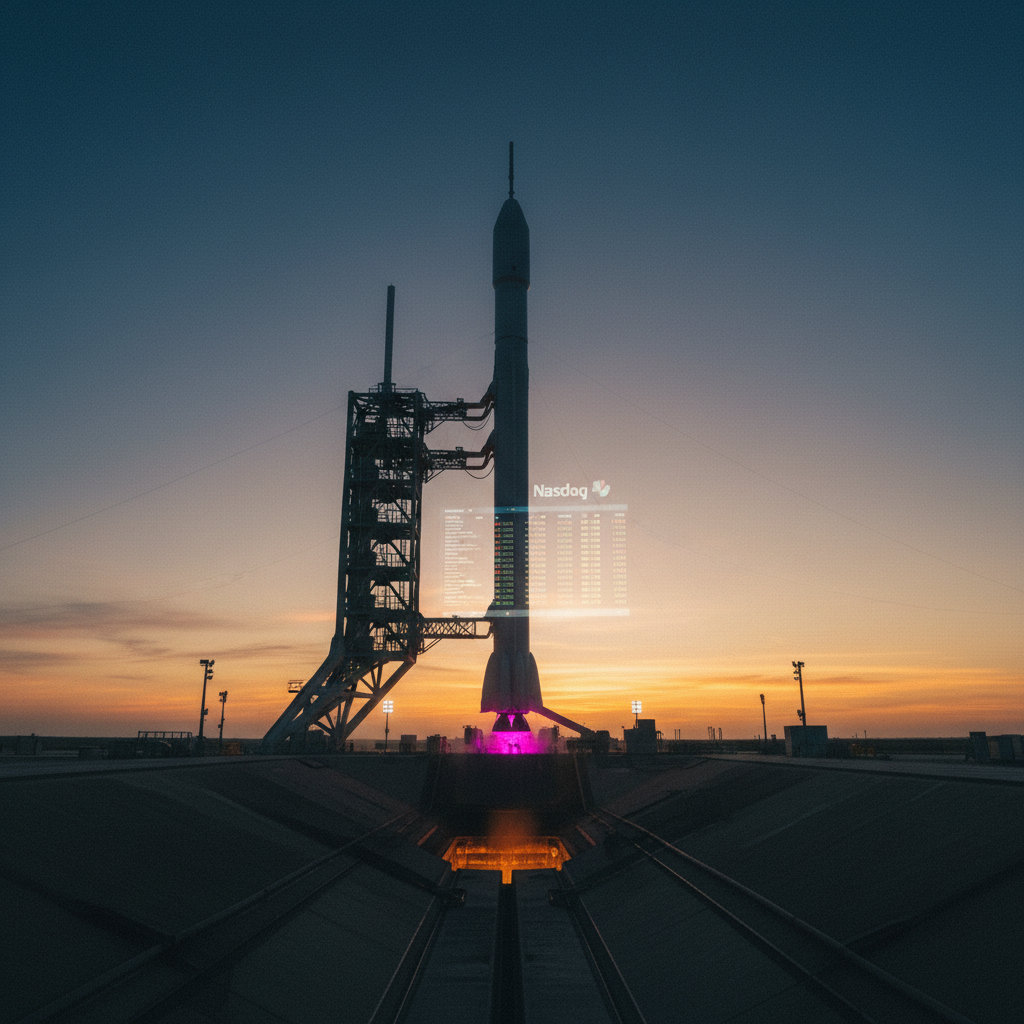
SpaceX raised $75 billion in an initial public offering this week — nearly three times more than any company has brought in from an IPO — and debuted on the Nasdaq stock exchange Friday, with shares lifting about 22 percent to $164.80. [1][2] The number is staggering. The structure behind it is stranger still.
Elon Musk holds 85.1 percent of the voting power of SpaceX, and most of the company's board members are his long-time allies. [2] The only way he can be removed as CEO is if he votes to fire himself. [2] Some skeptical investors have slammed these provisions as "novel and extreme" because they strip shareholders of oversight and make it nearly impossible to hold Musk accountable. [2]
And yet the market bought in. [2] The record haul also reflects a bet on the internal culture that produced the company: extreme ownership, a mantra baked into job postings and informal titles alike.
The principle is straightforward in practice. Current SpaceX job postings call for engineering hires to "demonstrate extreme ownership … from concept to delivery." [2] The company also incorporates the idea through the informal title of "responsible engineer." [2]
"You don't have to gain trust. [2] That ethos has a shadow side. Its purchase of Musk's money-losing AI research lab xAI has made the overall company unprofitable. [2] Its dreams of reaching Mars require a more powerful rocket, which SpaceX has yet to reliably operate. [2]
There is something worth sitting with here: a governance model that demands accountability from every engineer on the floor while concentrating final authority in a single person. The tension is not incidental — it is the product. Whether that design scales to a public company is a different question entirely.
The country's biggest public pension funds urged Musk to surrender some of his control ahead of the IPO; it didn't happen. [2]
Meanwhile, the SpaceX diaspora is spreading the culture outward. Dozens of former SpaceX employees have founded startups. [2] Brian Manning, ex-SpaceX engineer and now CEO of satellite company Xona Space Systems, says "extreme ownership" isn't written on the walls or in training materials, but it is captured by company values such as responsibility and ambition. [2] "We're hiring smart people so they can tell us how it should be done and have accountability," he says. [2]
Away from the governance debate, the week's other headline involves a very different kind of internal reckoning. Life Biosciences, a biotech company focused on reversing age-related diseases, announced it had dosed its first volunteer — a person with glaucoma who received an experimental treatment injected directly into the eye. [1] The approach relies on "reprogramming" cells to a younger state, with the company already eyeing broader applications across diseases of aging. [1]
Two stories, one week, each about what happens when a long-held conviction finally meets the real world. One is about who controls a rocket company once the public gets a say. The other is about whether biology itself can be rewritten. Neither question has a clean answer yet.
SpaceX is now publicly traded, but by design it operates as though it isn't. If anything trips up the company, extreme ownership means Musk will likely only have himself to blame — which is, after all, exactly the point. [2]
People are paying a trillion dollars for Elon.Ross Gerber