The Army Now Has 600 Dedicated Space Soldiers
A new enlisted specialty—MOS 40D—ends the revolving-door system that had trained space operators only to send them back to their home branches.
By The Defense Desk
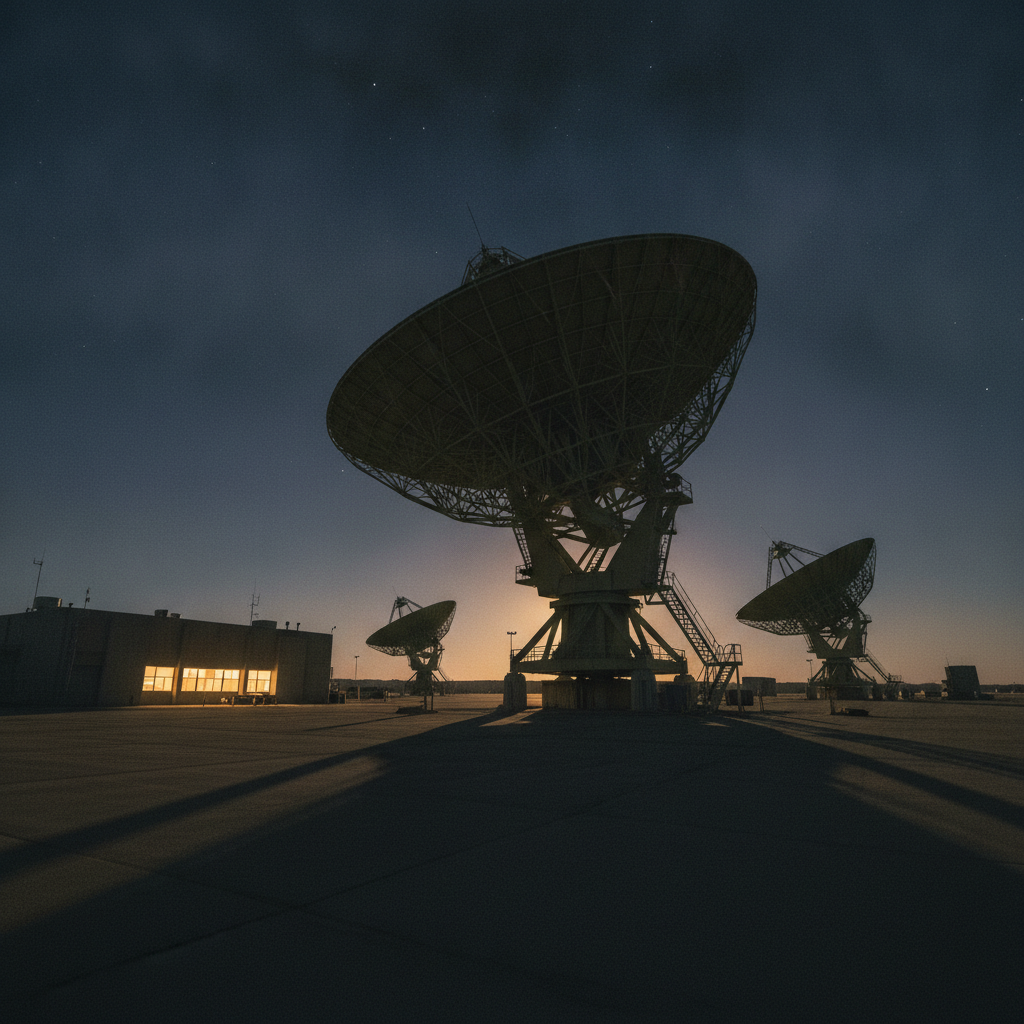
The U.S. Army has transferred 600 enlisted soldiers into a new permanent career field—MOS 40D Tactical Space Operations Specialist—formally creating the Space Operations Branch's first dedicated enlisted cadre. [1] Nearly 3,000 soldiers applied; those selected came largely from Military Intelligence, Air Defense Artillery, and the Signal Corps. [1]
The Army's Space Operations Branch was officially established in June, pairing the new enlisted specialty with functional area 40As—the Army's Space Operations Officers—who have been part of the force since 1999 but have never had enlisted peers. [1] The Army announced in January that applications for the specialty would be open to soldiers in grades E-4 through E-9 from the active-duty Army, National Guard, and Army Reserve, with the MOS slated to be officially established Oct. 1. [2]
The move addresses a structural problem that has dogged Army space operations for years. Previously, soldiers were temporarily pulled from other specialties and assigned to space roles, but their hard-won expertise evaporated when they rotated back to their home branches. [1] "For too long, enlisted soldiers with specialized space training and experience rotated through critical space assignments, eventually returning to their basic branches," said Lt. Gen. John L. Rafferty, commanding general of U.S. Army Space and Missile Defense Command. [1]
The Army is planning to open 1,000 slots for the new specialty, a number that could swell to 1,500 by 2032. [1]
The scope of what these soldiers will do is broader than satellites or signals. Col. [1] Soldiers in the 1st Space Brigade, the Army's only singularly-focused space unit, already support theater missile warning and long-distance satellite communications. [1]
A key design principle: these soldiers are expected to work alongside ground forces, not from remote facilities. Command Sgt. Maj. John Foley, the senior enlisted leader of U.S. Army Space and Missile Defense Command, made the distinction explicit. "Army space soldiers must be on the ground to provide effects to the warfighter and operate in deep enemy and extended deep areas," he said. "That is the distinct difference that only soldiers can do for our Army." [2]
What the Army is building here is not a capability so much as a culture—one where space knowledge compounds across careers rather than leaking out the door with every rotation. Institutional memory, it turns out, is itself a force multiplier.
The selection bar was deliberately high. Command Sgt. Maj. Rickey Jackson described the 600 chosen soldiers as those who "master their current jobs and consistently stand apart from their peers"—a standard meant to seed the new branch with NCO-corps credibility from day one. [1]
Space has been called a contested domain for years. The Army is now betting that a permanent, professional enlisted corps—not a rotating pool of borrowed talent—is what it actually takes to compete there.
The rotational system served the U.S. Army well in the past but will not meet the demands of the future, which requires a professional and sustainable approach to training, career progression and leader development for Army Space soldiers.Lt. Gen. John L. Rafferty