The Army's New Basics: Drones, Jamming, and Survival
From Lithuania to Georgia, the U.S. Army is rewriting the fundamentals of soldiering for a battlefield saturated with unmanned aircraft.
By The Defense Desk
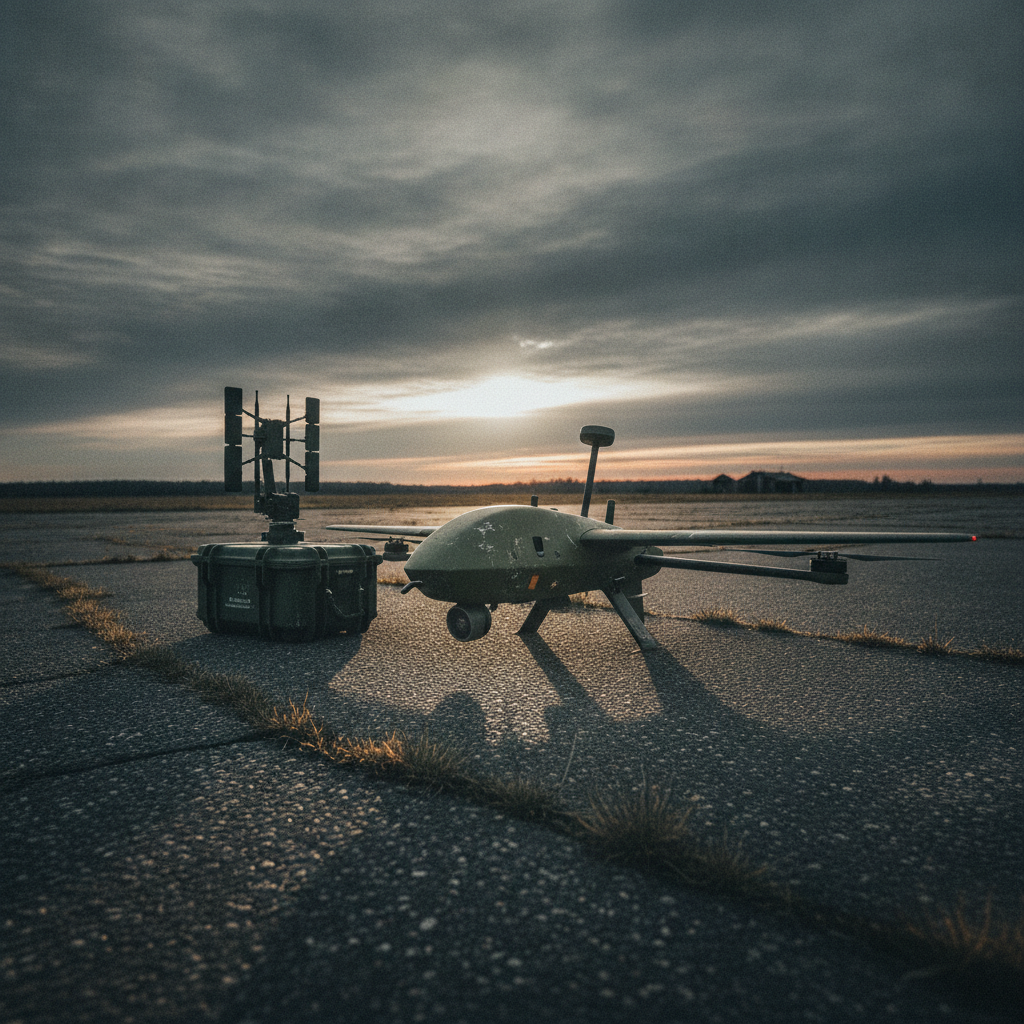
For decades, the Army's baseline soldiering skills were fixed: marksmanship, map reading, radio etiquette. [1] The battlefield changed faster than the training manual.
The push is formalized under Project Flytrap, an Army counter-UAS initiative that has leveled up from the individual soldier to the squadron level with multiple iterations. The most recent iteration, Project Flytrap 5.0, took place in Lithuania and involved partner nations including the United Kingdom and Australia, led by the Army's V Corps. [1] Together, the countries integrated and tested more than 50 industry-provided technologies, launched effects and unmanned ground vehicles, and tested against a live opposing force.
Col. Timothy Price, commander of the 2nd Cavalry Regiment, framed the stakes plainly: "The American way of war is centered on maneuver, and counter-UAS cannot remain tied to static defense." [1] The regiment is expanding Project Flytrap into a battalion-level operational capability, adapting from small-unit field trials into tactical employment connected with operational objectives aimed at breaking through drone-saturated frontlines on Europe's Eastern Flank.
Command Sgt. Maj. Jesse Clark, the regiment's senior enlisted leader, made the scope of the change explicit at the Association of the U.S. Army annual meeting. "Everyone needs to know these basics because it's going to be required whether you're on the frontline or you're back in the rear because we're going to have UAS all over the place," he said.
What makes this moment distinct is not the technology itself — it is the institutional acknowledgment that the technology has already won. Armies don't rewrite their foundational training lists for tools that might matter someday. They do it when the alternative is fielding soldiers who are already behind.
At Fort Stewart, Georgia, that reckoning is already playing out in concrete form. The Marne Unmanned Center of Excellence, which became operational in March, moves soldiers through academic instruction, virtual simulators, and increasingly challenging flight tests. [2] Before anyone touches a real aircraft, soldiers spend 40 to 50 hours operating virtual drones — learning to navigate through windows, under sallyports, and in conditions where line of sight or video quality is lost.
Fort Stewart also hosts a 60-seat collective trainer where each soldier operates their own laptop while a battlefield view is plastered across a massive screen at the front of the room. [2] Drones become part of the fight, and operators must coordinate with other capabilities — artillery, armored vehicles — in real time. Those who pass the simulators move outside, flying real aircraft through graded obstacle courses, then into the woods, piloting drones they can no longer see.
Spc. Tyler Lee, a student at the center, grew up playing video games, listing first-person games like Call of Duty among his favorites, and even bought a commercial drone to improve his skills. [2] Despite completing the academic training and simulators, he was measured about where he stood. "I'm nowhere near proficient," he said. "I would still consider myself a beginner even though I've flown a lot and I've got my own [drone]." [2] His instructor, Staff Sgt. Nway Nway Lwin, confirmed that basic maneuvering is only the entry point — the real curriculum starts with named-area-of-interest reconnaissance missions and complicated obstacle courses graded on time standards.
Chief Warrant Officer 5 Jonathan Morrison, who helped spearhead the base's drone training program, set the bar higher still. [2] Some units at the base already practice with one-way attack drones: aircraft designed to carry explosive payloads and detonate on impact with a target, the same type already in use in theaters across the world.
The gap between qualifying and being truly prepared is where wars are decided. Every iteration of doctrine, every new badge requirement, every hour logged in a simulator is the Army's attempt to close that gap before it matters in the field.
The U.S. military has strived to incorporate UAS and counter-UAS training across all branches, with new units in the Marine Corps and the Defense Innovation Unit aiming to recruit service members with first-person-view drone experience to participate in the Pentagon's Drone Dominance program. [1] Drone literacy is no longer a specialist skill. In the Army's new framework, it sits alongside map reading and marksmanship — a basic, expected of everyone, front line to rear.