The Genetically Enhanced Dog of War
Palmer Luckey and Ben Lamm want to redesign the military working dog from the genome up. The Pentagon's canine supply chain has never looked so fragile.
By The Defense Desk
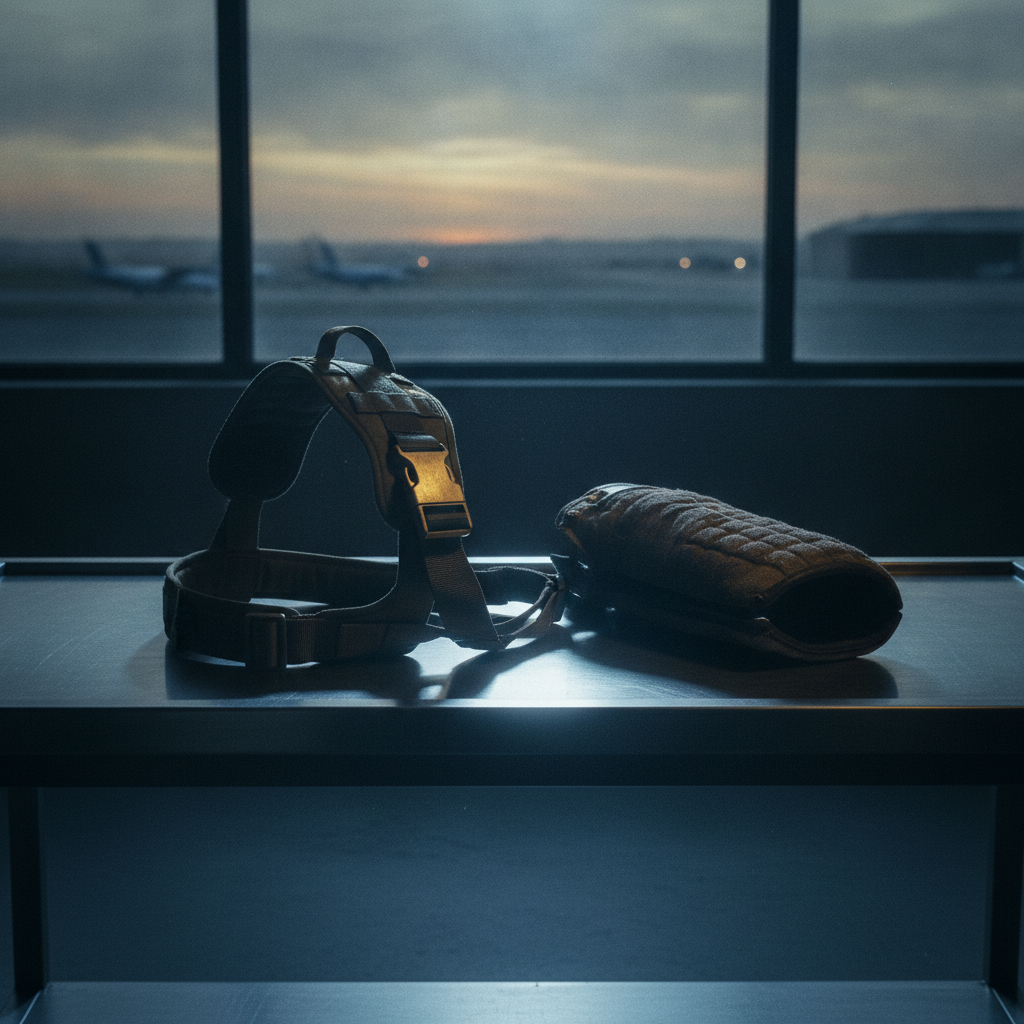
The U.S. military trains roughly 200 dogs to field 100. The other half wash out — too anxious, too soft, too slow to learn the particular grammar of war. Meanwhile, 80% of the working dogs that do make it into service were born somewhere in Europe, shipped across the Atlantic, and handed to handlers who have no say in the genetics that shaped them. For decades, that supply chain has functioned well enough. Now a Texas startup backed by $200 million in seed funding is arguing it has never been good enough. [1]
Warhound launched Friday with a proposition that sounds equal parts veterinary science and defense acquisition reform: use genetic engineering to produce healthier, more capable military working dogs, and in doing so, reduce American dependence on what the company calls a 'shrinking' European supply chain. [1]
The company was conceived by Anduril Industries founder Palmer Luckey and entrepreneur Ben Lamm, who started Colossal Biosciences, the firm best known for its efforts to revive extinct species. According to the announcement, Luckey and Lamm conceived the idea for Warhound years ago at the annual Moonshots Summit, a gathering where entrepreneurs discuss ambitious ideas — which, by most definitions, this qualifies as. [1]
S. Special Operations Command. The leadership stack reads like a deliberate signal: this is not a pet-tech company with a defense narrative bolted on. [1]
What makes the venture interesting is not merely its ambition but its structural logic — two founders combining distinct scientific and technological lineages to solve a problem that is, at its core, a supply-chain and biological reliability problem. The answer to both, they argue, is the same: redesign the animal before it ever reaches the kennel.
Luckey's contribution comes through Anduril, which makes autonomous platforms including drones and submersibles. His role at Warhound is to bring battlefield-awareness technology to the dog-handler relationship — sensors, communication layers, situational intelligence in the field. Lamm's Colossal Biosciences brings the genomic toolkit. The company describes the division of labor directly: 'Colossal's science will help produce healthier dogs with characteristics suited to demanding missions, while Anduril's technology will give dogs and their handlers greater awareness and protection in the field.' [1]
Spirk has framed Warhound's mission in welfare terms as much as operational ones. 'Our long-term goal is simple: healthier dogs, better-prepared teams, and more service members and first responders coming home safely,' he said in the company's press release. [1]
The tension at the center of this project is not technological — it is ethical and definitional. A dog bred with altered genetics for combat duty occupies a space that existing frameworks, regulatory or moral, were never built to accommodate. Warhound is betting that the welfare argument and the mission argument are the same argument.
The company says its goal is to reduce training washouts, limit the number of dogs entering intensive training unnecessarily, and enable safer, more effective missions. The last clause is the one that will draw scrutiny: what constitutes a more effective mission for a genetically optimized war dog is a question Warhound has not yet fully answered in public. [1]
Luckey's broader pattern of thinking helps contextualize Warhound's design philosophy. In an interview with the American Institute of Aeronautics and Astronautics, he argued that the U.S. needs to radically rethink defense production: 'We need to design missiles that can be made in car factories. We need to design aircraft that can be made in tractor factories.' The underlying logic is interoperability and scalability — systems designed from first principles for the realities of industrial mass production. Applied to biology, that same logic becomes: design the dog for the mission, not the mission for the dog. [2]
He is leading the workgroup alongside Elon Musk and Newt Gingrich, and the group is expected to submit its findings and recommendations by Jan. 28, 2027. Warhound sits neatly within that future-gazing remit. [2]
In the same interview, Luckey described his vision of unified information architecture for the battlefield: 'You need to have every sensor be a sensor for every effector and vice versa. You can't have these stove pipes across systems, across services, and especially across our ally and partner forces.' [2]
Defense technology tends to attract either total skepticism or breathless adoption, rarely the careful middle ground where difficult questions about autonomy, ethics, and biological manipulation get properly examined. Warhound will need to operate in that middle ground whether it wants to or not.
Oculus VR, which Luckey founded before Anduril, was acquired by Facebook in 2014. The trajectory from consumer virtual reality to autonomous weapons to genetically engineered military animals is not an obvious one, but each step followed the same logic: find a domain where software and hardware integration has been underestimated, move faster than incumbents, and define the category before regulators or competitors know what category it is. [2]
Lamm's background at Colossal Biosciences gives Warhound a specific genomic credibility that other defense-biotech plays lack. Colossal has raised substantial capital pursuing de-extinction — the woolly mammoth, the thylacine — and while those projects are scientifically contentious, they have produced real expertise in editing complex mammalian genomes. The leap from reviving an extinct species to optimizing an existing one is not small, but it is directionally coherent. What Warhound is proposing is less dramatic: not a new species, but a more reliable version of an animal the military already depends on. [1]
The military working dog has served in every major American conflict since World War II. It has never been redesigned at the genetic level. Warhound is now $200 million into the argument that the time to start is now — and that the dog coming home safely is the same goal as the soldier doing the same. Whether those goals are always compatible, at the genomic level, is the question the company will spend the next several years trying to answer. [1]