The Grid's Dumbest Device Is Getting a Brain
Solid-state transformers have been an engineer's dream for decades. AI data centers and rooftop solar may finally make them real.
By The Energy-Climate Desk
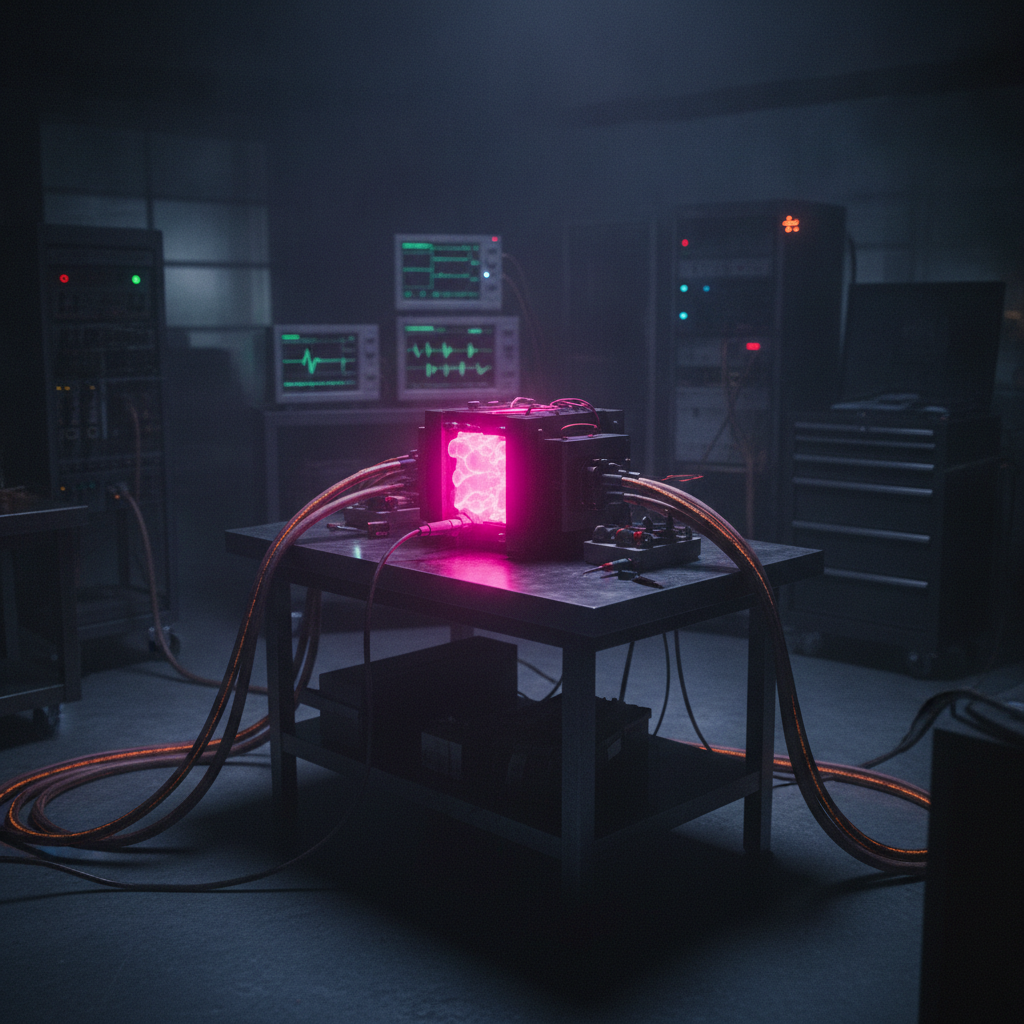
Every watt of electricity you have ever used passed through several transformers — copper coils around an iron core, a design that has barely changed in a century. The US grid runs on tens of millions of them, they are cheap and durable, and right now the US can't make them fast enough. [1]
Solid-state transformers swap that analog iron box for transistors and wide-bandgap semiconductors. The result is smaller, can convert AC to DC or DC to DC, and can actively monitor and manage power flow. The catch has always been cost — nobody needed a smart one badly enough to pay five to ten times the price of a dumb one. [1]
Two markets are now changing that calculus. Solar farms and large battery installations produce DC power and need a transformer that speaks that language. AI data centers want more DC power inside their buildings and will pay almost anything for speed. [1] Raghu Belur, who co-founded Enphase Energy with Martin Fornage in 2006, is betting the same modular logic that broke big solar inverters into small rooftop units can be applied to transformers. [1][2]
Data centers are the near-term revenue story, but the deeper prize is quieter and more distributed — neighborhoods where solar panels, electric vehicles, and heat pumps have turned one-way power lines into something far more complicated.
The long-term prize, in his framing, is not the big transformers at data centers — it's the little ones in local communities, the gray boxes on poles where rooftop solar, EVs, and heat pumps are complicating matters. [1]
A grid built for one-way, centralized power is now asked to manage flows in every direction. The humble pole-top transformer, unchanged for a century, may be the last analog bottleneck left to fall. [1]