The Mine That Breathes Hydrogen
Geologists are finding zero-carbon fuel seeping from billion-year-old rock. The hard part is proving it scales.
By The energy-climate Desk
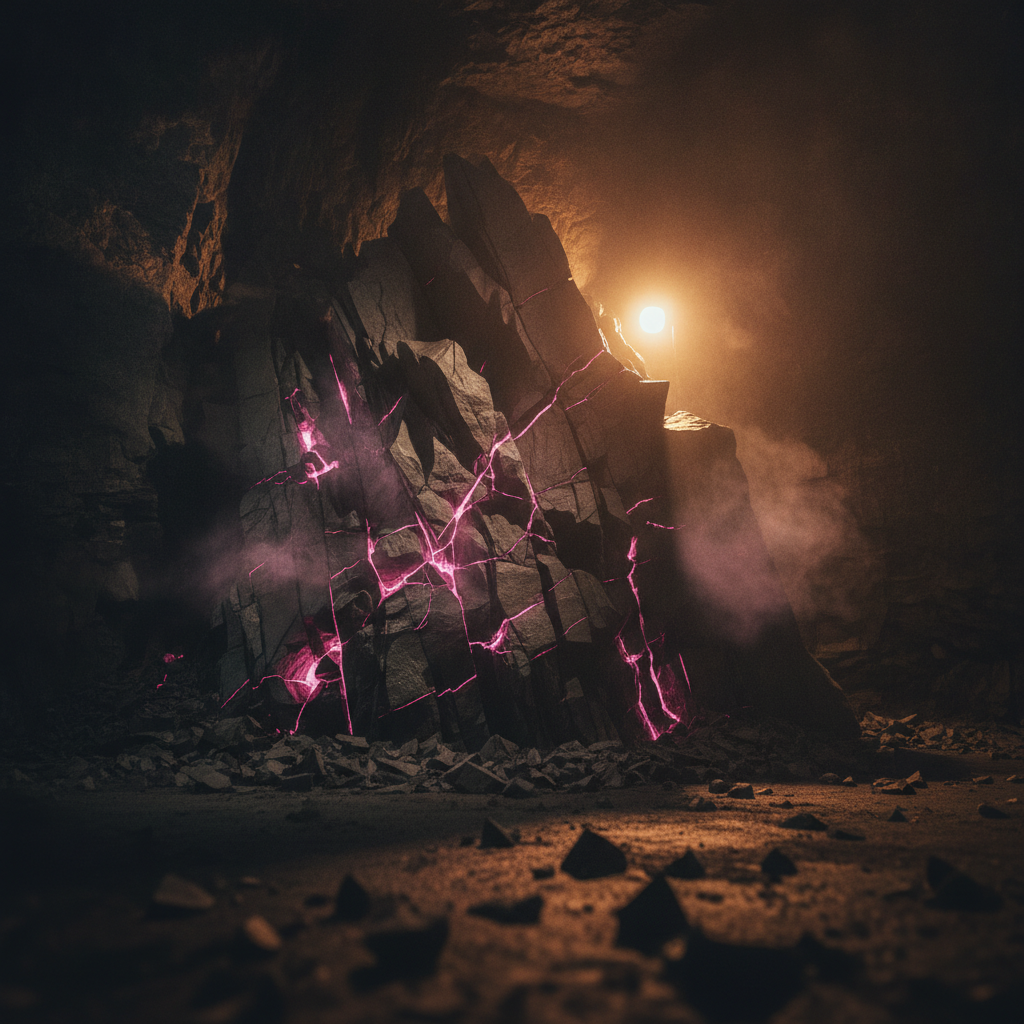
Three kilometers beneath northern Ontario, water trapped for more than a billion years feeds microbes that live on hydrogen—hydrogen that has been quietly venting into the atmosphere, unused, ever since the Kidd Creek mine opened. [1]
Geochemist Barbara Sherwood Lollar of the University of Toronto and her colleague Oliver Warr spent more than a decade logging data from 35 boreholes at Kidd Creek. [1]
That figure won't reshape global energy markets, but it could power a substantial portion of the mine's own operations—a proof-of-concept the field badly needs. No one has yet reported finding a commercially viable reservoir of geologic hydrogen, and public data remains scarce as startups including the Australian firm HyTerra and the Bill Gates–backed company Koloma—which have both been poking around the US Midwest to reach ancient oceanic rocks associated with hydrogen production—jockey for position and seek to attract investment. [1]
Meanwhile, researchers are not waiting for a mother lode. More than a dozen ARPA-E-funded projects are testing whether injecting water, heat, or catalysts into the reactive rocks that naturally produce the gas can stimulate hydrogen production—with a target of accelerating the reaction by a factor of 10,000. [1]
The question hanging over every result is whether the gas is new—born from stimulation—or ancient, simply disturbed. That distinction separates a demonstration from a technology.
Laurent Truche, a geochemist at the University of Grenoble Alpes, puts the stakes plainly: the remaining challenge is not proving that natural hydrogen exists, but proving that it can be produced economically and reliably at commercial scale. In 2024, his research team reported that at least 200 metric tons of the gas flow out of the Bulqizë chromium mine in Albania every year—yet that alone changes nothing without a viable extraction model. [1]