The Navy's $24.4B SM-6 Deal Has a Funding Gap
Raytheon lands a blockbuster missile contract. Congress hasn't approved the money—and wounded troops are already slipping through the cracks.
By The Defense Desk
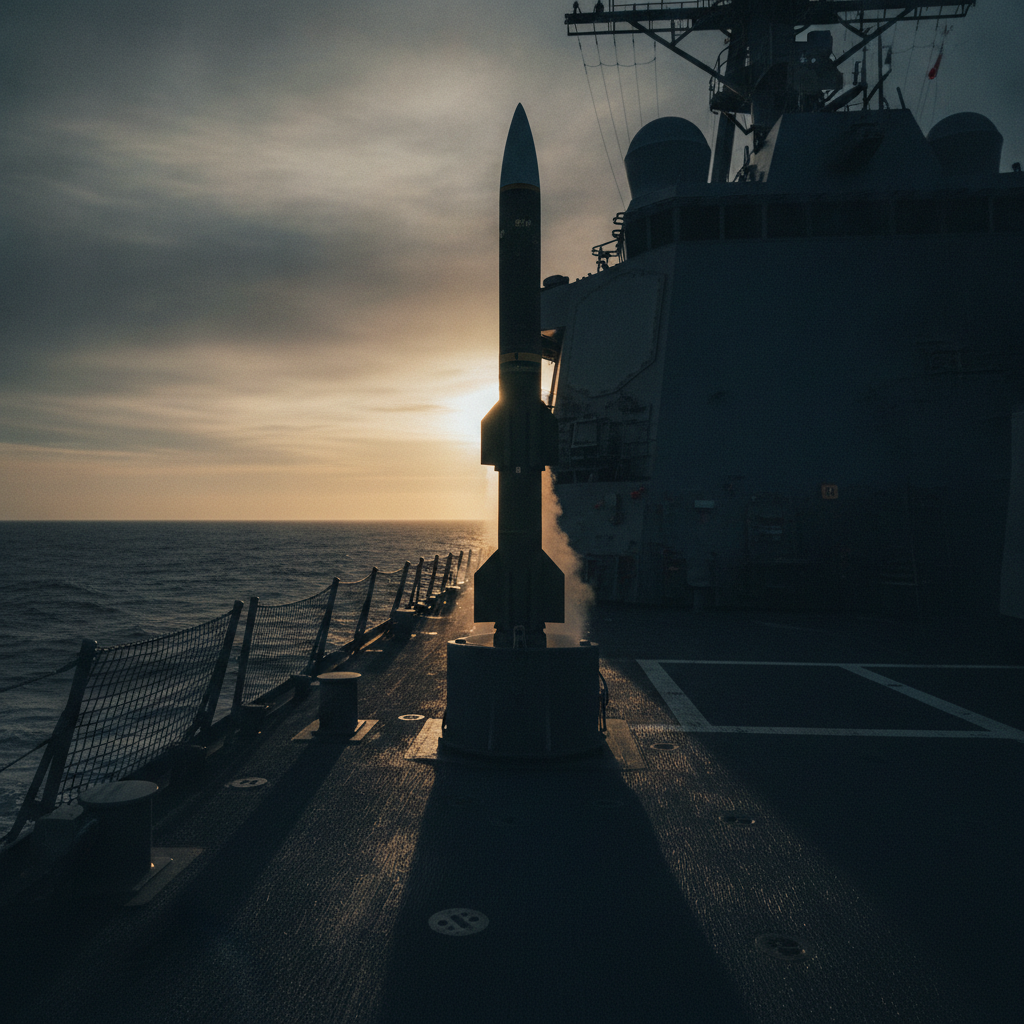
The U.S. Navy awarded RTX's Raytheon unit a multiyear contract worth up to $24.4 billion to produce Standard Missile-6 interceptors, the Pentagon confirmed Thursday—the latest volley in a push to rebuild munitions stockpiles depleted by Middle East operations. [1]
The five-year deal, with two additional option years, follows a $20.7 billion provisional multiyear deal for Raytheon's AMRAAM air-to-air missiles in late September and a $58.6 billion Patriot interceptor deal awarded to Lockheed Martin in July. [1] Raytheon says the SM-6 is the only combat-proven weapon that can perform anti-air warfare, anti-surface warfare and ballistic missile defense. [1]
There is a structural problem: industry executives have warned that Congress has not yet appropriated funding for the deals, meaning contractors may be unable to invest at scale in components and facilities until lawmakers act. [1] The Trump administration has framed the production agreements as part of a broader push to prioritize weapons production over shareholder returns—but intent and appropriation are different things. [1]
The gap between contract announcements and congressional action is where military strategy tends to stall. Pieces of paper move faster than factory floors, and factory floors move faster than budgets.
Meanwhile, the human cost of the current conflict is already exposing a different kind of readiness failure. Four Army Reserve soldiers from the 103rd Sustainment Command, wounded in the Iranian drone attack on Port Shuaiba, Kuwait, described delayed testing and treatment, inconsistent care depending on which Soldier Recovery Unit received them, and restrictions from taking leave to visit family. [2] One soldier, recovering at the Soldier Recovery Unit at Walter Reed National Military Medical Center, said that four months later he was only recently able to see a neurologist for the first time. [2]
A 2023 research paper by the Institute for Defense Analyses described the cycle bluntly: military medical forces excel at combat care during wartime, the authors wrote, "but then see these gains erode after the wars end." [2] In May, the Army was canceling dozens of medical training courses because of a budget shortfall, including courses intended to provide frontline combat care. [2]
The Pentagon is signing contracts measured in tens of billions. The soldier at Walter Reed just wants to go home to his wife and children and finish his care there. Both problems are real; only one is getting a press release.