The Navy's AI Sonar Can Learn a New Sub in Five Minutes
At RIMPAC 2026, Lockheed Martin's SensorMAX rewrote the rules of undersea hunting—and China is building its own answer.
By The Defense Desk
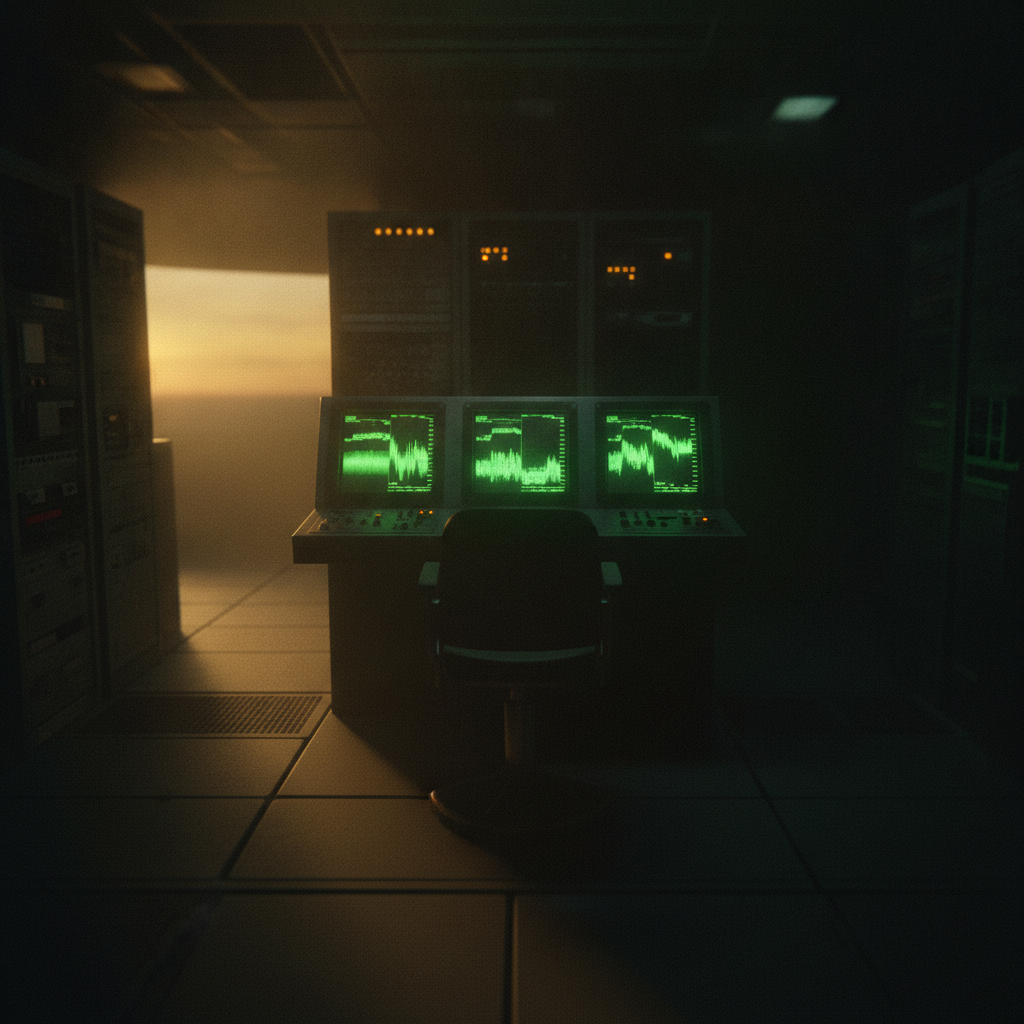
During RIMPAC maneuvers near Hawaii this past July, Navy MH-60R helicopters dropped sonobuoys that fed acoustic data into SensorMAX—Lockheed Martin's AI-powered sonar system. [1] No return to base. No analyst waiting on a slow uplink. Just machine learning, executed faster than most briefings take to load.
The demonstration took place during the biennial Rim of the Pacific exercise, which this year drew about 40 surface ships, five submarines, 140 aircraft, and more than 25,000 personnel to waters near Hawaii. [2] But few technologies on display raised as many questions about the future of undersea warfare as SensorMAX.
Lockheed Martin describes SensorMAX as the "Navy's AI portable sonar expert." [1] The system ingests acoustic data from a network of sensors, provides a continuous data stream to the aircrew, and sends information to the ground station. When a new target is identified, system operators label the identified noise signature, retrain the model on the new data, and push a small update packet back to the aircrew—all in under five minutes per cycle, according to Lockheed.
During RIMPAC maneuvers near Hawaii, Navy MH-60R helicopters dropped sonobuoys that fed data to SensorMAX, which assisted crews with target identification. [1] That throughput gain is the kind of multiplier that defense planners spend years chasing—more contacts tracked, more data processed, fewer personnel required to do it.
The over-the-air update mechanism is where SensorMAX gets genuinely interesting. [1] The company's collaboration with FUSE Inc. makes that possible: Lockheed Martin says the partnership "enables secure, resilient software delivery to deployed aircraft, allowing SensorMAX's trained AI models and mission software to be updated rapidly without interrupting operations." [1] In practice, the sub-hunting network learns while it hunts.
The architecture here reflects a broader shift in how militaries think about intelligence at the edge. Data collection and data interpretation used to happen in sequence—gather first, analyze later, act last. The new model collapses that chain. Analysis travels with the platform. The platform teaches itself. The gap between contact and decision narrows toward something that starts to resemble instinct.
Lockheed also emphasizes platform agnosticism. SensorMAX integrates data from a variety of sensors and is designed to be useful across air, ground, and naval operations. [1] The company argues that "the future fleet can leverage any acoustic sensor to expand the protective ring around high-value assets," accelerating what it calls the ASW kill chain. [1] That framing—any sensor, any platform, shared model—suggests the Navy envisions SensorMAX less as a single system and more as a common intelligence layer for dispersed anti-submarine operations.
The urgency behind that vision is sharpened by what is happening on the other side of the Pacific. China is also integrating AI into anti-submarine warfare. [1] Chinese media claimed last year that researchers had developed AI which evaluates data from multiple sources, including sonobuoys as well as data on water temperature and salinity. [1] The specifics are unverified, but the trajectory is clear: both powers are racing to automate the part of naval warfare that has historically been slowest and most labor-intensive.
Submarine detection has always been a problem of signal versus noise—of finding a faint, deliberate quiet inside an ocean full of chaos. The difficulty is what made it a human specialty for decades. What changes when the machine becomes better at listening than any individual analyst, and faster at teaching itself than any training pipeline can keep pace with?
RIMPAC 2026, which kicked off June 24 and was set to conclude July 31, also featured one of the more viscerally dramatic tests in the exercise's history: the planned sinking of two decommissioned warships. [2] These live sinking exercises, known as SINKEXs, put weapon systems against real hull steel and real ocean depth. The Peleliu and Mobile Bay would be the third SINKEX event in recent weeks, following the former USS Juneau, sent to the floor during the June 22–July 1 Valiant Shield exercise off the Mariana Islands. [2]
The Mobile Bay's history carries its own particular weight. Commissioned in February 1987, the ship launched 22 Tomahawk Land Attack Missiles in support of Operation Desert Storm and later fired TLAMs in support of Operation Iraqi Freedom in 2003. [2] Sending it to the bottom as a target is not cynicism; it is doctrine. Ships that can no longer sail can still teach.
There is something instructive about the juxtaposition: old warships sinking to the floor while new software learns to find the ones that are still running silent below. One era of naval dominance being consumed by the next. The targets shift, the sensors adapt, and the ocean keeps its own counsel.
What RIMPAC demonstrated is that the competition for subsurface advantage is now also a software competition. SensorMAX's retraining cycle—under five minutes, executed in the field, transmitted over the air—is not just a technical feature. [1] It is a claim about operational tempo: that the side whose AI learns faster will hold the acoustic advantage longer. Whether that logic holds in a real conflict, against a peer adversary running its own adaptive systems, is the question that this summer's exercises only begin to answer.
The Cold War version of anti-submarine warfare was a long, patient game—listening posts, acoustic libraries built over decades, analysts who spent careers learning a single ocean basin. SensorMAX represents a different theory: that the model can catch up in five minutes, and that five minutes is fast enough. [1] For the navies now building toward that bet, the Pacific is both the classroom and the exam.