The Navy's Aviator Pipeline Is Pooling, Not Flowing
CNATRA chief Rear Adm. McCoy is running triage and modernization simultaneously — and the bottleneck keeps moving.
By The Defense Desk
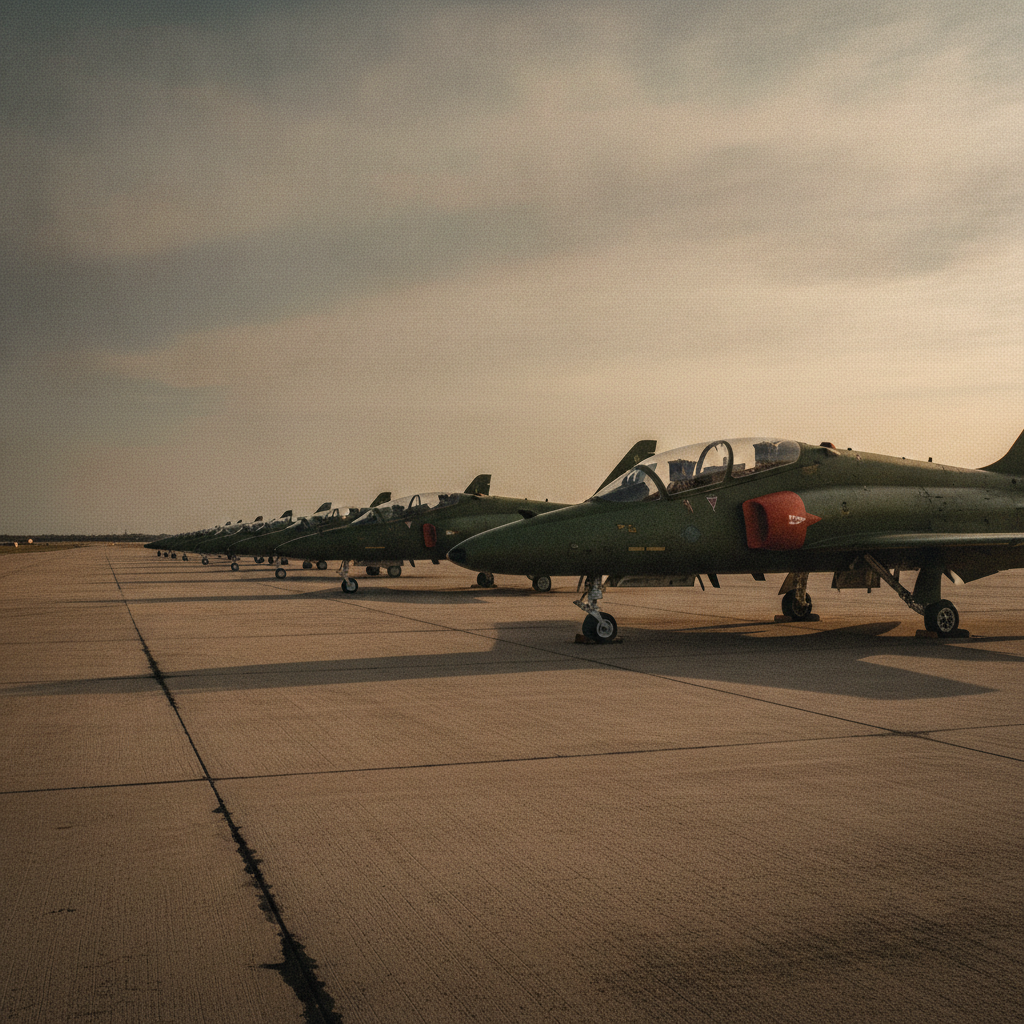
Rear Adm. Max "Pepper" McCoy, Chief of Naval Air Training, describes his command as a factory conveyor belt. Right now, by his own account, pools are forming in several places at once, and the Navy is running triage and modernization at the same time. [1]
CNATRA has been underproducing against fleet requirements for the better part of ten years, driven largely by problems with the T-45. According to CNATRA's Naval Aviation 2025 Playbook, McCoy's predecessor, Rear Admiral Richard T. Brophy Jr, drove production back up to 105 percent of requirement across every type-model-series — but fixing one stage exposed the constraint at the next. [1]
The Fleet Replacement Squadrons are now underproducing, creating a new logjam just before a winged aviator becomes useful to the fleet. Students arrive late to their first tour; career milestones don't move to accommodate the delay. The system, in McCoy's words, feeds on itself. [1]
McCoy frames the constraint as a production stool with three legs — airplanes, instructors, and students — and none are where they need to be. [1] To ease pressure on the instructor cadre, he currently has 15 Marine SERGRADs flying jet training at Kingsville and Meridian, freeing experienced instructors for advanced-phase work. [1]
The deeper tension is architectural: a pipeline shaped by peacetime assumptions now has to perform in conditions where the line between crisis and routine has dissolved.
McCoy calls this the age of urgency — a security environment where a training system built on the assumption that there will be time to catch up later is no longer viable. What the fleet needs, in his words, is a dynamic training system, not a custodial one. [1]
His stated ambition is to hand his successor a pipeline with the right number of airplanes, the right number of instructors, and time-to-train at entitlement — so the next Chief of Naval Air Training can accelerate modernization with a fully operational production line. [1]
What the fleet needs, in his words, is a dynamic training system, not a custodial one.Rear Adm. Max 'Pepper' McCoy