The Navy's Nuclear Hotline Gets a New Aircraft
The first C-130J-30 destined to become an E-130J Phoenix II has been delivered — launching a decades-long transition to keep U.S. submarine forces reachable.
By The Defense Desk
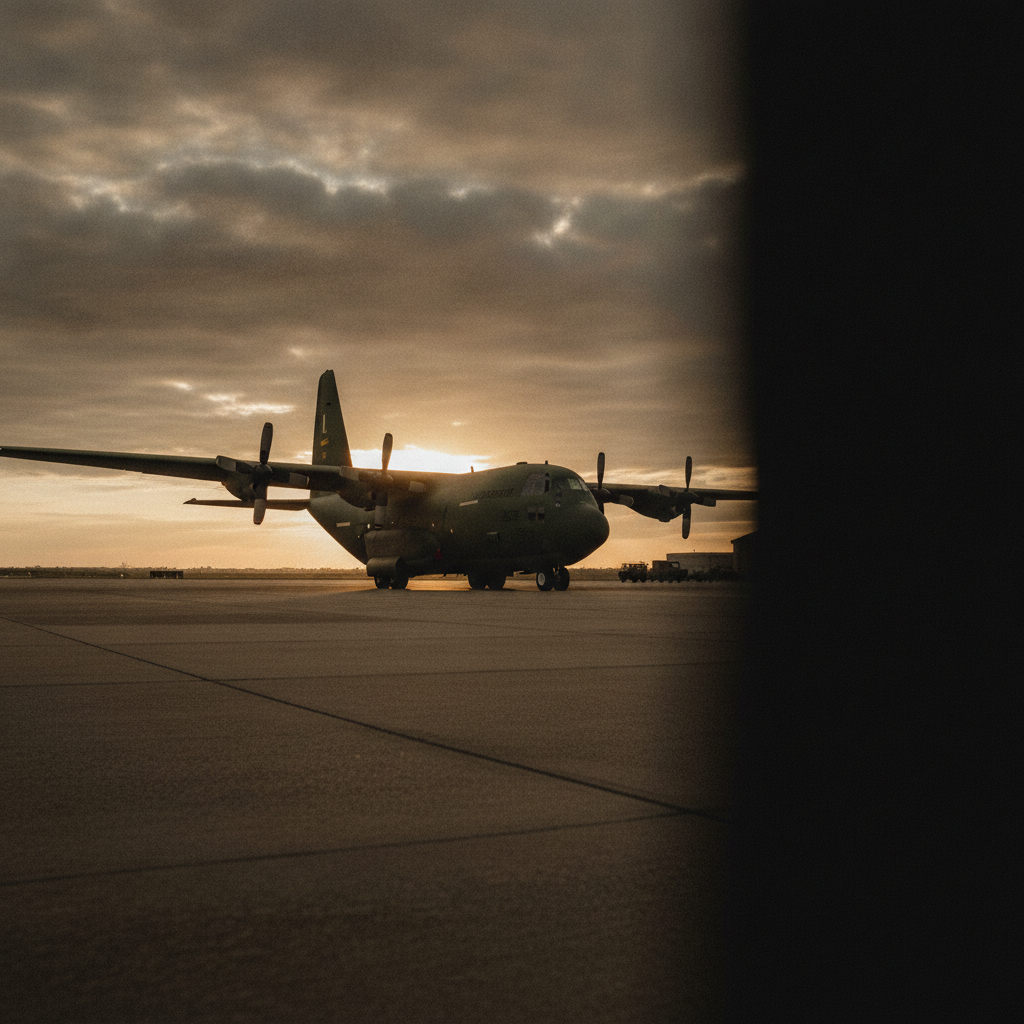
On October 15, Lockheed Martin handed the U.S. Navy a fresh C-130J-30 Hercules at its Marietta, Georgia facility — not a transport aircraft, but the first physical step toward the E-130J Phoenix II, the turboprop platform tasked with keeping the president, secretary of defense, and U.S. Strategic Command in contact with nuclear ballistic missile submarines even if every other communications link on Earth has been destroyed. [1]
The EC-130Q performed the TACAMO mission from 1963 to 1993, before the E-6A Mercury took over; the E-6B subsequently added an airborne command post role known as Looking Glass. The airframe will move next to Northrop Grumman — the E-130J program's prime contractor and mission-systems integrator — for conversion, with Collins Aerospace supplying the very low frequency (VLF) communications system that allows transmissions to reach submarines operating submerged at sea. [1]
The Navy plans to acquire 31 E-130Js in total, nearly doubling the 16 E-6Bs currently in service. That figure breaks down into six developmental aircraft and 25 production examples, though the operational fate of the developmental units remains unclear. The first of three C-130J-30s initially procured in September 2024, this airframe will spend the near term in mission-systems modification, ground testing, and developmental flight testing before anyone can call it an operational TACAMO platform. [1]
The E-130J is, in one sense, a homecoming. The EC-130Q performed the TACAMO role from 1963 to 1993 before the E-6A Mercury took over — meaning the Hercules family is reclaiming a mission it once owned. [1]
The physics of the choice are worth sitting with. A turboprop will never out-climb or outsprint a jet, and the mission it serves is one where every margin matters. What the new platform trades in raw performance, it bets on adaptability — a different calculus for a threat environment that keeps getting messier.
The trade-offs are real and documented. The Government Accountability Office has previously warned that integrating specialized mission equipment into the smaller C-130J-30 airframe could affect operational availability and create additional engineering and manufacturing difficulties. The E-6B's 707 lineage gave it speed and altitude the Hercules cannot match — meaning the E-130J will be slower to reach its patrol station and will operate at lower altitudes, which limits both weather avoidance and line-of-sight communications geometry. [1]
The counterargument is basing flexibility. As previously reported by The War Zone, the C-130J-30 can operate from austere airfields that an E-6B cannot reach — a meaningful advantage in a scenario where an adversary has struck well-established bases and large commercial airports serving as dispersal sites. The C-130J is still in production, unlike the long out-of-production 707-based E-6, and support infrastructure for the Hercules is already distributed across the U.S. and beyond, making logistics and crew training substantially simpler propositions. [1]
The E-130J will carry the pure TACAMO mission, while the Air Force separately pursues a replacement for the Looking Glass airborne command post capability that the E-6B added over time. That division of labor means two distinct programs now bearing responsibility for the architecture that connects national leadership to nuclear forces — a structure that raises coordination questions even as it clarifies each platform's mandate. [1]
For now, a freshly built turboprop sits in a modification hangar waiting to become something that may never be used — and hoping it never has to be. The real measure of the E-130J program will not be its flight test milestones but whether the Navy can field 31 capable aircraft before the E-6B fleet becomes too costly or too fragile to keep flying. The clock on that transition started the moment the first airframe crossed hands in Marietta. [1]